How to Get Rid of House Centipedes at Home
Knowing how to get rid of house centipedes starts with why one showed up. A house centipede is a fast, many-legged hunter. It is not a fabric pest, and it is not a millipede. One bathroom or basement sighting can be a stray.
Repeated sightings usually mean the building offers moisture, shelter, and other small insects to eat. This guide covers identification and the conditions that keep them indoors. It also covers steps that reduce repeat activity, and when a Sealy-area inspection beats another spray.
How to tell a house centipede from a look-alike
Adult house centipedes, Scutigera coleoptrata, have 15 pairs of very long legs. Penn State Extension describes a body about 1 to 1.5 inches long, with the last pair of legs on adult females nearly twice the body length. Counting the legs and antennae, the animal can look 3 to 4 inches across. The legs are banded light and dark. The body is a dirty yellow with three dark stripes running lengthwise.
Young house centipedes are easy to misread. Newly hatched larvae have only four pairs of legs. Later stages add pairs until the animal reaches 15. A short, pale juvenile on a basement floor is still a house centipede. It is not a different species just because the leg count looks wrong.
House centipedes are predators. According to Penn State Extension, they feed on silverfish, firebrats, carpet beetle larvae, cockroaches, spiders, and other small arthropods. They spend the day in dark, damp spots and come out at night to hunt. Frequent indoor sightings can mean those prey insects are also present.
Millipedes, silverfish, and earwigs
A millipede is a different animal and a different job. Millipedes are usually slower, rounder, and built for damp leaf litter and decaying plant matter. They are not the long-legged hunters this article covers. If the animal is cylindrical, has many short legs, and shows up after rain near mulch or a door threshold, keep notes and a photo. Do not treat that sighting as a solved house-centipede problem.
Silverfish are wingless, tapered, and silvery, with long antennae and three tail-like filaments. They do not have the house centipede's fringe of banded legs. If you are seeing those instead, the silverfish control guide is the better match.
Earwigs have a pair of forceps at the rear and a much shorter body plan. The earwig facts for homeowners page covers that question. Pill bugs roll into a ball and live with moisture around foundations. That is a separate topic in the pill bug control guide.
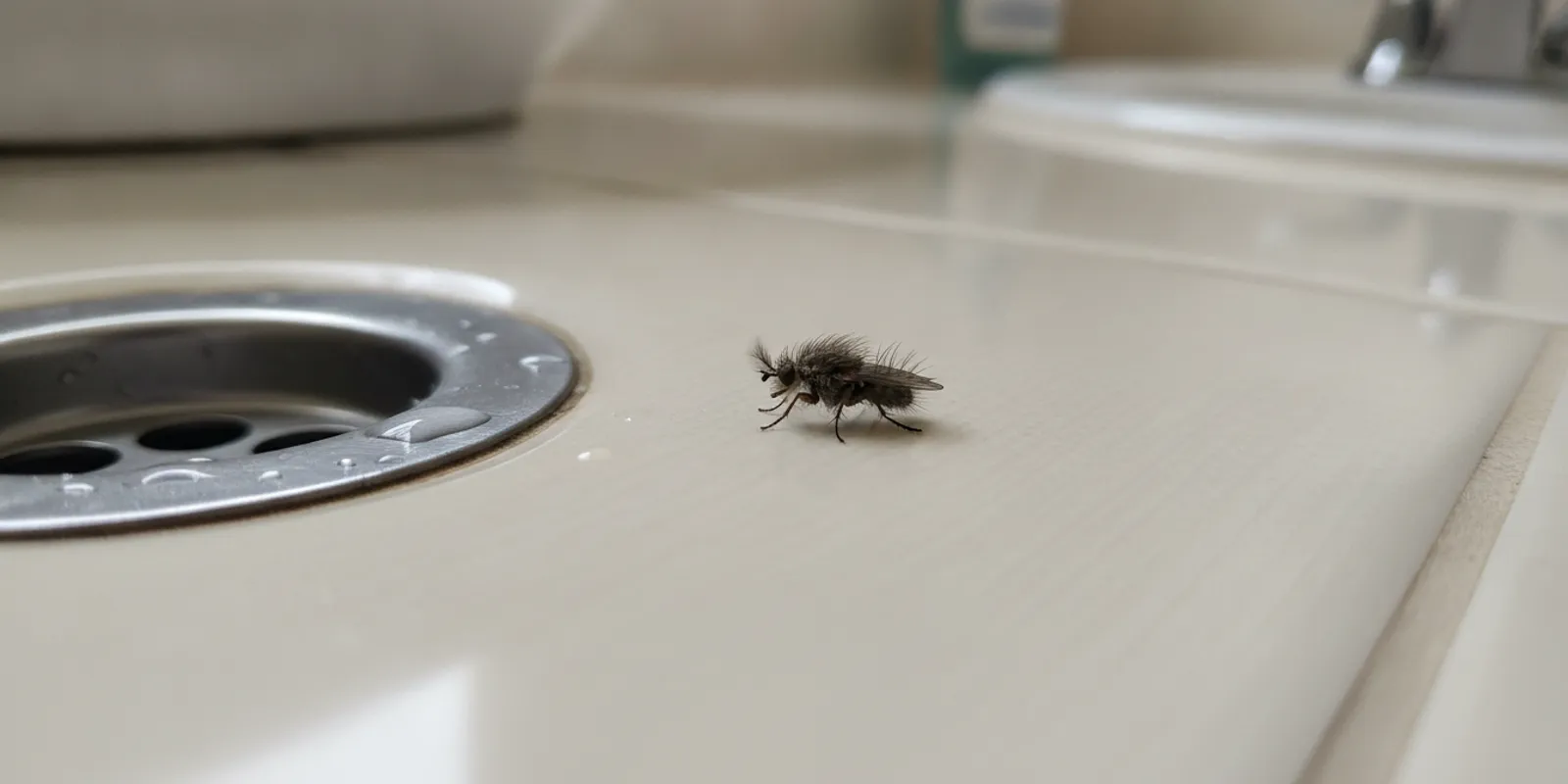
A phone photo, the room, the time of day, and whether you have seen more than one are enough to sort most of these. If the insect is smashed or only a blur, do not guess from leg count alone. A specimen in a closed container, or a clear photo next to a coin, is more useful than a broad spray chosen because something moved fast.
Why house centipedes keep showing up indoors
House centipedes are now widespread in the United States. Penn State Extension notes that they do not survive outdoor winters in Pennsylvania, but they readily reproduce inside heated buildings. In a warm Gulf Coast climate, outdoor adults can persist near foundations, but a steady indoor population still depends on shelter and food inside the structure.
Penn State Extension lists the same harborage sites again and again. Centipedes use the space beneath concrete slabs, reached through expansion cracks, sump openings, or other breaks. They also use the inside of concrete-block walls, through open blocks, missing mortar, or pipe penetrations.
Other common spots are floor drains without a water trap, especially drains tied to a dry sump. Cardboard stored on a slab is another. So is any damp, cool place, including an unexcavated crawl space. The Penn State Extension house centipede fact sheet is the source for those sites and for the feeding notes above.
That list is a map, not a scare story. A Sealy-area house with a damp bathroom, a closet of stored boxes. And a gap under an exterior door can support occasional hunters even when the living room looks clean. The same is true of a garage, laundry room, or utility closet. The insect is using the conditions. It is not proof that the whole house is infested, and it is not proof that the house is dirty.
Moisture, shelter, and prey
Three conditions usually travel together. Moisture keeps the microclimate stable. Shelter gives the centipede a day roost. Prey gives it a reason to stay. Remove only one of the three and you may still see an occasional adult. Reduce all three and repeat sightings usually drop, because the building is no longer a reliable hunting ground.
University of California IPM describes centipedes as elongated, flattened hunters with one pair of legs per body segment. It describes millipedes as slower decomposers. That split matters when you decide what to change. The UC IPM centipede and millipede note is the comparison used here.
Drying a crawl space and sealing a slab crack is house-centipede work. Raking mulch off a foundation is closer to millipede work. Mixing the two responses wastes effort.
How to get rid of house centipedes without a scattershot spray
The useful order is identify, reduce prey, reduce harborage, then lower humidity. Penn State Extension puts food-source reduction first and harborage reduction second. A store spray on a baseboard does not replace either step. It also does not tell you whether silverfish, cockroaches, or another prey insect is the real reason the hunter is there.
Confirm the insect. Compare the photo with the 15-pair adult pattern, banded legs, and striped yellow body. Separate millipedes, silverfish, and earwigs before you change products or call for service.
Map the sightings. Note the room, the time, and whether the spot was a bath, laundry, closet, garage, crawl-space hatch, or slab crack. Repeated rooms beat one dramatic encounter.
Check for prey. Look for silverfish, cockroaches, spiders, and other small insects in the same zones. Sticky monitors placed along walls, not in open walkways, show what is actually moving at night.
Dry the zone. Fix slow leaks, dripping supply lines, and standing water in drain pans. Run bath and laundry exhaust fans long enough to clear humidity. A dehumidifier helps a closed basement or utility room that stays damp.
Remove day roosts. Lift cardboard off concrete slabs. Discard collapsed boxes, and store what you keep in sealed plastic bins on shelves. Clear clutter from floor edges so there is less cover.
Close the easy entries. Seal expansion cracks, gaps around pipes, and openings in block walls with the right filler for that material. Screen a sump opening. Add a screen where a basement floor drain can be covered without creating a drainage problem. Make sure a drain trap holds water.
Grade and drain outside. Move soil so water flows away from the foundation. Do not pile mulch or stored goods against the wall. Outdoor work will not empty an indoor population by itself, but it removes a source of new adults.
Skip a whole-house fog. If you use a pesticide, read the label, use a product labeled for centipedes and for indoor crack-and-crevice sites. And keep it away from children, pets, food, and drains. Penn State Extension warns that pesticides are poisonous and must be handled and stored as the label says.
Vacuuming a centipede you see is a reasonable one-time response. It does not change the harborage. The same is true of a single baseboard spray. If monitors keep catching prey insects, deal with that insect directly. A house centipede problem that is really a cockroach or silverfish problem will return until the prey is reduced.
Do not promise yourself a permanent cleanout from one weekend of work. Females can live several years and produce many young inside a heated building, so a hidden population can keep sending out adults after the obvious clutter is gone. Judge progress by fewer sightings over several weeks, not by the absence of a single insect the next morning.
What helps, and what usually does not
Use the comparison below to decide where to spend time. The left column is the change. The middle column is why it matters for house centipedes. The right column is the limit, so a useful step does not get stretched into a guarantee.
Step | Why it helps | Limit |
Confirm the species. | Stops a millipede, silverfish, or earwig response from being applied to the wrong animal. | A smashed specimen can still be ambiguous. |
Sticky monitors. | Shows which prey insects are feeding the hunters. | Monitors sample activity. They do not remove a population. |
Leak and humidity fixes. | Makes bathrooms, laundries, basements, and crawl spaces less stable. | Drying alone leaves prey and open harborage in place. |
Declutter and sealed storage. | Removes cardboard and floor-level cover on slabs. | Wall voids and slab cracks can remain. |
Seal cracks, pipes, and drains. | Closes documented entry and roost sites. | Some slab and block-wall gaps need the right filler, not tape. |
Targeted, labeled crack treatment. | Can reach suspected roosts when the label allows that site. | Not a substitute for moisture, prey, and entry work. |
Whole-room fog or random spray. | Little lasting effect on hidden hunters or their prey. | Can add unnecessary exposure without changing the cause. |
University of California IPM notes that centipedes can bite if provoked. Outdoors, they are generally beneficial hunters. Indoors, the usual issue is the surprise of a fast insect, not structural damage.
House centipedes do not eat wood, fabric, or stored food the way termites, carpet beetles, or pantry pests do. If someone is bitten, or has a history of severe reactions to insect stings, that is a question for a clinician. A pest article cannot diagnose it.
Avoid essential-oil foggers, ultrasonic plug-ins, and unlabeled dusts as if they were a plan. None of those replaces a dry room, a sealed crack, or a check for prey. If a pesticide is part of the plan, the label is the instruction. Penn State Extension specifically cautions readers to follow directions, store products in the original container out of reach of children, pets, and livestock, and avoid contaminating water.
When an inspection is the better next step
Call for an inspection when sightings continue after the moisture, storage, and entry checks. Also call when monitors show another pest in numbers. The same applies when activity is in a crawl space, slab, or wall void you cannot safely open.
A single hallway sighting after a storm is a different situation. Weekly sightings in a bathroom and a utility room are the pattern that deserves a closer look.
Pro Pest is a Sealy-based, family-operated company. The published office is 200 Meyer St., Sealy, TX 77474. The public phone on the homepage and About page is (979) 885-6666. The usual path is an inspection of conditions and activity first, then a recommendation for targeted treatment.
A free, no-obligation inspection is a request. It is not a confirmed appointment, and it is not a fixed-price quote. Share the property type, the pest you think you have, and the ZIP code. Also say whether you want a one-time look or ongoing service.
Residential work can include a look inside and outside for activity, damage, conducive conditions, and entry points, followed by targeted treatment where it is actually needed. Interior follow-up is for indoor problems that are still present. Optional exterior return visits are a choice, not a default promise and not a published schedule. This article does not set a price, a contract term, or a guarantee that every house centipede will be gone.
House centipedes are not bed bugs, and the organic option described on the services page is specific to that bed-bug offering. Do not read this guide as a claim that every indoor treatment is organic or chemical-free. The 30-day no-charge re-service language on the site applies to the documented bee, flea, and gopher conditions. It is not a universal warranty for centipedes or for any other pest.
Same-day help is something the company describes as available whenever possible. It is not guaranteed. Office hours and field-service hours are also different, so a Saturday field window does not mean the office phone is covered the same way. If you are outside the Sealy and surrounding-area footprint, say so on the form. Houston and Katy are target markets, not proof that every address is in the service area.
If house centipedes keep returning, request a free, no-obligation inspection or call (979) 885-6666. You can also review how a residential visit works and the specialty services page before you send details.
Frequently asked questions
Are house centipedes dangerous?
Penn State Extension describes them as harmless to the house even though the long legs startle people. They do not damage wood, wiring, or stored food. University of California IPM notes that centipedes can bite if handled or provoked. Treat a bite that worries you as a medical question, not as a do-it-yourself diagnosis.
Does one house centipede mean an infestation?
No. One insect near a door, bath, or garage can be a hunter that wandered in. Repeated sightings in the same damp rooms, especially with other small insects on monitors, are the pattern that deserves moisture, harborage, and prey work.
Will spraying the baseboards get rid of them?
A baseboard spray rarely reaches slab cracks, block walls, or the prey insects. Penn State Extension puts food-source reduction and harborage reduction ahead of pesticides. Any product you do use must be labeled for the site, and the label is the safety instruction.
Why do I see them in the bathroom?
Bathrooms, laundries, and utility rooms often combine humidity, pipe gaps, and floor drains. Those are the conditions Penn State Extension associates with indoor harborage. Fix leaks, run the fan, and seal the pipe penetrations before you assume the whole house is involved.
Should I worry about a millipede instead?
Only if the animal is a slower, rounder decomposer rather than a long-legged hunter. This article answers house centipedes. A cylindrical insect near wet mulch is a different identification, and it should not be folded into the same control steps without a second look.
A practical close
House centipedes stay where a building stays damp, cluttered at floor level, and stocked with other small insects. Identify the animal and dry the rooms where you see it. Close the slab and pipe gaps you can safely seal, and check what else the monitors catch.
If the sightings continue, or the activity sits in a space you cannot inspect, ask Pro Pest to look first. The request form is the cleanest way to share the ZIP code, the rooms involved, and what you have already tried.

Comments