Pill Bug Control: How to Reduce Activity Around Your Home
Pill bugs tend to gather where moisture, shelter, and decaying plant material come together. If you find them beneath pots, beside a foundation, in mulch, or inside a damp garage, effective pill bug control begins by locating the conditions that support them. Removing the few you can see may help briefly, but it does not answer why they are there. This guide shows how to inspect the property, choose useful changes in a sensible order, and decide when to request an inspection.
What should you do first when you see pill bugs?
Begin with the immediate location. Note whether the pill bugs are outside, just inside an entrance, or appearing in a room farther from the exterior. Then look around the nearest damp or sheltered area. A cluster beneath a planter may indicate moisture held under the pot. A few individuals beside a garage door may have wandered from leaf litter or wet soil outdoors. Repeated indoor sightings deserve a closer look at both the entry route and any dampness inside.
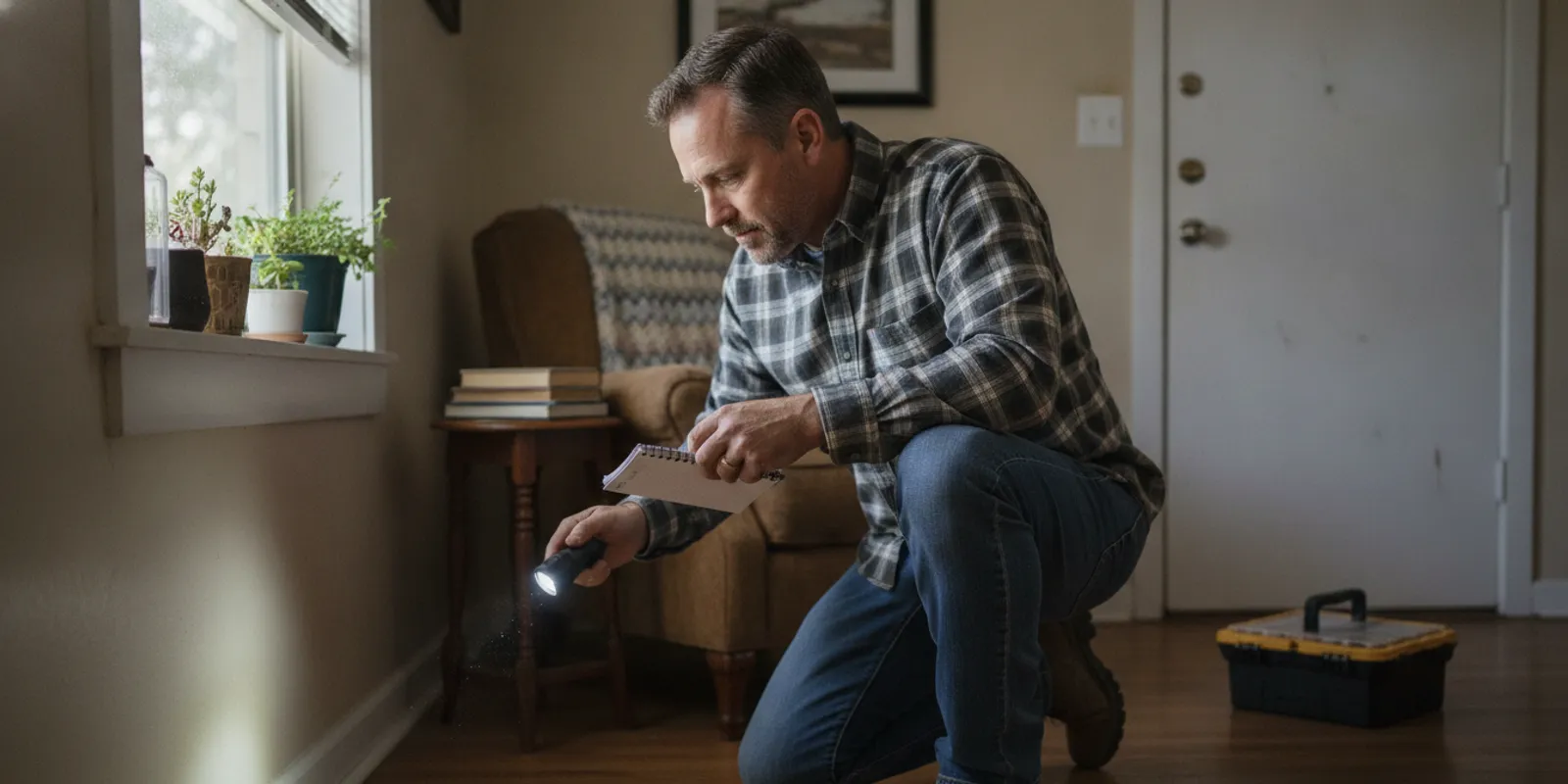
Use a brief, careful walk-through before choosing a treatment:
Check shaded sides of the home, especially after rain or irrigation.
Lift movable pots, boards, stones, and ground-level items carefully.
Look under leaves, grass clippings, mulch, and dense ground cover.
Notice whether soil, mulch, or vegetation touches the foundation or siding.
Inspect thresholds, garage-door edges, vents, and low openings.
Record whether the activity is outdoors only or keeps appearing indoors.
Do not assume the most visible place is the source. The insects may be moving from a nearby damp pocket, and the area where you notice them may simply be the easiest route into the house. A useful first question is: what is keeping this location moist and protected?
What are pill bugs, and why do they gather near homes?
Pill bugs are land-dwelling crustaceans, not insects. Some curl into a ball when disturbed, which is why they are often called roly-polies. They commonly shelter in damp soil, leaf litter, compost, mulch, and other protected places containing decaying organic material. They feed on decaying plant matter and contribute to its breakdown outdoors.
Their presence outside is not automatically a sign of a building problem. A shaded garden bed can support them without any indoor infestation. But repeated activity around a doorway, patio, garage, or living area can be inconvenient and may point to conditions worth changing. The practical goal is to reduce favorable shelter near the building and limit easy entry, not to promise that no outdoor pill bug will ever be seen.
Pill bugs are sometimes confused with sowbugs. Both are often found in damp places, but sowbugs tend to look flatter and do not curl into a complete ball. A quick glimpse may not be enough to distinguish them. If identification is uncertain, take a clear photo without handling the animal and note exactly where it was found. Location and surrounding conditions help make the observation more useful.
How do you trace the damp area to its source?
Moisture is one of the most useful clues. Walk around the exterior in daylight and compare the dampest places with locations where activity is highest. If possible, check shortly after rain or watering; drainage patterns and irrigation overspray are often easier to see then than during a dry stretch. You do not need to diagnose every building or plumbing issue yourself. The first task is to notice a pattern and decide what kind of follow-up is appropriate.
Inspect gutters and downspouts
Look for roof water discharged directly beside the house, disconnected downspouts, clogged gutters, erosion, splash marks, or soil that stays dark and soft. A narrow strip of persistent damp soil can provide shelter even when the rest of the yard appears dry. Observe where water flows rather than guessing based on the appearance of a single pipe. A drainage correction may call for a qualified repair professional or landscaper, depending on the site.
Check irrigation and outdoor faucets
Run the irrigation system only if it is safe and practical, and observe whether sprinklers wet the foundation, siding, door thresholds, or a shaded planting bed. Look for overspray, a broken head, or a schedule that repeatedly leaves one area wet. Check hose connections and outdoor faucets for drips. A small leak can keep the underside of a pot or a patch of mulch damp long after the surrounding ground has dried.
Look for low spots and slow drainage
Water may collect where soil has settled or slopes toward the structure. Dense ground cover, compacted soil, and a thick layer of organic material can also slow drying. Do not excavate, alter the grade, or redirect water without understanding the property's drainage and utility layout. Photograph the area after rain and describe where water remains; that evidence can help determine whether a drainage specialist or another professional should assess it.
Check indoor sources only when sightings warrant it
If pill bugs appear inside more than once, look near exterior doors, garage transitions, crawl-space access points, plumbing areas, and utility penetrations. Notice visible condensation, damp materials, or water staining. A dehumidifier, ventilation change, or plumbing repair may be relevant in some buildings, but the right solution depends on the actual source. Pest treatment cannot repair a leak or correct persistent condensation.
Which outdoor changes are most useful?
Homeowner prevention is usually about changing the conditions close to the structure. You do not have to strip the yard of plants or remove every natural area. Start with the foundation edge, entryways, patios, and locations where sightings recur. A narrow, visible inspection area is often more useful than broad cleanup far from the house.
- Address water first.
Correct obvious drips, overspray, or discharge beside the foundation. If the issue involves grading or a drainage system, seek the appropriate expertise rather than improvising a new water route.
- Remove decaying debris beside the building.
Clear dead leaves, grass clippings, rotting boards, cardboard, and similar material from the immediate foundation area. Move debris to an appropriate disposal or compost location away from the structure, rather than relocating it to another sheltered spot beside the wall.
- Reduce plant contact.
Trim growth that touches walls, doors, vents, or window areas where practical. Better visibility makes it easier to inspect and can improve airflow around a damp location.
- Review mulch placement.
Avoid allowing mulch to form a continuously damp bank against the structure. Keep a visible inspection gap where landscaping and site conditions allow. The goal is not a universal mulch depth rule; it is to avoid hidden, persistently wet cover at the building edge.
- Move stored items.
Firewood, lumber, tools, planters, and cardboard can create cool, protected spaces. Store them off the ground and away from the foundation when feasible.
- Keep a clear sightline.
A visible strip along the wall helps reveal new debris, dampness, cracks, or insect activity. It also makes periodic checks quicker.
These steps work best together. If you remove leaves but leave a dripping faucet and overspraying sprinkler in place, the same area may stay attractive. If you adjust irrigation but keep wet cardboard and dense mulch against the house, shelter remains. A practical order is water correction, shelter reduction, then monitoring. Make one or two clear changes at a time so you can tell whether activity changes.
A university extension response on pill bug management recommends removing dead or decaying plant material from the soil surface and addressing supportive conditions. See the Extension guidance on pill bug control. The suitable response at a particular home still depends on drainage, construction, landscaping, and where the animals are being found.
How do you check for an entry route?
Once you have reviewed outdoor moisture and shelter, inspect the lowest parts of the structure. Pill bugs may enter through small gaps at places where materials meet or where a door does not close evenly. A simple exterior-to-interior comparison can narrow the search: if sightings occur beside one garage corner, inspect that corner and the matching interior edge before searching the entire house.
Check door sweeps and weatherstripping for wear, gaps, or uneven contact.
Inspect garage-door edges and both corners of the threshold.
Look around pipes, wires, vents, and other wall penetrations.
Note foundation cracks or openings near the location of sightings.
Check screens and covers where they form part of an opening.
Reduce garage clutter so the floor edges are visible and activity is easier to notice.
Do not seal every opening that looks suspicious. Some gaps or openings may serve drainage, ventilation, or movement between building materials. Blocking one without understanding its purpose can create another problem. Photograph openings that are difficult to assess and ask an appropriate professional about a repair. For a straightforward worn door sweep, replacement may be a suitable maintenance step, but verify the fit along the full edge rather than checking only the center.
Inside, keep floors and corners clean and dry. Vacuuming visible pill bugs can remove the individuals that entered, but it does not address the outdoor conditions. Empty the vacuum or dispose of collected insects appropriately rather than leaving them in a warm, sheltered container.
Should you use a spray?
A pesticide may affect visible animals, but it is not a substitute for checking moisture, shelter, and entry conditions. Applying product across many surfaces can create unnecessary exposure and may not give a lasting result if the damp source remains. If you consider any product, read and follow its label, including the permitted locations, application amount, and precautions.
Do not apply a product to food-preparation surfaces, toys, pet areas, drains, or other locations unless the label specifically permits that use. Never mix products or increase the rate. Keep people and animals away from treated areas as directed. If the label does not clearly cover the intended location, do not guess. The choice to use a product is not the first step when the underlying issue may be a wet planting bed or an open threshold.
Outdoor treatment, if considered, should be based on the location and conditions supporting activity. Pro Pest describes an inspection-led process: inspect activity and conditions first, then recommend targeted treatment. The scope depends on findings; a request for a free, no-obligation inspection is not a confirmed appointment or a fixed-price quote. Share the property type, pest location, ZIP code, and whether you are seeking one-time help or considering ongoing service.
How can you tell if activity is occasional or recurring?
Use a simple record rather than relying on memory. A single pill bug found after a rainstorm differs from repeated sightings at the same garage corner over several weeks. Neither pattern alone proves a particular cause, but the comparison helps you decide what to inspect next and gives a provider a clearer starting point.
Keep a short log with these details:
Date and approximate time.
Exact room, doorway, or outdoor location.
Whether the animal was alive or dead, and an approximate count.
Recent rain, irrigation, hose use, or plumbing work.
Nearby leaves, mulch, stones, stored items, or dense plants.
Any cleanup or moisture change made since the last sighting.
For example, suppose you find several individuals beneath a flowerpot beside a back door, move the pot, and stop watering that patch. If sightings decline and do not recur, the immediate sheltered area may have been a useful lead. If they continue inside at that door, inspect the threshold and nearby drainage as well. In another case, sightings at multiple ground-floor locations after rain may call for a broader walk around the foundation, downspouts, and low openings. The purpose of the log is not to prove a diagnosis; it is to distinguish patterns and avoid repeating changes that have not helped.
After making a change, monitor the same locations over time and through different weather. Do not judge a long-term result from one afternoon. If the area dries and activity subsides, continue routine checks. If the location stays damp or sightings continue, investigate the unresolved condition rather than increasing pesticide use without a clear reason.
What should renters and property managers do?
Renters can document sightings, reduce clutter, avoid adding moisture, and report leaks or damaged door seals. Repairs to drainage, exterior openings, or building components may require permission or action by the owner or manager. Send a concise report with dates, exact locations, photographs, and any visible water condition. This is more actionable than a general message that insects are appearing everywhere.
Homeowners should also distinguish pest questions from repair questions. A pest professional can assess pest activity and relevant conditions, while a plumber, drainage specialist, or building contractor may be needed for a leak, grading concern, or structural repair. One inspection does not automatically replace the expertise of another trade.
Commercial property owners and managers should note which entrances, storage areas, staff spaces, or customer areas are affected. Keep observations separate by area and operating conditions. A restaurant, warehouse, office, or apartment property may have different access and scheduling needs, so explain the setting when seeking an inspection. Do not assume that a process for a single-family home automatically answers a commercial site's requirements.
When should you request a pest inspection?
Consider an inspection when activity continues after reasonable cleanup and moisture reduction, when pill bugs repeatedly enter occupied areas, or when you cannot identify the source. It can also help when activity is near a crawl-space access, commercial entrance, or foundation area where several possible causes overlap. A few outdoor sightings in damp mulch may be manageable with observation; persistent indoor activity is a stronger reason to seek help.
Prepare useful details before making a request:
Give the property ZIP code and identify whether it is a home, rental, apartment, office, restaurant, warehouse, or another property type.
Describe the animal and share a photo if available; do not handle it to obtain one.
List the specific locations, dates, and approximate frequency of sightings.
Explain recent rain, irrigation, leaks, landscaping work, or other changes.
Say whether you are seeking help with a one-time concern or asking about ongoing service.
Ask what the inspection will cover, what findings would guide a recommendation, and whether any preparation is needed.
Pro Pest is a Sealy-based, family-operated residential and commercial pest-control provider. Its public location is 200 Meyer St., Sealy, TX 77474. Sealy and the surrounding area are the documented service anchor; Houston and Katy are target regions, not proof that every address is eligible. Confirm coverage for your ZIP code before assuming dispatch. You can review Pro Pest's listed services and its local business information.
What should you ask before agreeing to a recommendation?
A useful conversation should connect the proposed action to what was observed. Ask what conditions were found, which locations are included, and whether the recommendation addresses pest activity, moisture, an entry route, or more than one factor. Ask what you should do before and after any service, and whether the work is a one-time treatment or an ongoing arrangement.
Pro Pest does not publish a standard price list, plan tier, contract term, or universal visit schedule in the available customer information. Request the current terms for the property and situation rather than assuming them. If treatment is proposed near a garden, pet area, food surface, or occupied room, ask which product-use instructions and preparation steps apply. The answer should be specific to the proposed work and product, not a blanket assurance about every treatment.
For a commercial property, ask how the inspection will account for access, operating hours, employees, customers, storage, sensitive areas, and documentation needs. A provider should understand whether activity is at a public entrance, a loading area, or a staff-only space. Give enough detail for the site to be evaluated without assuming a particular service cadence or contract arrangement.
Can pill bugs damage a home?
Pill bugs are generally associated with damp outdoor organic material, not with the kind of structural damage associated with wood-destroying pests. Finding them does not by itself establish a termite problem or building defect. Repeated indoor sightings can still be a helpful clue that moisture, debris, vegetation, or an opening deserves attention. Often, the surrounding condition is more important than the individual animal.
Do not treat pill bug sightings as proof of a hidden leak either. One animal may wander inside after rain, and multiple sightings may have several contributing conditions. Look for corroborating signs such as persistent dampness, staining, odors, soft material, condensation, drainage trouble, or a visible gap. If you suspect a plumbing or structural issue, contact the appropriate repair professional as well as a pest professional when needed.
Why might activity increase after rain?
Rain can make outdoor shelter less suitable or displace pill bugs from their usual hiding places, so you may notice more movement for a time. It can also reveal where water collects. After rain, check downspout discharge, low spots, mulch against the foundation, and thresholds. Record whether the ground dries normally or remains damp into the next day; do not infer a lasting infestation from one post-rain sighting.
Allow the property to dry while correcting obvious conditions. If the same location remains active in different weather, the repeated pattern is more informative than a single event. Note rainfall and watering alongside sightings so you can explain the timing accurately if you request help.
How should you compare the next steps?
The following comparison can help match the response to the situation. These are decision points, not guarantees that any one action will eliminate activity.
What you observe | First reasonable step | When to escalate |
One outdoor sighting under a damp pot | Move the pot if practical, let the area dry, and check for debris or a drip. | Escalate if sightings persist or move indoors. |
Several sightings along one foundation section | Inspect mulch, vegetation, irrigation, downspouts, and the nearest low openings. | Seek help if moisture or entry conditions remain unclear. |
Repeated sightings inside by one door | Record dates, inspect the threshold and matching exterior area, and keep the floor dry. | Request an inspection if the pattern continues after reasonable corrections. |
Activity in several rooms or a commercial site | Map locations and note operating conditions, recent water, and property type. | Ask for a site-specific evaluation; do not assume one treatment plan fits every space. |
For many homeowners, the least disruptive first step is observation followed by a targeted change: fix a clear drip, remove a damp pile of leaves, or improve visibility at the affected threshold. Broad pesticide use is not the natural first response when the source is still unknown. When several possible causes overlap, a professional inspection can help organize the next decision.
What is the practical pill bug control checklist?
Use this sequence to turn a vague concern into a manageable plan:
- Identify.
Photograph the animal and note whether it curls; avoid handling it if uncertain.
- Locate.
Mark exact indoor and outdoor places where activity appears.
- Trace water.
Check leaks, irrigation, downspouts, condensation, and low spots.
- Reduce shelter.
Clear decaying plant material, cardboard, and rotting wood near the structure.
- Separate.
Keep dense growth, stored items, and persistently damp mulch from creating hidden contact with the building when practical.
- Inspect access.
Check thresholds, sweeps, vents, utility penetrations, and openings without blocking features whose purpose is unclear.
- Monitor.
Record sightings after changes and across different weather conditions.
- Qualify the request.
Share pest, property type, ZIP code, locations, and whether you seek one-time or ongoing service.
This sequence is more useful than treating only the spot where the latest pill bug appeared. It helps distinguish outdoor activity, occasional entry, and a recurring condition that deserves further evaluation.
What is the practical next step?
If pill bugs continue to appear, start with moisture and shelter, then request an inspection when the source is unclear or activity persists. Pro Pest's process is based on inspecting conditions and activity before recommending targeted treatment. Its free, no-obligation inspection request is not a confirmed appointment or a fixed-price quote. Provide your property type, ZIP code, pest location, and one-time or ongoing-service preference; you can also review the residential pest-control information before deciding what to ask.
Reducing damp shelter and checking possible entry routes can make pill bug activity easier to understand, while an inspection can help clarify what remains when practical changes do not resolve it.
Comments