What Do Bed Bugs Look Like? Key Signs to Know
What do bed bugs look like? Adults are small, reddish-brown, wingless insects, often compared in size to an apple seed. Young bed bugs are smaller and lighter, and eggs are tiny and pale. Their appearance can help you investigate, but a bite or a single mark alone cannot confirm an infestation.
What do adult bed bugs look like?
An adult bed bug has six legs, antennae, and a broad, oval body. It is wingless. Before feeding, its body is usually flattened, which helps it hide in narrow seams and cracks. Its color can range from tan to reddish brown. After a blood meal, the abdomen may look more elongated and darker. A recently fed insect may also appear swollen compared with one that has not fed recently.
Adult bed bugs are often described as roughly the size of an apple seed. Exact size can be hard to judge because an insect may be tucked into a mattress seam, viewed from an awkward angle, or photographed without an object for scale. The U.S. Environmental Protection Agency (EPA) describes adult bed bugs as visible to the naked eye and explains that bites can resemble other insect bites or skin conditions. See the EPA guide to finding bed bugs for additional identification and inspection context.
Look at the overall shape rather than relying on color alone. Many insects are brown, and lighting can make a small insect appear darker or lighter than it is. A single quick glimpse may not reveal the legs or body shape. If you can safely take a close, well-lit photo or save a specimen in a sealed container, that evidence may be more useful than a description based on color alone.
How do nymphs and eggs differ from adults?
Bed bugs pass through several immature stages before becoming adults. These young insects are called nymphs. They are smaller than adults and can be pale or translucent, particularly before feeding. A dark background or a recent blood meal may make them easier to see. Because their small size and light color can blend into fabric, nymphs are easy to overlook during a quick glance.
Eggs are much smaller than adult insects and are usually pale. They may be attached in protected places, such as a seam, a crack in a bed frame, or another narrow crevice. Their size and color make them difficult to identify without close inspection. Do not assume every tiny white speck is an egg: lint, debris, and other household particles may look similar at a glance.
What you may find | Typical appearance | What makes it easy to miss | Useful next step |
Adult | Oval, flattened, reddish brown, wingless; often compared with an apple seed | It hides in seams and narrow gaps; lighting changes how its color appears | Photograph it clearly or contain the specimen and record where it was found |
Nymph | Smaller than an adult, often pale or translucent; may look redder after feeding | Its small size and light color blend into fabric, seams, and other surfaces | Use a flashlight and inspect close to the original sighting |
Egg | Tiny and pale, sometimes found in a protected crevice or seam | It can resemble lint or other small debris and is not easy to assess from far away | Do not treat an unidentified speck as proof; document the location for assessment |
Shed skin | A pale, empty-looking insect-shaped casing | It may be mistaken for dry skin, lint, or a fragment of debris | Photograph it in place and check whether other clues are nearby |
These descriptions help you organize what you see, but they are not a substitute for identification when the evidence is unclear. The Centers for Disease Control and Prevention overview of bed bugs also describes their appearance and notes that reactions to bites are not a dependable way to identify them.
Which signs should you look for besides an insect?
Bed bugs often hide close to places where people rest. In addition to live insects, an inspection may reveal dark or rusty-looking spots, pale shed skins, or tiny eggs near protected areas. Look around mattress seams, box springs, bed frames, headboards, and nearby furniture. The EPA recommends looking for physical evidence rather than relying on bites alone.
- Live insects:
Check seams, folds, joints, screw holes, and narrow gaps near a resting area.
- Dark or rusty marks:
Note small spots on fabric or nearby surfaces, but do not assume every mark has the same cause.
- Shed skins:
Look for pale casings in sheltered spaces, especially if other signs appear nearby.
- Tiny pale specks:
Eggs are one possibility, but ordinary lint or debris can look similar.
- More than one type of clue:
Evidence in the same area can provide more context than an isolated mark, though an assessment may still be needed.
No single clue should automatically be treated as proof. A stain can have another source, a stray insect may be a look-alike, and a pale fragment may be ordinary debris. Consider where you found the evidence, whether it resembles an insect, and whether other signs are present in the same protected area. Record your observations instead of trying to force a conclusion from one ambiguous speck.
Where should you inspect first?
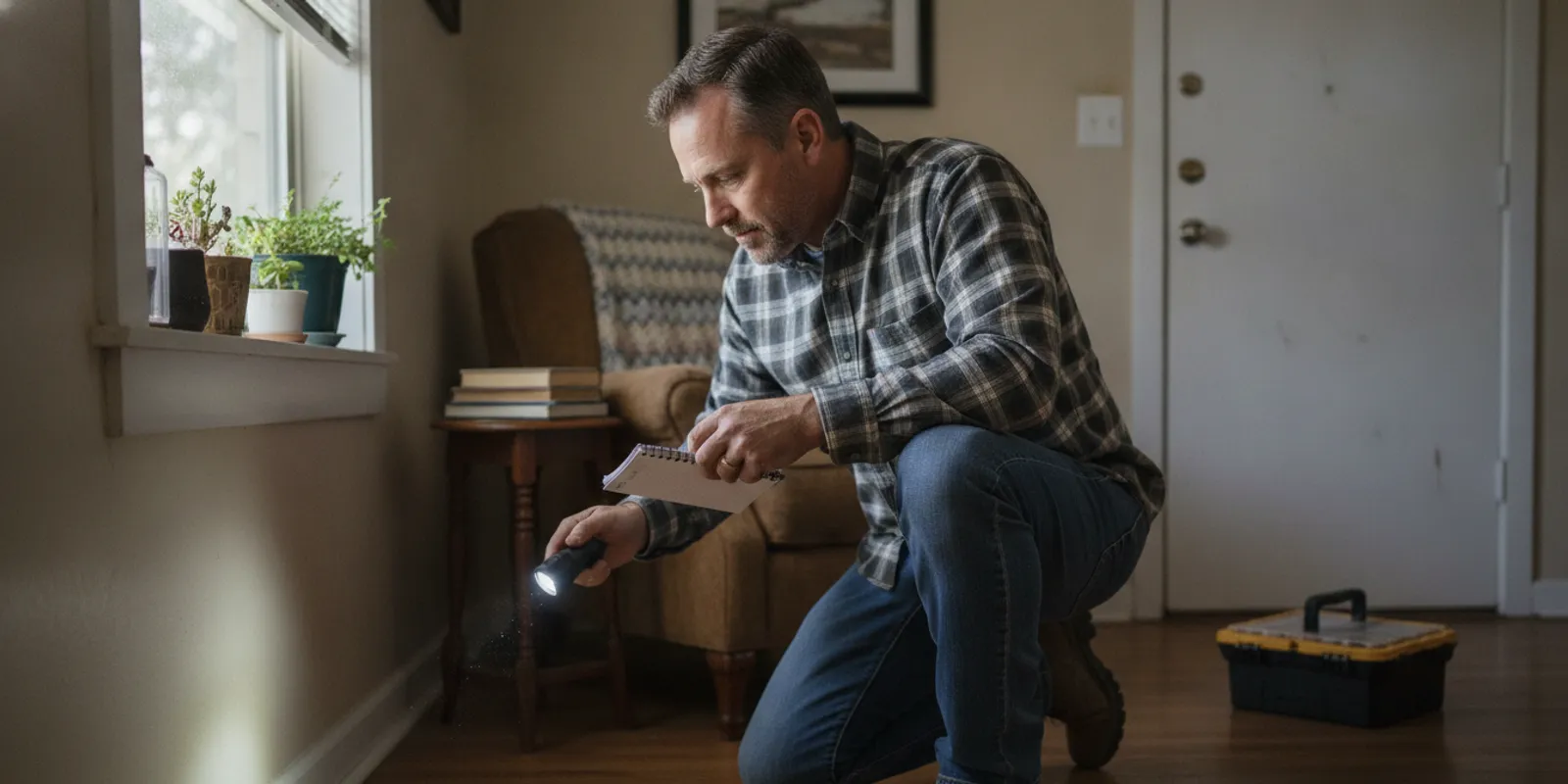
Begin at the bed or resting place closest to where you noticed activity. A systematic check is more useful than searching every room at once. Use a flashlight and move slowly. Inspect the places where fabric folds, seams meet, or parts of a frame join together. Do not take loose belongings through the home while investigating, since moving items can make it harder to track where a clue originated.
- Note the original sighting.
Write down the room, date, exact surface, and what you saw. If you noticed a mark on bedding, note which side or seam.
- Check the mattress carefully.
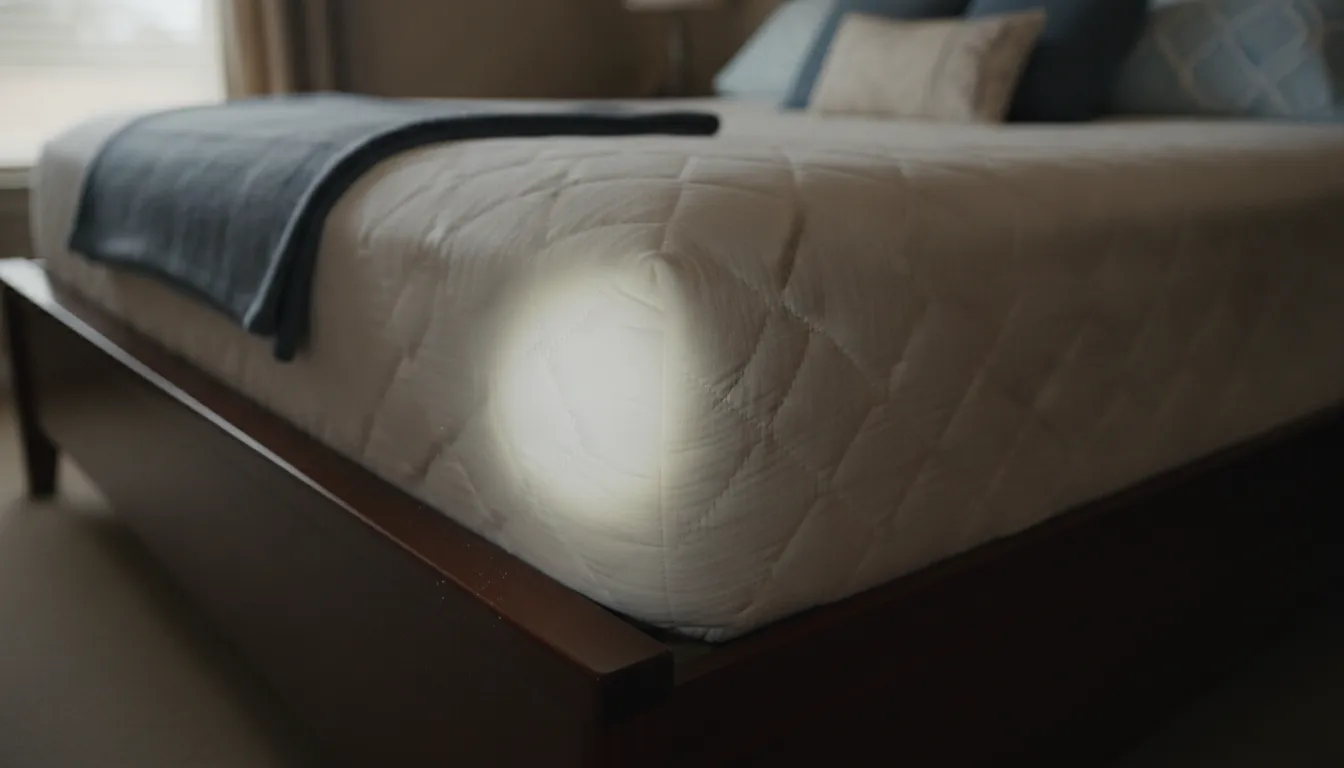
Look over seams, piping, corners, labels, and folds. Use the light to examine both sides and the edges without shaking bedding around the room.
- Inspect the box spring and bed frame.
Check accessible edges, joints, screw holes, and the underside where it can be viewed safely. Do not dismantle heavy furniture just to look into a hidden void.
- Look at the headboard and immediate surroundings.
Examine attachment points, nearby nightstands, and upholstered furniture close to the bed. Keep the search centered on relevant resting areas.
- Document, do not relocate.
Photograph a sign where it is, or capture an insect in a sealed container if that can be done without spreading it. Label the photo or container with the room and exact location.
- Pause if the evidence is uncertain.
Avoid spraying or discarding items based only on a suspected mark. Ask for an identification or inspection if you cannot tell what you found.
A clear record helps someone assess what you observed without requiring you to make a diagnosis. Include a close image and, if possible, a second image showing the item in context. Keep the original file rather than relying on a heavily cropped or edited picture. If the image is blurry, a written note about the location and conditions can still be useful.
How can you tell bed bugs from look-alikes?
Small household insects may share brown coloring, and a quick sighting can be misleading. Bed bugs are wingless and have a broad, flattened, oval shape. Carpet beetles may be more rounded and can have patterned coloring. Other insects may have wings, a different body outline, or different proportions. These comparisons are starting points, not a reliable identification from a vague description.
Use several features together: body outline, visible wings or lack of wings, approximate size, color in good light, and the place where the insect was found. A photo that shows the whole insect is more helpful than one that shows only a dark blur. If you find a specimen, keep it contained rather than crushing it or leaving it loose on a surface. Do not carry an unsealed sample from room to room.
Bites are especially unreliable for identification. Some people may have a visible reaction while others may have little or none, and marks can have other causes. The EPA's bed bug inspection guidance specifically warns that bite-like marks can be confused with reactions from other insects or skin conditions. If you have a rash, significant irritation, or another health concern, speak with a qualified medical professional; an insect guide cannot diagnose a skin condition.
What does a possible bed bug sighting mean?
A possible insect or mark calls for careful checking, not panic. Bed bugs can be transported in belongings, but their presence is not a measure of how clean a home is. You do not need to make a decision about treatment based on one uncertain clue. Start by preserving the evidence and avoiding unnecessary movement of furniture, bedding, or bags.
Try to distinguish an observation from an assumption. “Small reddish-brown insect on the bed-frame joint at 8 p.m.” is more useful than “the bedroom is infested” when the insect has not been identified. Similarly, “two dark spots along the mattress seam” records what you know, while “bed bug droppings” may overstate an uncertain finding. This careful language helps keep the next step focused on evidence.
Do not throw away a mattress or move furniture to another room solely because of a possible sighting. Those steps may create more work or spread belongings before the situation is understood. If you are in a rental, follow the property's reporting process and document what you found. Keep loose items out of shared spaces and ask the property manager how to coordinate an assessment.
How should renters and commercial properties respond?
For renters and apartment residents, note the location and date, preserve a photo or contained specimen when practical, and report the concern through the property’s established process. Avoid moving potentially affected items into hallways or shared laundry areas. A property manager may need to coordinate access or inspection in more than one area; one sighting does not, by itself, prove that an entire building is affected. For general expectations, see this guide to what to expect during a pest control inspection.
Commercial property owners should keep the response separate from household assumptions. Record the affected room or work area, where staff found the evidence, and whether it was near a regular resting area such as guest accommodations. Follow the business’s internal reporting and housekeeping processes, and limit movement of suspect belongings until a response plan is clear. A residential inspection request is not a substitute for determining the scope of a commercial property’s needs.
Pro Pest provides residential and commercial pest-control services, but the appropriate scope depends on the property type, suspected pest, ZIP code, and whether the request is for one-time or ongoing service. Homeowners can review the residential pest-control information, while business and property operators can review commercial pest-control information. Coverage should be checked for the specific address rather than assumed from a broad regional label.
What should you avoid before an assessment?
Do not decide that bed bugs are present based on bites alone.
Do not carry loose bedding, luggage, or furniture through the building without a plan.
Do not apply a pesticide to a mattress or other surface unless the product label permits that use and you can follow all label directions.
Do not assume one cleaning or one treatment step resolves every life stage; eggs and young insects can affect what follow-up is appropriate.
Do not discard furniture based only on an unconfirmed stain, speck, or insect.
Do not mix cleaning products or use a product in a way its label does not describe.
Do not treat every room or item without first understanding where the evidence was found.
Pro Pest describes a whole-house liquid treatment and a bed-bug-specific organic option in its service information. The inspection findings guide which approach may be appropriate. The organic option is specific to this bed-bug offering; it is not a claim that every treatment is chemical-free or suitable for every occupant. Read the bed bug service details for the documented service language, and ask about the method and any preparation instructions relevant to the property.
What information helps with an inspection request?
A useful request gives the provider enough context to check service fit and understand what prompted the call. Include the property type, suspected pest, ZIP code, whether you want a one-time or ongoing service, and where the evidence appeared. A short factual description is better than a firm diagnosis if you are unsure what you found.
Property type: home, apartment, hotel, office, or another commercial setting.
ZIP code and the room or area involved.
Date and time of the observation, plus whether it has happened more than once.
What the insect or sign looked like and its approximate size, if known.
Whether you have a photo or a contained specimen.
Whether you are seeking a one-time or ongoing service.
Pro Pest is based in Sealy and serves Sealy and surrounding areas. Its free, no-obligation inspection is a request, not a confirmed appointment or fixed-price quote. Service coverage should be checked using the property’s ZIP code before service is promised. You can learn more about Pro Pest and its Sealy-area service context, then send the property and pest details through the inspection request form.
How should different sightings shape your next step?
Different observations call for different kinds of documentation. The goal is not to diagnose the home from one clue. It is to keep the evidence in context and make the next check more useful. These examples show how to record what you know without assuming more than the observation supports.
If you see one moving insect
Take note of where it was moving and whether it was on a bed, upholstered chair, wall, or another surface. If you can take a photo, include enough detail to show the body shape and, when possible, another image that shows where it was found. A single insect could be a look-alike, so avoid labeling it as a bed bug unless it has been identified. If it can be captured without handling it directly or allowing it to escape, contain it and note the date and room.
If you find a dark spot but no insect
Write down the exact surface and whether the spot is in a seam, corner, or open area. Photograph the mark before cleaning it, and do not scrape or spread it across the fabric to test what it is. A mark without an insect or other clues may have several explanations. Check the nearby seams and joints carefully, then preserve the photo so the spot can be discussed with the rest of your observations.
If you find a pale casing or tiny speck
Compare the shape and location with surrounding material. A shed skin may resemble an insect outline, while a tiny pale speck may simply be lint. Do not collect loose debris from multiple rooms in one unmarked container; that removes the location information that gives a clue meaning. Photograph it in place and record whether there were other signs in that same protected area.
If you hear about bites but see no physical evidence
Do not treat the marks on skin as an insect identification. Note when they were first noticed and whether any physical sign has been found in the room, but avoid using the number or arrangement of marks to declare a pest. A medical professional is the right resource for questions about skin symptoms. For a property assessment, share the concern as a concern and describe what you have and have not found.
In all four situations, a simple log can prevent details from getting mixed up. Use one entry per observation with the date, room, surface, visible features, and any photograph filename. If you inspect again later, make a separate entry rather than rewriting the earlier note. This makes changes over time easier to understand and avoids turning an uncertain first sighting into a stronger claim than the evidence supports.
Bed bug identification questions
Can bed bugs be seen without a magnifying glass?
Adult bed bugs can usually be seen with the naked eye, although their small size and hiding places make them easy to miss. Nymphs and eggs are smaller and harder to identify. A flashlight, close inspection, and a clear photograph can help you document what you see.
Do bites confirm that bed bugs are present?
No. Bite-like marks can have other causes, and people can react differently. Look for physical evidence and seek an identification if the insect or signs are uncertain. Consult a medical professional for health concerns rather than relying on an insect article.
Where should I look first?
Start near the place where you noticed the evidence, then inspect mattress seams, the box spring, bed-frame joints, the headboard, and nearby furniture. Search methodically and avoid carrying loose belongings to other rooms.
Should I keep an insect I found?
If you can do so without spreading it, photograph it clearly or place it in a sealed container. Record the room and exact spot where you found it. Do not carry an unsealed specimen through the home.
Does one possible insect mean the whole home is affected?
Not necessarily. One sighting is a reason to preserve the evidence and check nearby areas carefully, not proof of the extent of a problem. A focused inspection can help determine what the evidence means and what response, if any, is appropriate.
If you suspect a bed bug, record what you saw and where you found it so the next step can be based on the evidence.
Comments