Types of Beetles: Common Household and Yard Identification Guide
Seeing beetles indoors or around a building raises a practical question: what types of beetles might be present, and what should you check next? A useful answer comes from combining body shape, markings, size, location, and activity rather than relying on color or one photo. A beetle near a porch light may be an outdoor visitor; repeated sightings near food, fabrics, or wood deserve a closer look. This guide helps Sealy-area homeowners and property managers record clues and choose a sensible next step without guessing at a species.
What makes a beetle identifiable?
Beetles are a broad group, not one household pest. Many have hardened front wings that form a shell-like cover over the hind wings. Beyond that shared feature, beetles vary in body shape, size, color, feeding habits, and preferred surroundings. Even insects that look similar in a quick glance may belong to different groups, and a common name may refer to more than one species.
Start by collecting observations rather than trying to settle on a name immediately:
- Shape:
Note whether the body looks round, oval, long and narrow, cylindrical, flattened, or noticeably tapered. Look at the outline from above.
- Markings:
Record spots, bands, stripes, mottled patches, or a difference between the head and wing covers. Color can change with lighting, so treat it as one clue.
- Size:
Estimate length, or photograph the insect beside a ruler or familiar object. Avoid handling it just to measure it.
- Distinctive features:
Note a visible snout, unusually long legs, ridged wing covers, or a compact rounded form. Do not assume a feature is present if the image is blurry.
- Where it was found:
Write down the room, shelf, window, door, outdoor surface, plant, textile, or wooden item nearest to it.
- How often it appears:
One insect is different from several found over days in the same place. Record dates and approximate counts.
If possible, take one photo from above and another from the side. Keep the image in focus and include a size reference in a separate frame. A note such as “two small oval beetles on the pantry shelf beside an opened grain package, seen on Monday and Wednesday” is more useful than “tiny brown bugs.”
Do not crush or discard every specimen before documenting it. If you can safely capture one in a closed container without touching it, keep it available for identification; otherwise, clear photos are a reasonable record. Avoid disturbing food, nests, or damaged materials more than necessary.
Which types of beetles may appear near a home?
The groups below are practical starting points, not a complete field key. They describe common settings and clues, not a diagnosis of any particular insect. A beetle found in a building may have wandered in from outside, and location alone cannot prove where it developed.
Ground beetles
Ground beetles are often dark and elongated, with noticeable legs and a shape suited to moving over soil or other outdoor surfaces. They occur in varied environments. The University of Minnesota Extension describes ground beetles as a common North American group found in settings such as fields and forests. That reference explains the group generally; it does not identify a beetle in a Texas home.
A ground beetle near an exterior door or window may be an incidental visitor. Check whether sightings recur indoors, especially away from openings. Inspect screens, door sweeps, and obvious gaps, and note whether the insects appear near outdoor lighting. For general background, see UMN Extension's ground beetle overview.
Carpet beetles
Adult carpet beetles are small and can have mottled markings. Their larvae may be more relevant indoors because some feed on natural fibers and other materials. An adult near a window does not, by itself, show that a carpet or garment is being damaged. Inspect undisturbed places where lint, pet hair, or susceptible stored items collect. Look for repeated activity and signs on the material rather than making a decision based on a single adult.
For the separate control topic, use Pro Pest's carpet beetle control guide. Do not discard belongings solely because one beetle was seen.
Pantry and stored-product beetles
Small beetles in a pantry can be associated with stored dry goods, but the insect's location does not establish which package is involved. Check opened and unopened packages, seams, shelf corners, crumbs, and nearby storage. Look for insects or damaged seals, and set questionable goods apart while checking. Note the specific shelf and package instead of assuming the nearest item is the source.
Keep unaffected food closed while you inspect. If you find insects or signs in a package, avoid spreading its contents through the cupboard; follow the product's disposal guidance and clean the affected shelf. If activity continues, document where further insects appear. Some stored-product beetles are very small, so a clear close-up and the package context may be more useful than an uncertain name.
Wood-associated beetles
Some beetles are associated with wood, but a small round hole or fine material under an item does not confirm active beetle activity. Holes can be old, and dust or damage can have other causes. Photograph the affected item, note whether new material appears, and check whether signs recur in the same location. Avoid scraping away evidence before recording it.
For focused information about this sign pattern, see the guide to wood-boring beetle signs. A single hole is not enough to determine the cause or whether activity is current.
Weevils
Many weevils have a snout-like extension at the front of the head, although appearance varies. Some are associated with plants and others with stored products. Record whether the insect was near a pantry shelf, dry goods, a houseplant, or an open window. A photograph from above can help show the head shape; do not rely on a common name alone.
If you suspect stored-product activity, inspect the shelf and nearby packages before deciding on a source. For additional source-checking steps, see Pro Pest's weevil guide.
Beetles seen outdoors
Beetles in a garden, on a path, or near exterior lights may be part of outdoor activity rather than evidence of an indoor problem. Note whether you see them on plants, under debris, on soil, or close to a doorway. If the question concerns a particular plant, record what part of the plant is affected and whether damage is visible; an insect nearby is not proof that it caused the damage.
Ground beetles are a useful example of why context matters: their presence outdoors does not mean they are breeding inside. Keep outdoor and indoor observations distinct, and look for a repeatable path or entry point before choosing any response.
How can location and signs narrow the possibilities?
Location does not prove identity, but it helps you select what to inspect next. Use the table as a note-taking guide, not as an identification guarantee.
Where you find activity | Clues to record | Useful next check |
Window or exterior door | One sighting or repeated; nearby light or opening | Check screens, door sweeps, and visible gaps; track indoor sightings separately |
Pantry or food storage | Specific shelf, package condition, crumbs, repeat activity | Inspect package seams and neighboring goods; separate questionable items |
Closet or textiles | Adult or larval forms, shed skins, fibers or stored items affected | Check corners, lint, pet hair, and undisturbed storage areas |
Wood or furniture | Hole size and location, recurring fine material, affected object | Photograph before cleaning and note whether signs reappear |
Garden, path, or exterior wall | Plant or surface, time of day, nearby debris or light | Observe whether the insect is outdoors only or also appears inside |
One feature rarely settles the question. A dark shell, small size, or shiny wing cover can occur in different groups. A useful record combines an image, approximate size, date, exact location, nearby material, and whether the observation repeats. Compare observations over time rather than drawing a conclusion from one moment.
How should you inspect without spreading the problem?
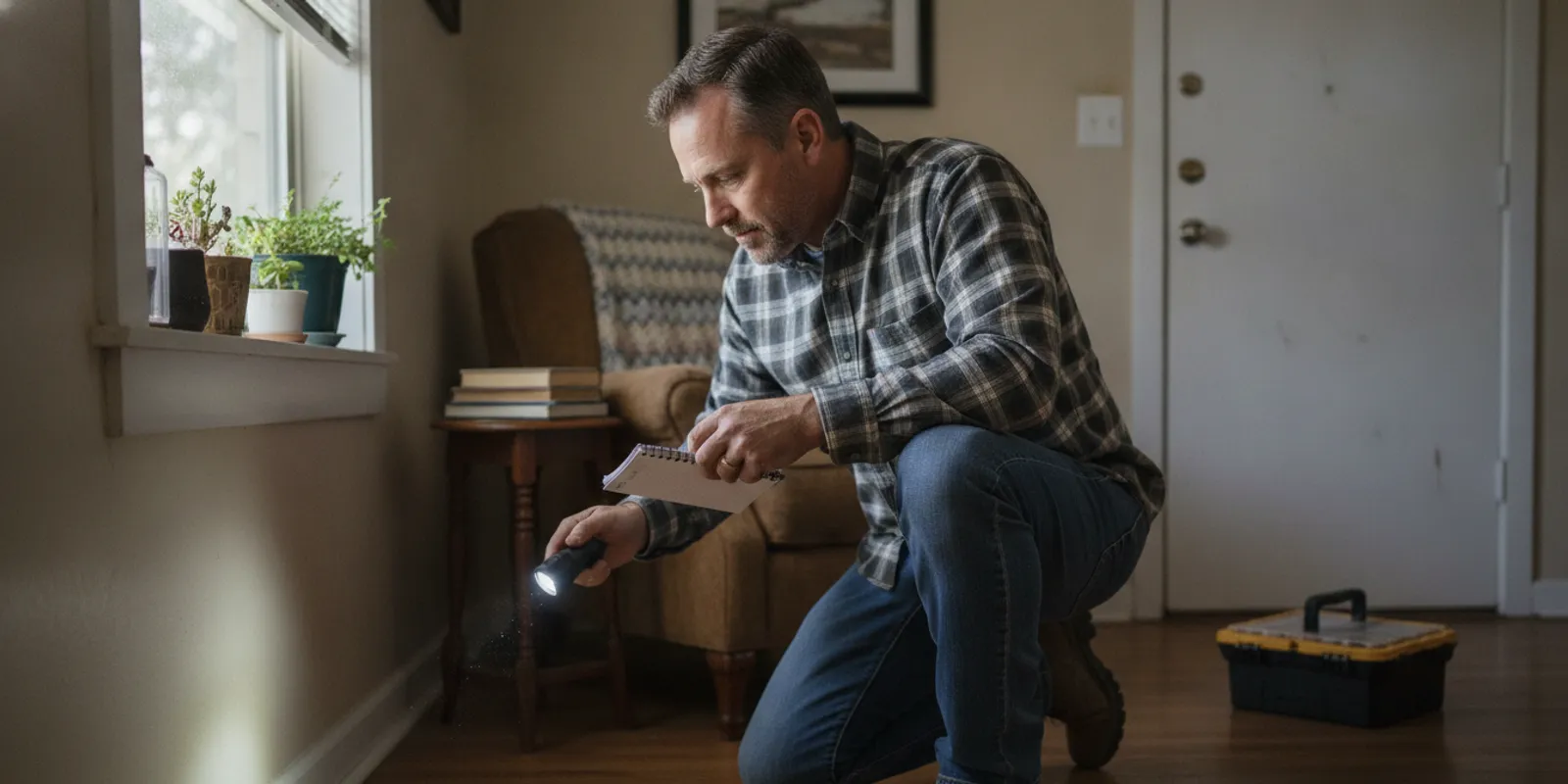
A short, organized inspection can reveal whether sightings cluster around one source. Begin with the place where you found the insect, then widen the check only if the signs point elsewhere.
- Make a simple site map.
Write the room and exact spot, such as “north pantry shelf” or “inside garage window.” For a business, identify the room or work area without including sensitive customer information.
- Check the immediate surroundings.
Look at nearby food packages, textiles, wood, plant material, lights, and openings. Do not empty every cupboard or move heavy furniture unless the signs justify it.
- Look for more than adults.
Depending on the group, additional insects or immature forms may be present. Record what you actually see; do not label a larva or patch of debris unless you are confident.
- Keep suspect items separate.
For food, close or isolate questionable packages while checking neighboring goods. For textiles, set aside the item for closer inspection rather than carrying it through several rooms.
- Photograph before cleanup.
Take images of the insect and any surrounding signs, then clean crumbs or lint where appropriate. A before-and-after note helps establish whether signs returned.
- Track recurrence.
Add date, approximate count, and location to a short log. Repeated sightings in one area can guide the next inspection more effectively than a list of guessed species.
For example, if one beetle appears on a windowsill and none are found again, check the screen and keep watching rather than assuming the pantry is involved. If several small beetles appear on the same pantry shelf on separate days, inspect that shelf's goods and seams first. If fine material returns beneath the same wooden item after cleaning, document that recurrence and seek a closer assessment. These examples show how the pattern changes the next check; they do not identify a species by themselves.
What should you avoid doing based on a beetle sighting?
A quick response can make it harder to find the source. Avoid treating every beetle as an indoor infestation or applying a product to a surface simply because an insect resembles an online image.
- Do not use color as the only test.
Lighting and worn markings can mislead, and different beetles can share colors.
- Do not assume the nearest object is responsible.
A beetle found on a counter may have arrived from another room or outdoors.
- Do not discard all food or fabric automatically.
Inspect first and focus on items with observed signs.
- Do not spray without identifying an appropriate use.
Product labels specify where and how a product may be applied. Never apply it to food, bedding, or another surface unless the label allows that use, and follow all label directions concerning children and pets.
- Do not seal evidence into a wall or throw away damaged wood immediately.
Record the location and signs before changing the area, especially when activity may be recurring.
Cleaning and closing obvious gaps can help reduce access or make monitoring easier, but those steps do not identify the insect or resolve every source. If you are uncertain, preserve a photo and describe the setting rather than attempting an aggressive treatment.
When is an inspection a useful next step?
One beetle near an exterior opening may be an incidental visitor. Consider requesting an inspection when sightings repeat, insects or possible damage appear in stored materials, or activity continues without a clear source. An inspection-led process starts by assessing conditions and activity; recommendations depend on what is found, not on a guessed label from a photograph.
For a home, note the room, dates, approximate number, nearby materials, and any recurring signs. For a commercial property, keep the description distinct: identify the type of space, affected area, operating constraints, and whether the activity appears in one location or multiple areas. A food-handling space, office, warehouse, or apartment setting may call for different inspection considerations. Do not delay a request because you cannot name the beetle.
Pro Pest is a Sealy-based, family-operated provider of residential and commercial pest control serving Sealy and its surrounding-area footprint. The free, no-obligation inspection is a request, not a confirmed appointment or fixed-price quote. Findings guide recommendations, and any treatment depends on the pest and conditions identified. See Pro Pest's service information for the service hub and inspection-led approach.
What should you include in a service request?
A useful request describes the observations and the property, even when the species is unknown. Include:
Whether the property is a home, apartment, office, restaurant, warehouse, or another setting.
Your town and ZIP code so service-area eligibility can be checked; do not assume every nearby city or ZIP is covered.
The room, structure, or outdoor area where the beetle appeared.
Approximate size, shape, color, number, and a clear photo if available.
When the activity began, how often it appears, and whether the same location is involved.
Any affected food package, textile, wooden item, or plant, describing only what you observed.
Whether you want to ask about a one-time service or discuss ongoing options.
Pro Pest's inspection request page is the appropriate next step for a new service inquiry. Submitting a request does not itself confirm an appointment or establish treatment scope. If you are a homeowner, focus on the affected room and household materials; if you manage a business or property, mention access limits and the areas that need assessment.
How do residential and commercial checks differ?
The basic identification clues are the same, but the inspection context changes. At home, a homeowner can usually focus on the immediate source area: one pantry shelf, a closet, a window, or an item of furniture. Keep photos and notes together, and check adjacent materials only when the evidence points there. This helps avoid turning one sighting into a whole-house search without a reason.
In a business or multi-unit property, record where the insect appeared in relation to the operation. A commercial owner may need to distinguish a public area, storage area, staff space, or building exterior. If activity appears in several rooms, record each location separately rather than merging sightings into one vague report. Note any times when an inspection would interfere with normal operations, but do not infer that a specific treatment schedule or commercial plan is available before discussing the findings.
For both settings, preserve records without making an unsupported species claim. A photograph, date, location, and recurrence pattern can be shared with an inspector. Pro Pest offers residential and commercial pest control, but the inspection and recommendations depend on the property, pest, ZIP code, and conditions observed.
How can you tell an incidental visitor from a recurring issue?
No single count proves that an infestation exists. Instead, consider how sightings cluster. An insect at a door after an evening with lights on suggests a different first check from repeated insects on one pantry shelf. Several sightings in separate rooms may indicate that the source is not obvious, while recurring signs around one wooden item make that item worth documenting. These are inspection clues, not definitive diagnoses.
Use a simple log with four columns: date and time, room or outdoor area, approximate count, and nearby material or opening. Add a photo filename if you have one. After a few observations, look for a pattern: do insects appear only near an exterior opening, only after moving stored goods, or repeatedly in one undisturbed area? That pattern can guide where to inspect and what details to share.
If the evidence stays limited to one outdoor edge or a single indoor visitor, monitor and address obvious access conditions. If activity repeats or there are signs on stored food, textiles, or wood, expand the check around that material. If the cause remains uncertain, ask for an inspection rather than escalating to broad pesticide use.
What are common identification mistakes?
Misidentification often begins when someone relies on a single characteristic or searches for a match from a poor image. Keep the following limits in mind:
- Scale is easy to misjudge.
A close-up without a size reference can make a tiny beetle appear large. Add a ruler or coin nearby without placing it against the insect.
- Color varies in photographs.
Warm indoor lighting, flash, and shadows can change a brown or black appearance. Take a second image in natural light if safe.
- Common names are broad.
A name used in one region may not match the species someone else has in mind. State the observed feature rather than forcing a name.
- Damage does not identify the cause by itself.
Holes, crumbs, fibers, or dust can have more than one explanation. Document where signs occur and whether they return.
- One adult may not reveal the source.
An adult near a window could have come from outdoors, while an insect found by a stored item may have another origin. Inspect before deciding.
When asking for help, say “small oval insect with mottled markings, found twice beside a closet rug” rather than naming a carpet beetle if you are unsure. Clear observations prevent a confident-sounding but unsupported guess from shaping the next step.
What details should you prepare before an inspection?
A little preparation can make a visit more focused without requiring you to clean or rearrange everything first. Keep the suspected area accessible if practical, but do not move heavy items or disturb potentially affected materials just to make the room look tidy.
- Collect the record.
Put photos, dates, approximate counts, and locations in one note.
- Identify the property context.
Give the property type and ZIP code, and say whether the concern is residential or commercial.
- Point out the pattern.
Explain whether sightings recur in the same location, involve multiple areas, or appear only near an opening.
- Describe possible affected items.
Mention food storage, textiles, wood, or plants only when you observed a relevant connection.
- List access considerations.
For businesses, note operating hours or areas that require coordination; for a home, note rooms or storage areas where activity was seen.
You do not need to empty a pantry, discard furniture, or apply a pesticide before asking for help. Keep questionable food sealed and separate while you determine what is affected. The goal is to preserve useful evidence and explain the conditions clearly, not to diagnose the pest on your own.
Identifying types of beetles starts with a careful record of appearance, location, and recurrence; use those clues to choose what to inspect and when to seek a closer assessment.
Comments