Hornet Vs Wasp: How to Tell the Difference
When a large stinging insect appears near your home, the question often is hornet vs wasp: what are you seeing, and what should you do next? Size and color can offer clues, but neither is enough on its own. Body shape, flight behavior, and repeated activity at one location give better context. Keep your distance while observing. If activity is near a doorway, walkway, play area, or work entrance, do not approach a nest to get a closer look.
What is the basic difference between a hornet and a wasp?
Hornets are a type of wasp. The word “wasp” describes a broad group of insects, while “hornet” is a common name used for particular kinds of wasps. In everyday conversation, people may call any large, intimidating wasp a hornet. That shorthand can make an insect sound more certainly identified than it is.
For a first comparison, many familiar wasps have a noticeably narrow waist and a slender body. Paper wasps may have long legs that hang down while they fly. Yellowjackets often look more compact, with strong yellow-and-black markings. European hornets are generally larger and more robust than many common wasps, and may show reddish-brown coloring with yellow markings. These are broad visual clues, not a guaranteed identification key. Several species share colors and shapes, and an insect seen briefly in flight may not offer enough detail for a reliable label.
There is also a difference between recognizing a general group and identifying the precise species. A person may be able to say that an insect looks like a social wasp without knowing whether it is a hornet, yellowjacket, or another kind. That distinction matters because the common name alone does not tell you where a nest is, whether the insect is entering a building, or what response is suitable. Avoid basing a treatment decision on an uncertain label.
Michigan State University Extension describes the European hornet as a large wasp active in spring, offering useful context for why size and season may attract attention. That page concerns European hornets, not every insect called a hornet: Michigan State University Extension’s European hornet overview. Penn State Extension’s account of the yellow-legged hornet describes that specific hornet as a predator of bees, wasps, and flies; it should not be generalized to every local stinging insect: Penn State Extension’s yellow-legged hornet overview.
Which visual clues can help distinguish them?
Look for several features at once and observe from a safe distance. Do not handle a living or dead insect to inspect it. A specimen may still be hard to identify, and getting close to a nest creates more risk than the extra detail is worth. If you can watch from indoors through a closed window, that is usually a better vantage point than standing near a suspected nest.
- Overall size and build:
A hornet may look larger and heavier-bodied than a common paper wasp. Apparent size can be misleading when the insect is near you or far from a background object. Do not use size alone as proof.
- Waist and body shape:
Many wasps have a narrow connection between the thorax and abdomen. Some look long and slender, while others are compact. A quick glimpse from the side may hide the body shape.
- Legs:
In some paper wasps, long legs hang below the body during flight. This can be a useful clue when visible, but it is not a reliable feature if the insect is moving quickly or partly obscured.
- Color and pattern:
Yellow-and-black markings occur in more than one kind of wasp. Reddish-brown areas may be visible on some European hornets. Shade, sunlight, distance, and motion can all change what a person thinks they see.
- Flight and route:
Repeated trips to one opening can suggest a nest or entry point nearby. A single insect passing through the yard does not prove that a nest is on the property.
- Setting:
The location of a nest or repeated traffic may add context, but does not identify the insect by itself. A visible paper-like structure may be inactive, hidden activity may have no visible nest, and different insects can use sheltered spaces.
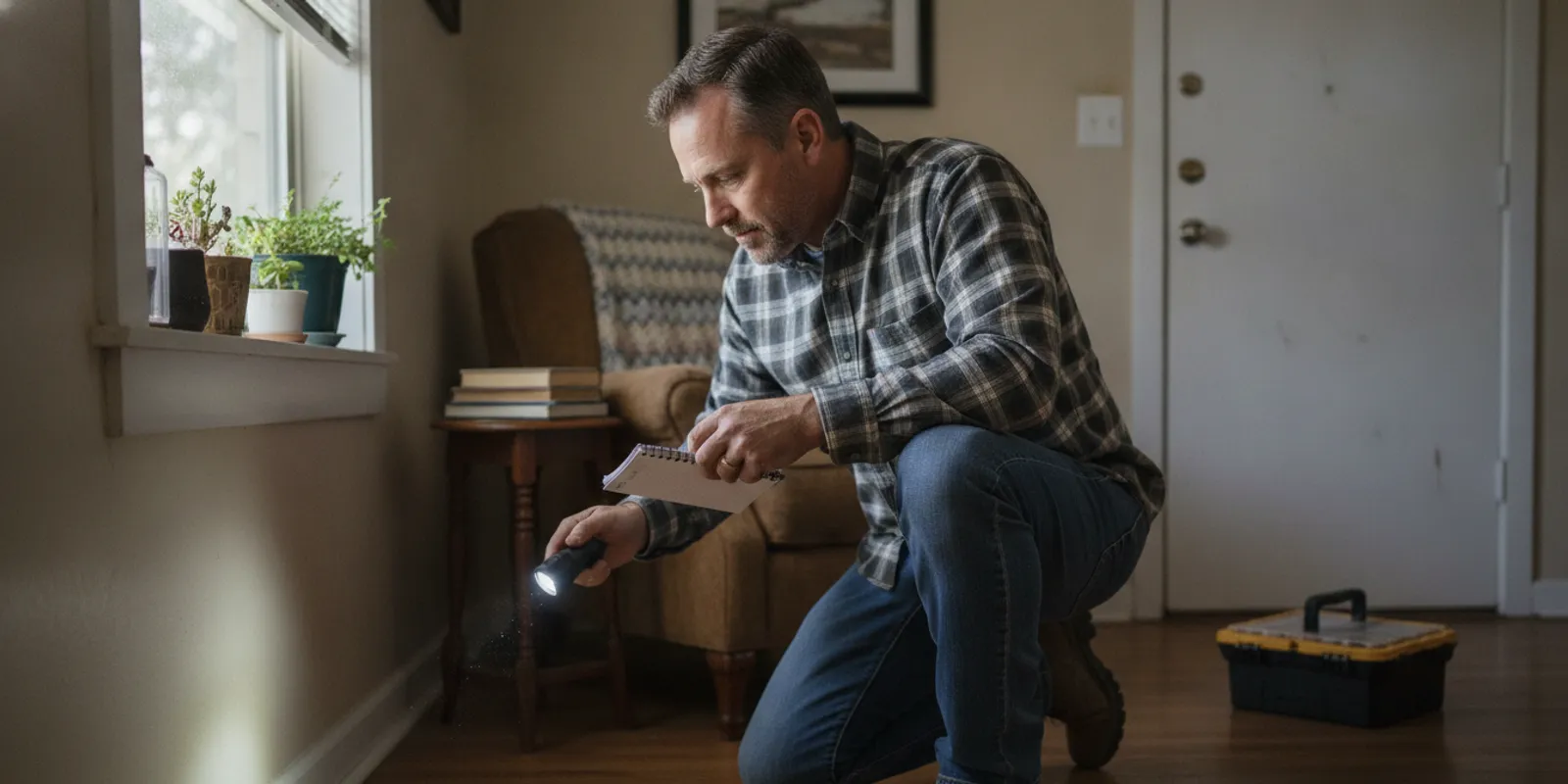
Make a short observation record rather than trying to settle the species question immediately. Note the approximate size, colors, time of day, location, and whether the insect flies alone or returns to a consistent point. If you are unsure whether the movement is repeated, observe again later from the same safe position. A written description of several observations is often more useful than one blurry photograph taken while moving closer.
How can you compare likely clues without overreading them?
A simple comparison can help organize what you see, but it cannot replace a careful identification. Treat each row as a prompt for observation, not a rule that proves a species.
Clue | What you might notice | What the clue can and cannot tell you |
Build | Some wasps appear slim; a hornet may look more robust. | Useful as one visual clue, but perspective and viewing angle can distort apparent size. |
Markings | Yellow and black are common on several wasps; some European hornets have reddish-brown areas. | Color narrows possibilities only a little and is not a species diagnosis by itself. |
Legs | Some paper wasps show long legs trailing in flight. | May support a tentative observation if visible, but not all views show the legs clearly. |
Repeated flight | Insects repeatedly enter or leave one opening. | Suggests a location to report; it does not reveal the exact species or nest size. |
Nest context | Activity occurs at an eave, shrub, tree, shed, or wall gap. | Helps describe the situation and access, but location alone does not identify the insect. |
For example, suppose you see a yellow-and-black insect moving between a hedge and a small gap in an outbuilding. The color and route may support the possibility of a wasp nest nearby, but they do not tell you whether it is a hornet or another kind of wasp. You can report the hedge, the gap, and the repeated movement without deciding the species. That is a more dependable account than saying “there is definitely a hornet nest” based on a brief look.
Now consider a single large insect crossing the yard without returning to a particular point. It may be a passing forager, or you may not have watched long enough to see a pattern. Record what happened and avoid assuming that a nest is in the yard. If activity becomes consistent, update your notes. This distinction helps avoid both unnecessary alarm and false reassurance.
Does nest location identify the insect?
Nest location is useful context, not a definitive label. Social wasps may build in sheltered or exposed places, depending on the kind of insect and conditions. A nest might be visible near an eave, under a ledge, among branches, or in another sheltered spot. In other cases, repeated activity may lead to a gap in a wall, roofline, shed, or other structure where the nest itself cannot be seen.
A paper-like structure does not automatically mean an active wasp nest. It may be inactive, damaged, or mistaken for a structure made by another insect. Likewise, not seeing a nest does not prove there is no nest nearby. Observe the pattern of traffic over time from a distance, but do not tap a wall, shake a branch, shine a bright light into an opening, or place an object near the suspected nest to test whether it is active.
Use a protected viewing point if you need a better look. Binoculars from indoors can help you see whether insects repeatedly approach one point without walking toward it. Avoid standing below a suspected nest or in the path between the nest and a likely food source. Do not use a flash close to an active nest. If a photo is not possible without getting nearer, skip the photo.
When activity appears to come from inside a wall void or another hard-to-reach space, do not seal the opening. Blocking an active route may redirect insects into the building or leave the nest unresolved. A professional assessment can consider the opening and observed activity before a treatment recommendation is made. Describe the location and route; you do not need to open, probe, or dismantle anything to make the report useful.
How should you observe a suspected nest safely?
Start by making the area safer, not by proving the species at close range. Keep children and pets away from a suspected flight path. If activity is beside a frequently used entrance, use another route where possible and tell household members or staff which area to avoid. For a business, temporary directions can help customers and employees steer clear without disturbing the nest.
- Choose a distant observation point.
Stay indoors or behind a closed window if it gives you a view. Do not stand directly beneath, beside, or in front of a suspected nest. If the insects change their flight pattern because you are nearby, move away rather than continuing to watch.
- Look for repeated traffic.
A steady return to one location is more informative than one sighting. Watch briefly from the same safe point and note whether insects enter or leave the same gap or structure.
- Record the setting.
Write down whether the activity is near a door, eave, tree, shrub, fence, wall opening, shed, or outdoor seating. Note the closest routine-use area and any route people can avoid.
- Keep the record factual.
Describe approximate size and visible colors as impressions. Record dates or times if activity recurs. Avoid treating a tentative visual guess as a confirmed species.
- Reduce immediate exposure.
Keep people from lingering near the route. Cover outdoor food, close waste containers, and clean spills, while recognizing that these steps do not remove an established nest.
- Decide what needs attention.
A nest far from people may be less urgent than repeated traffic beside a doorway or busy work area. If the location is hard to access or activity is indoors, seek advice rather than trying to investigate it yourself.
Do not use fire, fuel, household cleaners, or improvised mixtures. Do not knock down a nest or spray into a wall void. Such attempts can provoke stings, damage property, or make the source harder to assess. If you use any pest product for a permitted purpose, follow its label directions. Do not apply a product to a nest unless the label specifically permits that use and you can follow every direction safely. When uncertain, leave the nest undisturbed and request an assessment.
What should homeowners do about wasp activity?
For a homeowner, the first distinction is between a passing insect and repeated activity at a location people use. A solitary sighting in the garden may call for observation rather than action. Repeated entry and exit at an eave or wall gap deserves documentation, especially if that spot is close to a door, patio, or play area. Do not try to make the insects leave by hitting the structure or spraying the route.
Practical prevention is about limiting easy food and checking ordinary building barriers. It cannot guarantee that wasps will stay away, especially if a nest is already established nearby.
Keep outdoor rubbish in closed containers, and clean food or drink spills promptly.
Cover food and sweet drinks during outdoor meals. Bring leftovers indoors after the meal rather than leaving them exposed.
Check screens, door sweeps, and frequently used doors for gaps that could let insects indoors.
Notice repeated insect traffic from a safe distance instead of searching inside roof or wall spaces.
Use another entrance when practical if a suspected flight path is beside a doorway.
Tell family members, visitors, or contractors to avoid the area until the activity is assessed.
These steps address accessible food and routine contact. They do not identify a nest, remove one, or establish that an insect is harmless. If you rent, share the observation with the property manager and avoid opening building materials or applying a treatment yourself unless you have appropriate authorization and instructions.
Pro Pest is a Sealy-based residential and commercial pest-control provider. Its residential process describes inspecting interior and exterior areas for activity and conditions, then recommending targeted treatment; optional exterior follow-up may be available. The appropriate next step depends on the activity and property. See residential pest control in Sealy or review the range of Pro Pest services.
What changes when the activity is at a business?
For a commercial property owner or manager, the insect’s exact common name is only one part of the decision. Consider how the location affects customers, employees, deliveries, outdoor dining, or routine maintenance. A nest near a staff-only storage area may create a different operational concern from one beside the main customer entrance. Neither situation calls for a close-up check by an employee.
Make a brief site note that gives a practical picture of the issue. Include the area of the property, the nearest occupied space, the times when traffic is most noticeable, and whether the insects repeatedly enter a single opening. If the activity is close to an entrance, direct people to another entrance where possible. If it affects a loading or service route, coordinate a safe alternate path with the people who use that area. Do not ask staff to knock down a nest or test whether it is active.
Commercial and residential settings have different use patterns. A restaurant may need to account for outdoor seating and food handling; an office may need to keep a routine entry clear; a warehouse may need to consider the movement of workers and goods. These examples describe questions to assess, not a promise that every operating condition can be resolved in the same way. A commercial recommendation should account for the pest, property, and how the affected space is used.
For business-specific service context, review commercial pest control information. When requesting help, describe the property type and the affected area rather than relying only on a guessed insect name.
When is an inspection a useful next step?
Consider requesting an inspection when you repeatedly see insects entering or leaving one location, when a nest is near a doorway or other high-use area, or when activity is inside a wall or another hard-to-reach space. A single insect does not prove a nest is present. Recurring traffic, however, is useful information to share with someone assessing the property.
An inspection-led approach begins with the observed conditions and activity, then considers a targeted recommendation. For a homeowner, the useful details may include the room or exterior area, nearby entry points, and whether insects have been seen indoors. For a business, add the affected entrance or work area and how people currently move around it. The goal is to describe the situation accurately, not to choose a treatment before the source is understood.
Pro Pest describes its base as Sealy and its service as covering Sealy and surrounding areas. Houston and Katy are target markets, not confirmation that every address is eligible. Share your ZIP code and ask whether the specific property can be served. A request for a free, no-obligation inspection is not a confirmed appointment or a fixed-price quote. To understand the process, read what to expect from a pest control inspection.
When considering any recommendation, ask what activity was observed, where the suspected source is, and what the proposed next step addresses. If the source is uncertain, ask how that uncertainty affects the recommendation. For a structure with an inaccessible void, ask how the entry route and surrounding area will be assessed; do not attempt to answer the question by sealing the opening yourself.
What information should you share when requesting help?
A clear request lets an inspector understand the context without asking you to get closer to the insects. Before submitting a request, gather the information you already have. Do not delay a request because you cannot identify the species, and do not approach the nest to fill in missing details.
- Property details:
Give the ZIP code and say whether the property is a home or commercial site. If you manage a business, state the relevant property type.
- Location:
Describe where the insects appear: for example, near an eave, shed, doorway, hedge, roofline, or wall gap. Identify nearby areas used by residents, customers, or staff.
- Pattern:
Say whether this was one sighting or repeated traffic to a single point. If known, include approximate times and how long you have noticed the pattern.
- Appearance:
Share approximate size and colors as observations, not a certain species identification. Mention that the view was distant or brief if details are uncertain.
- Access and use:
Explain whether the area is easy to reach, whether activity is indoors, and whether people can use another entrance or route.
- Service preference:
Say whether you want to discuss a one-time response or ongoing pest-control needs. Do not assume a standard visit schedule or treatment plan.
If you have a photograph taken safely from indoors or another protected position, mention that it is available. A photo is optional; it is not worth walking toward a nest. The date, location, and route may be more useful than a close image. Keep any immediate safety steps simple: limit access to the area and do not disturb the insects.
Use the inspection request form to share property and activity details. If the insect turns out to be a different kind of wasp, other guides may help with general clues, including this article on identifying a black wasp and the guide to mud dauber wasp nests. Those guides do not replace an assessment of a nest in a risky location.
How do common sighting situations change your next step?
Two sightings that look similar can call for different observations because the insects are using different parts of the property. Think about what is happening around the sighting, not only what the insect looks like. The examples below show how to turn a vague concern into a useful, cautious next step.
A large insect passes through the yard once
If you see one large wasp fly across the yard and do not see it return, record where and when it happened, then continue to observe from a normal safe location. One insect alone does not establish that a nest is present. Do not follow it, search under nearby branches, or inspect holes in the ground. If the same route or point becomes active on later observations, update your notes and consider whether the location is near people.
Several insects repeatedly enter a gap near a door
Repeated entry and exit at one gap is more actionable than a single passing insect, even if you cannot identify the species. Keep people from standing beside the opening and use another entrance if possible. Note which gap is involved, how often you see traffic, and whether insects appear to enter the building. Do not plug the gap, spray into it, or pull away nearby trim. Give those observations to the person assessing the property.
Activity appears near a tree or shrub away from a path
A nest or flight route in a part of the yard that people rarely use may be less immediately disruptive than one at the front door, but do not assume it is safe to handle. Keep children and pets away and avoid pruning, mowing, or moving equipment close to the activity until you understand where the insects are coming from. Note the distance from routine paths and whether the activity increases at particular times. A location away from the house does not by itself identify the insect or prove the nest is inactive.
A business sees activity beside an entrance during operating hours
Prioritize a practical route around the activity. Tell employees what area to avoid, direct customers to another entrance if that is feasible, and record which doorway or outdoor area is affected. Do not ask a worker to get a close photograph during a busy period. A brief report that distinguishes the entrance, operating schedule, and recurring flight path can help an inspection focus on the impact to the property.
These examples do not set a universal threshold for when a nest must be treated. Location, repeated activity, access, and the use of the area are all relevant. The same insect at a secluded corner and beside an occupied doorway presents different practical conditions. An inspection request can describe those conditions without claiming a species or selecting a treatment in advance.
Frequently asked questions
Are hornets more dangerous than other wasps?
The common name alone does not determine the risk. The species, nest location, and circumstances all matter. Any active stinging-insect nest can be a concern if people approach or disturb it. Keep your distance and seek appropriate help when activity is near a routine-use area.
Can I identify a hornet from its color alone?
No. Several wasps share yellow-and-black markings, and distance, lighting, and individual variation make color an incomplete clue. Consider size, body shape, movement, and nest context together, and keep the identification tentative unless it is confirmed.
Does one wasp mean there is a nest?
Not necessarily. A single insect may be passing through or foraging. Repeated traffic to one point is more useful evidence that a nest or entry route may be nearby, though it still does not prove the species or exact nest location.
Should I remove a nest that looks empty?
Do not assume a nest is inactive based on a brief observation. Avoid touching or dismantling it. If it is near a busy area or you are unsure whether it is active, request an assessment rather than testing it yourself.
Will sealing a gap stop insects from entering?
Sealing may be part of prevention when an opening is confirmed as an entry point and there is no active nest inside. Do not block an opening with repeated insect traffic before its use is assessed; doing so can redirect activity into a building or leave the source unresolved.
The safest way to approach hornet vs wasp identification is to combine distant observation with careful notes, not a close approach. Keep people away from active traffic, avoid disturbing a suspected nest, and request an inspection when recurring activity or its location creates a concern.
Comments