Mud Dauber Wasp for Sealy-Area Homeowners
A mud dauber wasp can leave a small mud structure on a wall, eave, shed, or garage, but the nest alone does not always tell you whether it is active or what kind of wasp made it. If you are deciding whether to leave it alone or have it checked, start with observation from a safe distance rather than scraping or disturbing it. This guide explains what to look for and when an inspection request may be the sensible next step.
What is a mud dauber wasp?
Mud dauber is a common name for certain solitary wasps that build nests from mud. Rather than forming a large social nest with a group of workers, a female constructs individual cells or small clusters of cells, then provisions them for developing young. The exact appearance and construction can vary, so a mud tube, cluster, or patch on a structure is a clue—not proof of the wasp species or whether the nest is currently in use.
Some mud daubers hunt spiders as food for their developing young. Research has examined nest ecology and prey preference in Sceliphron mud dauber wasps, but the study should not be treated as an identification guide for every mud nest found around a home. Read the study on Sceliphron nest ecology and prey preference for that specific research context.
The practical point for a property owner is simple: a mud structure can be part of a wasp's nesting activity, but one photograph or glance may not settle the identification. Consider the nest's shape and location alongside what you observe around it. Do not put yourself close to a suspected nest to collect those clues.
What can a mud dauber nest look like?
Mud dauber nests are made from dried mud, often in small tubes, rounded cells, or attached clusters. They may be placed on a sheltered surface such as an eave, porch ceiling, garage wall, shed, or another protected spot. A nest can be easy to miss when it blends with the surface, and some nest structures may have openings or be partly covered with mud. Appearance depends on the wasp and its building behavior, so there is no single outline that guarantees an identification.
Look only from a position where you can remain several feet away and leave a clear path back indoors. Note the general form, approximate size, height, and surface. If you can do so without approaching, take a zoomed photograph. A photo can help communicate what you saw, but it is not a substitute for a close examination by a qualified professional when identification matters.
Do not tap the structure, poke an opening, pull at the edges, or place a ladder beside it to get a better view. Those steps can disturb an insect, damage the surface, or put you within reach of a wasp that you have not identified. If you cannot observe safely from the ground, leave the inspection to a professional.
When comparing a possible nest with what you expect a mud dauber nest to look like, use a group of clues rather than a single feature. Ask whether the material appears to be dried mud, whether it is attached to a sheltered surface, and whether wasps repeatedly approach it. A nest's shape can be altered by weather, age, damage, or the surface beneath it. Even an apparently familiar tube or cluster does not establish who built it. If the structure is partly hidden, painted over, or mixed with debris, acknowledge that uncertainty instead of trying to expose it.
The surroundings can also help explain why a structure caught your attention without confirming its identity. An eave or porch ceiling offers cover from rain; a garage or shed may provide a quiet surface. Those are observations about the location, not a diagnosis. In a short note, separate what you can see from what you infer: for example, “small dried mud tubes under the garage eave; two wasps seen nearby” is more useful than “a large active infestation” when you have not confirmed either activity or species.
How can you tell whether the nest is active?
Repeated wasp traffic to and from a nest is a useful sign to report, but it does not by itself identify the species. A single sighting near a wall is even less conclusive: a wasp may simply be passing through. Watch from a protected indoor location or a safe distance outdoors, and record what you see without blocking the insect's path.
An old, dry-looking nest may be inactive, but appearance alone is not a reliable test. A closed cell or small opening does not tell you whether a young wasp is developing inside, whether the nest has already been used, or whether another insect is involved. Avoid treating a nest as abandoned based only on a lack of activity during a brief glance. If the distinction affects what you plan to do, ask for an inspection rather than opening the structure.
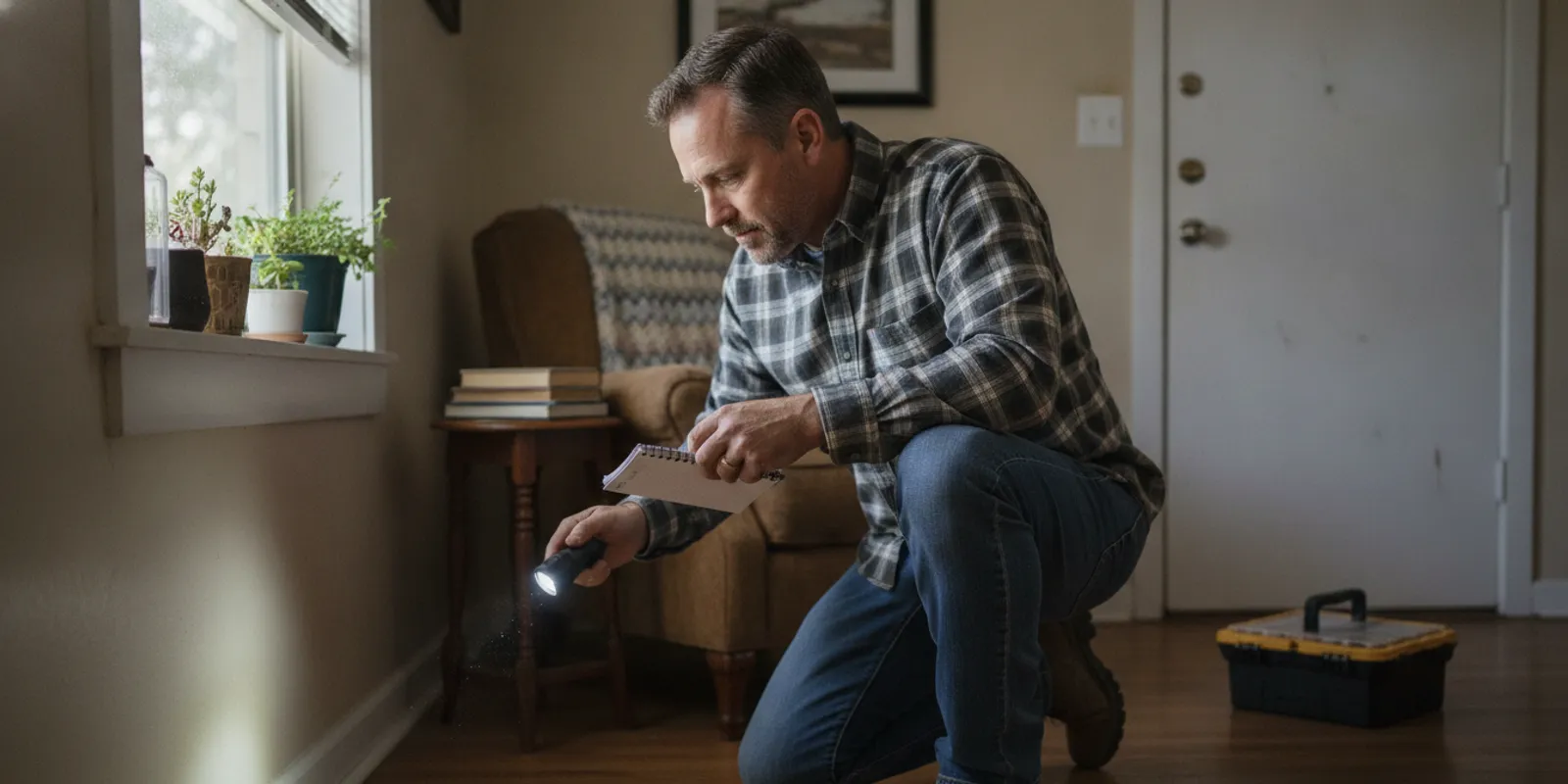
A simple observation note can make the next decision clearer:
Where is the nest: indoors, on an exterior wall, beneath an eave, or on a detached structure?
How high is it, and can it be reached without a ladder?
Have you seen repeated wasp visits, and at what general time of day?
Is the nest near a doorway, walkway, outdoor seating area, play space, or work area?
Has anyone been stung, or is anyone in the household or workplace especially concerned about a nearby nest?
You do not need to monitor the nest for a long period or approach it to answer these questions. If you feel unsafe, stop observing and keep others away from the immediate area.
If you choose to observe, keep it brief and passive. You might look from a closed window or from a position well outside the insect's flight path, then write down the time and whether you noticed repeated arrivals or departures. Do not stand directly below the structure, shine a light into openings, or wait in a spot that makes it difficult to move away. A short, cautious observation can provide context; it does not need to become a prolonged watch or an attempt to count every insect.
It can help to distinguish three different observations. “I saw a wasp nearby” describes one insect at one moment. “I saw wasps return to the same opening more than once” describes a pattern that may be relevant. “The nest is active” is a conclusion that may require an inspection. Report the first two accurately and avoid presenting the third as certain if you do not know. That simple distinction keeps a request useful and prevents unnecessary confidence based on limited evidence.
Are mud dauber wasps a reason for concern?
Finding a mud dauber nest does not automatically mean that a property has a serious wasp problem. Solitary nesting behavior differs from a large social colony, and the presence of one mud structure is not evidence of a widespread infestation. Still, a wasp can sting if it is handled, trapped, or pressed against skin, and a nest in a place people must use may create a practical safety concern regardless of the species.
Use extra caution if someone has a known severe reaction to stings, if children or pets may reach the nest, or if it is beside a frequently used entrance. Do not try to test how defensive the wasps are. Keep people away from the nest, do not swat at insects, and avoid sealing an opening or blocking a flight path. If a person has a severe or rapidly worsening reaction after a sting, seek emergency medical help.
For a business, consider the location and the people using it. A nest by a staff entrance, customer walkway, loading area, or outdoor dining space may need prompt attention even if it is small. A nest in a rarely used, out-of-the-way location may call for a different decision. The key is to assess access and exposure without making assumptions about risk from the nest's size alone.
Think in terms of exposure: who uses the area, how often they pass it, and whether they can reasonably avoid it while the concern is assessed. A nest high above a seldom-used section of an outbuilding presents a different access problem from one above a door that serves as the only practical route into a home. This comparison does not label one nest harmless and the other dangerous. It helps you prioritize which situation to describe first when asking for guidance.
Also consider whether the concern can be managed temporarily without disturbing the nest. A household may use another entrance, move outdoor seating, or keep a pet away from a corner. A business may redirect foot traffic or temporarily limit access to one section. These are exposure-reduction steps, not a treatment, and they should not put anyone closer to the nest. If a safe alternate route is not available, say so when requesting help.
Should you remove a mud dauber nest yourself?
There is no need to rush into removal just because you found a nest. First consider whether it is in a place where people or pets are likely to disturb it, whether you have a confident identification, and whether you can address it without getting close. If the nest is high, near a doorway, inside a work area, or still receiving wasp visits, do not attempt a do-it-yourself removal.
Household tools and improvised methods can make the situation less predictable. Avoid hitting, scraping, burning, spraying at close range, or knocking the nest down from a ladder. Do not use a pressure washer or direct a stream of water at it. These actions can bring you near the nest, scatter debris, damage a finish, or provoke an insect. They may also fail to address the source of activity if the structure is misidentified or another nest is nearby.
If you are considering removing a small, clearly empty structure in a low-risk location, take time to confirm local guidance and use appropriate protective precautions; do not handle a nest if you are uncertain it is inactive or if anyone may be exposed. This article cannot determine from a description whether a particular nest is safe to remove. When the nest's status or species is unclear, a professional can inspect the conditions and explain the available next step.
It is also useful to distinguish removal from prevention. Taking down a visible nest does not establish why a wasp chose that spot or guarantee that insects will not return. A property owner can note sheltered locations and activity, but should not assume that a nest removal alone resolves every possible pest concern.
Before deciding on any do-it-yourself action, walk through the decision in order without approaching the nest. First, ask whether people can stay clear of the spot. Second, consider whether the structure is low enough to inspect from the ground and whether you are certain of its status. Third, consider whether you would have to use a ladder, work overhead, reach around a corner, or handle an insect to proceed. If any answer raises a concern, stopping is a reasonable outcome. The purpose of this checklist is not to give a removal recipe; it is to identify when uncertainty or access makes self-help a poor fit.
Next, consider what could be affected besides the nest. A scraper can mar siding or a painted surface; forceful water can spread mud and debris; a ladder can make a quick task more hazardous if you need to move suddenly. A method that appears simple from the ground can become difficult when the nest is beneath an eave or near wiring, a light fixture, or an entry. If you cannot see the whole working area from a safe position, do not assume that the task is straightforward.
For a property manager, the same principle applies to assigning work. Do not send an employee or tenant to remove an uncertain nest simply because it is small or visible. Record its location, limit access if practical, and decide whether a professional inspection is appropriate. That keeps the decision focused on the actual conditions rather than on who happens to have a ladder or a can of spray available.
What should you do if the nest is near a home entrance?
When the nest is close to an entry door, garage opening, patio, or walkway, focus first on reducing contact. Use another route if one is readily available, keep children and pets away, and do not stand beneath the nest to observe it. If you need to pass nearby, do not wave your arms or try to knock insects away. Avoid propping open a door directly below active wasp traffic.
Then decide whether the location makes the nest difficult to leave undisturbed. A nest above a little-used corner may be less urgent than one over a main entrance that household members must use several times a day. That does not establish a treatment method; it helps explain the problem clearly when you seek advice.
For a Sealy-area home, Pro Pest describes an inspection-led residential process: the technician checks for pest activity, damage, conducive conditions, and entry points before recommending targeted work. Residential treatment may include relevant interior and exterior areas, with optional exterior follow-up if chosen. The exact recommendation depends on inspection findings, the pest, the property, and the requested service. Learn more about residential pest control in Sealy.
A request for a free, no-obligation inspection is a request, not a confirmed appointment or a fixed-price quote. Share the nest's location, how often you have seen wasps, and whether people must pass nearby. If you are unsure whether the property is within the current service area, provide its ZIP code when you contact the company rather than assuming coverage.
Make the temporary access plan specific. For example, if the nest is over a garage-side door and a front door is available, tell household members which entrance to use and remind them not to linger under the eave. If the garage door is the only route for a person with mobility needs or for necessary equipment, explain that constraint rather than suggesting an alternative that will not work. Keep the plan simple enough that visitors, delivery workers, and children can follow it.
When you describe a home entrance concern, include whether wasps have been seen near the doorway itself or only near the nest. Those details are different. You can also mention whether the entrance is used occasionally or throughout the day. Avoid provoking activity to gather a clearer answer. If you cannot safely tell, say that the level of activity is unknown.
How should a business handle a mud dauber nest?
For a commercial property, consider who uses the area and how often. A nest near a customer-facing entrance, restaurant seating area, employee door, loading zone, or hotel walkway may be a greater operational concern than one on a seldom-used exterior wall. Document the location and any observed activity, then restrict access if practical while you decide what inspection or service is appropriate.
Keep the response proportionate. Do not tell employees to knock down nests, spray unknown insects, or climb to inspect them. Assign one person to record observations from a safe location and communicate the issue to the property manager. If a tenant or customer reports a sting, document the incident through the business's normal safety process and seek medical help for a severe reaction.
Pro Pest describes commercial pest-control services for property types including apartments, restaurants, hotels, offices, and warehouses. The specific service approach, timing, and terms are not published as one universal plan; they should be discussed in relation to the property, pest concern, and inspection findings. A property owner or manager can review commercial pest control in Sealy and describe the location and use of the affected area when requesting information.
Businesses should also avoid promising occupants that an issue is resolved before the property has been inspected and any agreed work is completed. Clear communication helps: say where the nest was seen, what access has been limited, and what follow-up is being arranged. Do not describe a single sighting as proof of a building-wide infestation.
A manager can make the report more actionable by identifying the exact building and area, such as “east employee entrance, under the canopy” instead of simply “outside.” Note whether that entrance can be closed or whether deliveries, customers, or staff still need to use it. If the area is shared by tenants, let the responsible property contact know what temporary access measure is in place. Avoid broadcasting an unconfirmed species identification or an alarmist description; communicate what has been observed and what remains uncertain.
For a site with several buildings, record whether the concern is one nest or multiple separate structures, and whether those structures are near the same kind of access point. This does not establish a larger pest issue. It helps the inspection request distinguish a single localized concern from several locations that may need to be checked. If work schedules or public access affect the time an inspection could occur, mention that when asking about availability rather than assuming a specific service window.
Commercial operators should also avoid turning a temporary measure into an indefinite plan. A barrier, sign, or alternate route may reduce contact while a decision is pending, but it does not determine whether the nest is active or what response is appropriate. Assign responsibility for checking that access remains controlled and for following up on the inspection request. Keep the record factual: date noticed, location, observed activity, any reported contact, and the steps taken to limit exposure.
What details help with an inspection request?
A concise report can help a pest professional understand what needs to be assessed. You do not need to identify the wasp yourself. Give practical observations and let the inspection address the uncertainty.
- Property location:
Include the ZIP code and whether it is a home or commercial property.
- Nest placement:
Describe the surface and its height, such as under an eave or beside a garage door.
- Activity:
Report whether you have seen repeated visits or only an occasional wasp.
- Access concern:
Explain whether the nest is near a doorway, walkway, customers, employees, children, or pets.
- Photos:
Attach a zoomed image only if you can take it from a safe distance. Do not climb or approach to improve the picture.
- Desired service:
Say whether you want an inspection, advice about a nest, or help with a broader pest concern.
Pro Pest's inspection request form asks for contact details, ZIP code, preferred date, service interest, and comments. A requested date is not a confirmed appointment. You can use the inspection request form to share the details; include any access or safety concern in the comments.
Think of the request as a handoff of information, not a requirement to arrive with a diagnosis. A useful description might be: “Residential property in [ZIP]; small dried mud structure below the back porch eave, about [height] above the ground; I have noticed wasps return several times; the patio door is used daily.” If you do not know the height, activity pattern, or likely species, say so. An accurate unknown is more useful than a confident but unsupported guess.
If you include a photograph, take it only when you can remain at a safe distance and use zoom rather than walking closer. Avoid stepping into a garden bed, standing on a chair, opening a window beside the nest, or leaning from a balcony for a better angle. A partial image is acceptable if it captures the location and general shape. If a photo cannot be taken safely, describe the structure and leave the image out.
It is also useful to state what you want to decide. You may want someone to assess whether the nest appears active, whether the location calls for action, or whether the issue fits a requested service. Do not assume that sending a form schedules a confirmed visit or establishes a price. Ask what happens next, whether the address is eligible, and whether anyone needs to prepare the property before an appointment is set.
When should you request a pest inspection?
Request an inspection when you cannot confidently identify the nest, when activity continues, or when the nest is positioned where people regularly pass. It is also reasonable to ask for help if the nest is high or difficult to reach, if you have seen multiple structures, or if a prior do-it-yourself attempt has not clarified the issue. These are practical reasons to get the conditions assessed, not proof that treatment is always necessary.
You may choose to observe from a safe distance before asking for help if there is no immediate access concern. Do not make observation a requirement if the nest is near someone at risk or the location makes safe distance impossible. If you are unsure, keep people away and ask what the inspection can establish.
Before an appointment is confirmed, ask what the inspection covers, whether the address is in the service area, and whether any preparation is needed. Do not assume that an inspection automatically includes treatment, that a requested date is booked, or that the same approach applies to every type of wasp. Pro Pest's service information emphasizes inspecting conditions first and tailoring recommendations to what is found.
It may help to weigh the choice using three factors: certainty, access, and exposure. If the nest is unidentified, uncertainty is high. If it is above a porch roof or behind a fixture, access is difficult. If people use the nearby door repeatedly, exposure is frequent. One factor can be enough to justify asking for an inspection, especially when you cannot manage distance safely. Conversely, a nest in a remote, unused part of a property with no observed activity may present less immediate pressure, but you should not treat that comparison as proof that the nest is empty or harmless.
For a Sealy-area request, be clear about the property type, pest concern, ZIP code, and whether you are asking about a one-time assessment or possible ongoing service. The inspection findings should guide the recommendation; there is no need to request a particular treatment before the conditions are understood. If your property is in a broader target market such as Houston or Katy, confirm address-level availability rather than relying on a general regional assumption. Sealy and surrounding areas are the documented service anchor, while an exact ZIP should be checked.
What should you avoid assuming?
A mud nest does not by itself prove that a wasp is a mud dauber. A wasp seen nearby does not prove it built the structure. A lack of visible traffic does not confirm that a nest is empty. And removing one visible nest does not guarantee that no other nesting activity exists on the property.
Do not assume a treatment is needed just because a nest is present, or that no action is needed because the nest is small. The right next step depends on identification, activity, location, and how people use the space. An inspection can help assess those conditions; it cannot be replaced by a generic recommendation based on a single photo or an assumed species.
Likewise, do not assume that a free inspection is a fixed-price treatment quote or a confirmed service booking. For details about the company's Sealy base and service context, see About Pro Pest. If you are outside the confirmed Sealy and surrounding-area footprint, verify eligibility by ZIP code before relying on service availability.
Keep service expectations just as specific. Residential work may include targeted interior and exterior treatment, with optional exterior follow-up if chosen; an inspection request does not establish which work, if any, will be recommended. For commercial properties, an inspection does not create a universal schedule or contract. Ask what the findings mean for your particular property and what is included in any proposed work before deciding.
Nor should a property owner infer a guarantee of permanent prevention from a nest assessment or removal. A visible structure is one observation at one location. If you continue to notice wasp activity later, record where and when it occurs and ask whether another assessment is warranted. Avoid claiming that the entire property is free of wasps based only on one nest being addressed.
What is the practical next step?
If the nest is out of the way and you can leave it undisturbed, observe only from a safe distance and avoid unnecessary contact. If the nest is active or uncertain and lies near an entrance, walkway, customer area, or other regularly used space, keep people clear and request an inspection rather than attempting risky removal. Share what you observed, not a guess about the species or a promise that the problem is solved.
For a quick decision, ask yourself: can everyone stay away from the area, can you observe without approaching, and do you know enough to judge whether the nest is inactive? If the answer to any question is no, do not force a do-it-yourself conclusion. Keep the route clear, note the location and activity you actually observed, and ask for an inspection. If all three answers appear to be yes, you can still choose to leave the structure alone and seek advice before taking action; the absence of immediate pressure is not a reason to disturb it.
When you contact a provider, explain the difference between what you saw and what you are concerned may be happening. “I saw a wasp near a mud-like structure above the side door” is concrete. “There is a dangerous colony in the house” asserts more than those facts establish. Clear wording helps the next person understand the decision without inflating the evidence.
For a mud dauber wasp concern, the safest decision begins with the nest's location and observed activity; when either is uncertain or access is difficult, let an inspection guide the next step.
Comments