How to Choose a Commercial Pest Control Company
Choosing a provider for a business is different from choosing one for a single household. The right questions depend on the property, the pest, the people who use the space, and how the issue could affect daily operations. This guide explains how to choose a commercial pest control company by comparing its inspection process, proposed treatment, communication, and follow-up—not by relying on a promise or a price alone.
What should a commercial pest provider help you decide?
A commercial pest provider should help you understand what is happening at the property and what response fits the evidence. A useful first conversation narrows down the pest or signs, where and when activity occurs, what conditions may be contributing, and what areas need attention. The next step should be a recommendation that responds to those findings.
That sounds straightforward, but commercial properties vary widely. A restaurant, apartment building, hotel, hospital, office, bar, or warehouse has different layouts, occupants, operating schedules, inventory, and points of concern. Even two buildings of the same type may have different needs. A provider should ask enough about your site to avoid treating a generic description as a complete diagnosis.
Before contacting companies, define what decision you need to make. Are you responding to a new sighting, recurring signs, a tenant report, a concern around food or stored goods, or a property-wide prevention question? Are you seeking a one-time response, or do you want to discuss ongoing service? You may not know the answer yet; that is part of what an inspection and conversation should clarify.
Pro Pest serves residential and commercial customers from Sealy and describes commercial pest-control service for several property types. Its commercial page is a useful place to see the company's service context, but a web page alone cannot confirm whether a particular pest, property, or address is eligible. Describe your site and ask directly. See Pro Pest's commercial pest-control information and its company and local service context.
How should you prepare before comparing companies?
A concise, accurate description helps a provider ask better questions. Gather what you know before requesting an inspection. You do not need to identify an insect with certainty, and you should not put yourself at risk to collect a specimen or reach a hidden area.
- Describe the property.
Note whether it is an apartment building, food-service business, office, hotel, warehouse, or another type of site. Include the approximate layout, the spaces involved, and whether the area is occupied during the day, night, or both.
- Record the location of signs.
Write down the room, floor, unit, loading area, exterior wall, storage area, or other place where activity was seen. A simple floor-plan mark or a brief written description can help you explain the pattern.
- Note timing and frequency.
Record when you first noticed the issue, whether sightings are isolated or repeated, and whether they occur at a particular time or after a particular activity. Distinguish what you personally observed from what a tenant, employee, or customer reported.
- Keep examples factual.
Describe what you saw, such as an insect, droppings, damaged packaging, or a possible entry point. Avoid treating a suspected species or cause as confirmed until it has been assessed.
- Identify operational constraints.
Consider access hours, occupied areas, sensitive workflows, food or inventory storage, and who can authorize entry. Ask the provider how these details affect inspection and service planning instead of assuming a schedule or method.
- Gather earlier records if available.
Prior service notes, dates, locations, and actions taken can reveal whether the issue is new or recurring. Do not assume an earlier treatment failed until you know what was treated and what follow-up was planned.
Keep the initial brief short. A useful opening might be: “We manage a two-story lodging property in the Sealy area. Staff have reported possible insect activity near a ground-floor service door on three mornings this week. We need an inspection and want to understand any treatment and follow-up options.” It names the setting, location, pattern, and decision without asserting an unconfirmed pest or requesting a predetermined treatment.
For a larger or shared property, choose one contact person to coordinate access and collect observations. Ask staff to share dates, locations, and descriptions rather than trying several uncoordinated treatments. This creates a clearer picture and reduces the chance that important details are lost between shifts or departments.
Which questions reveal the quality of an inspection?
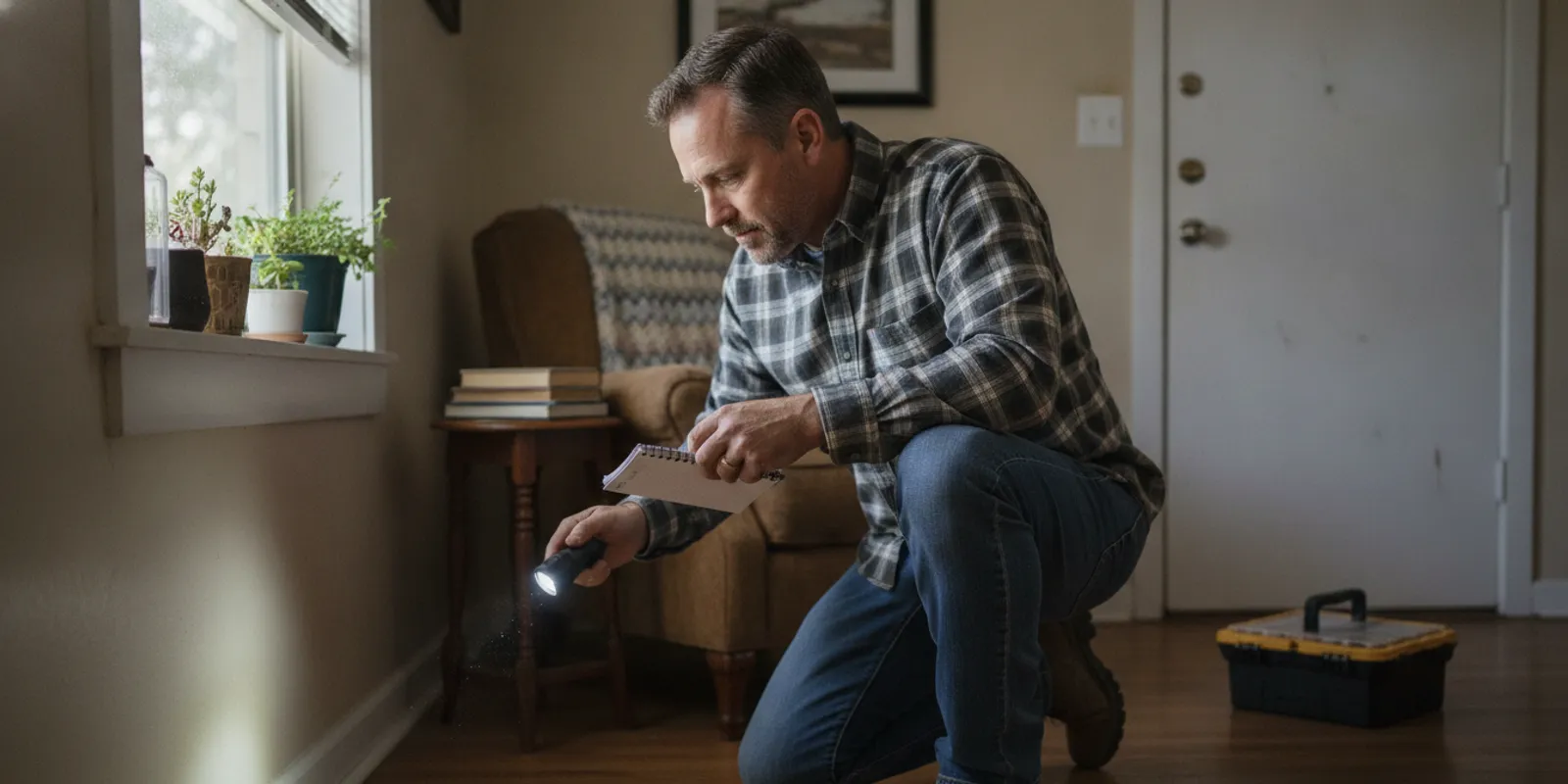
Inspection should be more than a quick look at the most visible spot. Ask how the provider will assess the reported area, check for related signs, and consider conditions that might support activity or allow pests to enter. The appropriate scope will depend on the property and concern, so the goal is to understand the reasoning—not demand that every building receive the same checklist.
Consider asking:
What information would you like us to provide before the visit?
Which areas do you expect to inspect based on the report, and what might change that scope?
How will you distinguish a confirmed pest identification from a possibility?
Will you look for activity, damage, conducive conditions, and possible entry points where relevant?
What should our staff do if they see additional signs before or during the inspection?
How will you explain findings to the person responsible for the property?
Listen for a process that begins with the reported conditions and can adapt if the evidence points somewhere else. Be cautious if a provider recommends a specific treatment before asking what pest is involved, where it was seen, or what kind of property is affected. There may be cases where the next step is clear from an initial report, but the company should still explain what it knows and what remains to be checked.
An inspection request is not the same as a confirmed appointment, a diagnosis, or a fixed-price quote. Share the property address or ZIP code, the pest or signs, the type of site, and whether you are asking about a one-time or ongoing service. Ask what happens after submitting a request, and confirm access and timing directly. Pro Pest invites customers to request a free, no-obligation inspection; the request itself does not confirm a visit or a set price. Its guide to what a pest inspection involves can help you prepare useful observations.
How can you evaluate the proposed treatment?
Once a provider has assessed the conditions, ask it to connect its recommendation to the findings. You should be able to understand what issue the treatment is intended to address, which parts of the property are in scope, what the company will do, and what follow-up—if any—it recommends. The details may differ for an apartment property, a food-service site, a hotel, an office, or a warehouse. A proposal should not rely on a vague label such as “complete coverage” without explaining what that means for your building.
Ask the provider to make these points clear in writing or in a service summary:
- Purpose:
What finding or risk is the proposed work responding to?
- Scope:
Which areas are included, and which areas are not included?
- Method:
What general action is proposed, and why does it fit the observed conditions?
- Preparation and access:
What must the site contact arrange before the visit, if anything?
- Operational coordination:
How will the provider coordinate with the person responsible for the premises?
- Follow-up:
What should the customer monitor, and when should the company be contacted again?
- Limits:
What does the proposed service not address, and what could require reassessment?
Do not treat a promised outcome as a substitute for a clear plan. Ask how the provider will judge whether the recommendation is working and what observations should prompt a follow-up conversation. For recurring or changing activity, the answer may involve monitoring and reassessment rather than a guarantee that no pest will ever appear again.
Also ask whether the recommendation is one-time or ongoing. Do not assume that a commercial service has a standard visit frequency, a fixed contract length, or a particular set of included pests. Those details depend on the provider's actual offer and the property. Request the terms that apply to your site before agreeing, including any limits, cancellation conditions, and what is included in follow-up work. A responsible comparison is based on the actual proposal, not a general claim about what a plan usually contains.
How should you compare commercial pest companies?
Compare providers using the same questions and the same description of your property. A low initial number can be difficult to evaluate if one proposal covers a limited area and another includes a different scope. Likewise, a lengthy service description does not automatically mean it fits your problem. The U.S. Environmental Protection Agency's tips for selecting a pest control service encourage consumers to weigh quality and value and consider a provider's competence as well as cost. Use the questions below to organize your own comparison.
What to compare | Questions to ask | What a useful answer clarifies |
Inspection | What will be checked based on our report, and how will findings be shared? | The expected inspection scope and how observations inform a recommendation. |
Treatment fit | What finding supports this method, and which areas are included? | The purpose, boundaries, and limits of the proposed work. |
Site coordination | Who needs to arrange access, and how should we plan around the visit? | Practical responsibilities for the provider and property contact. |
Follow-up | What should we monitor, and how do we request reassessment? | What happens after service and how a continuing concern is handled. |
Written terms | Can we review the scope, any recurring schedule, and applicable conditions? | The actual service commitment, not an assumption about common plans. |
Experience and accountability | Who will perform or oversee the work, and how can we verify relevant qualifications? | Who is responsible and what evidence supports the provider's claims. |
Total value | What does the proposal include, exclude, or charge separately? | A fair comparison of cost against scope and stated service obligations. |
When reviewing qualifications, ask the company what licenses, certifications, or training apply to the people and work involved, and how you can verify them through the appropriate authority. Requirements differ by place and service, so do not rely on a vague claim that “everyone is certified.” Ask who will be responsible for the work at your site and who can answer questions about the recommendation.
Look at the written terms as carefully as the conversation. If the company describes recurring visits, ask for the proposed frequency and what happens if your needs change. If it mentions a guarantee, request the exact written conditions, including what is covered and any exclusions. Do not interpret a limited re-service condition as a promise that every pest problem will be eliminated or that every situation qualifies for the same remedy.
What should you ask about communication and records?
In a commercial setting, a sound technical recommendation is only useful if the right people can act on it. Find out who will be the main contact, how staff should report new signs, and what information will be shared after a visit. If a property has tenants, several shifts, or multiple decision-makers, agree on one route for relaying observations so that reports do not become scattered or contradictory.
Ask what kind of service summary or record the company provides, if any. Clarify whether it identifies the areas visited, observations made, work performed, and recommended next steps. These details help a property manager distinguish a new report from a previously observed condition. They can also help you communicate with a facilities team or owner. Do not assume every provider uses the same report format or includes the same information; confirm what is available before you rely on it.
Communication should make uncertainty visible. A provider may need further inspection to confirm a suspected pest, or additional information to determine the likely source. It is reasonable to ask what has been confirmed, what remains uncertain, and what the next observation should be. Clear limits are more useful than confident-sounding conclusions unsupported by what has been observed.
For multi-unit or shared properties, also ask how the provider expects you to coordinate access and tenant or staff communication. The provider can explain what it needs for its work, while the property manager decides how to handle internal notices and permissions. Do not assume that every space can be accessed or that a report from one unit represents the whole building.
How do property type and pest concern change the questions?
The same selection principles apply across commercial properties, but the details you raise should reflect the use of the space. Pro Pest lists commercial pest-control service for apartments, bars and restaurants, hospitals, hotels, office buildings, and warehouses. That list describes the property categories in its commercial marketing; it does not establish a particular service schedule, special certification, or contract for each category. Ask whether your own property and concern are within the company's service scope.
For restaurants, bars, and food-related areas
Explain which areas are involved and when they are accessible. Describe the signs and any changes in activity without assuming a cause. Ask the provider how it will define the area to be inspected and what the proposal requires from your site contact. If the recommendation affects an operating area, ask how the visit will be coordinated. Do not assume a particular product, application method, or occupant-safety instruction applies; request the provider's specific written directions for the proposed work.
For apartments and other multi-unit buildings
Keep a record of the reported unit or common area, date, and observation. Ask how the company will evaluate the reported location and whether it needs information from adjacent or shared spaces. Clarify who will arrange access and who receives findings. A report from one apartment can be important, but it does not by itself establish the extent or source of activity across the property.
For hotels, offices, and public-facing properties
Tell the provider which rooms or work areas are affected, whether reports are isolated or recurring, and what access windows are practical. Ask what observations would help distinguish a local issue from a wider pattern. If staff or guests have reported signs, record the location and timing without making claims about a cause that has not been verified.
For warehouses and inventory spaces
Describe the storage and work areas where signs have been observed and identify any access or inventory constraints. Ask how the inspection can account for the reported location and what information the provider needs from the site contact. Keep a log of locations and dates, especially if multiple teams or shifts have noticed activity. A targeted, evidence-led discussion is more useful than assuming that the same response fits every storage building.
For any property type, choose a provider that can explain how the recommendation follows from the inspection and what the customer must do next. Do not choose solely on the basis of a broad promise aimed at every commercial site. The relevant question is whether the provider can discuss your pest concern, property conditions, and requested service clearly and within its actual service area.
What warning signs should make you pause?
One awkward answer does not always prove a provider is unsuitable, but repeated gaps are a reason to slow down and ask for clarification. Be cautious if a company:
Recommends a treatment before asking about the pest, signs, property type, or affected location.
Uses broad claims such as guaranteed elimination without explaining the written scope and conditions.
Cannot describe what the proposed work includes or what it leaves out.
Pressures you to agree before you can review the recommendation and applicable terms.
Will not explain who is responsible for the work or how to verify relevant qualifications.
Suggests a standard frequency or contract as if every commercial property has the same needs.
Dismisses your questions about access, records, preparation, or follow-up.
Claims that a single observation proves the source or extent of a building-wide issue.
Ask for a clearer explanation before deciding. If a provider makes a claim about credentials, a guarantee, or a particular outcome, request the documents or terms that support it. If you still cannot tell what you would be agreeing to, compare another proposal with the same site information. The objective is not to find a company that says yes to every request; it is to find one that can explain its assessment, boundaries, and next steps.
How can you make a fair final decision?
Use a short scorecard after you have spoken with each provider. Rate each item as clear, unclear, or not applicable, and keep a note of the answer rather than relying on memory:
- Site fit:
Did the company confirm that it can consider your property type, pest concern, and location?
- Evidence:
Did it ask for useful details and describe an inspection process appropriate to the report?
- Recommendation:
Can you explain why the proposed work is being recommended and where it applies?
- Boundaries:
Are exclusions, unknowns, and conditions stated plainly?
- Coordination:
Do you understand who arranges access and who communicates with your staff or tenants?
- Follow-up:
Do you know what to monitor and how to raise a continuing concern?
- Terms and value:
Can you compare the actual scope and conditions, not just an initial cost?
A simple scorecard does not replace your judgment. It helps reveal which important questions remain unanswered. You might choose a provider that gives a more limited recommendation if it is clearly supported and fits your need better than a broader proposal. Conversely, the most detailed proposal is not automatically best if it fails to address the reported area or leaves the responsibilities unclear.
Before agreeing to service, verify that the service area includes your address. Pro Pest's concrete business location is in Sealy, and the company describes service in Sealy and the surrounding area. Do not assume that a regional target or a mention of another city establishes eligibility for every address. Share the property ZIP code and ask the company to confirm whether it can respond there before making plans.
What information should you include in a service request?
A focused request gives a provider a useful starting point without trying to prescribe the solution. Include:
The property type and ZIP code.
The pest you suspect, if known, or a plain description of the signs.
Where the activity was observed and when it occurred.
Whether this is a new concern or has been reported before.
Whether you are asking about a one-time response or want to discuss ongoing service.
The name and best contact method for the person coordinating access.
Any practical timing or site-access details that should be discussed.
Do not include sensitive information that is not needed to evaluate the request. If you have images or records, ask how to share them rather than sending them through an unverified channel. Keep a copy of what you submitted and note whether the company has confirmed a visit. A request form begins a conversation; it is not proof of a confirmed appointment.
For a commercial property in Pro Pest's confirmed service area, you can review its pest-control services and use the inspection request page to describe the site, pest concern, ZIP code, and desired service. Pro Pest's request is free and carries no obligation, but submitting it does not set a treatment price or confirm an appointment. You can also browse its pest-control guides for related preparation and identification topics.
Commercial pest control questions
Should I choose the provider with the lowest initial price?
Not without comparing what each proposal includes. A lower initial amount may cover a different inspection scope, treatment area, or follow-up than another offer. Ask each company to identify included work, exclusions, applicable conditions, and any separate charges. Then compare value against the documented scope and your actual need.
Does requesting a free inspection confirm a service appointment?
No. A request begins the conversation and is not itself a confirmed appointment, diagnosis, or fixed-price quote. Share the property type, address or ZIP code, signs, and preferred timing, then wait for the provider to confirm whether it can serve the property and what the next step is.
Should I expect ongoing visits for every commercial property?
No single frequency should be assumed for all properties. Ask whether the provider is recommending one-time or ongoing service for your conditions, what schedule it proposes, and what terms apply. The reason for the recommendation should connect to the inspection and your property rather than a generic assumption.
What if I cannot identify the pest?
Describe the signs and location instead of guessing. Note when activity occurs, and share a photograph only if you can take it safely and the provider has a suitable way to receive it. A provider can explain what it can determine from your report and what requires an inspection.
Can a pest company promise that pests will never return?
Do not rely on a broad promise without reviewing its exact written conditions. Ask what outcome is covered, what follow-up is included, and what could require additional work. A recommendation should explain its limits and how to report continuing activity; no general statement substitutes for terms that apply to your property.
The strongest choice is a provider that listens to the property-specific report, inspects before recommending work, explains the treatment scope and its limits, and makes follow-up responsibilities clear. Compare proposals on those points, confirm service-area eligibility, and choose only after you understand what the company is offering.


Comments