House Cricket Control: Identification and Indoor Prevention
House cricket control starts with confirming what you are hearing or seeing, then tracing the activity instead of treating one room at random. A single cricket may have wandered inside, while repeated chirping or sightings can point to an entry route, hiding place, or conditions worth checking. Here is a practical way for Sealy-area homeowners to assess the problem and choose a next step.
What does a house cricket look and sound like?
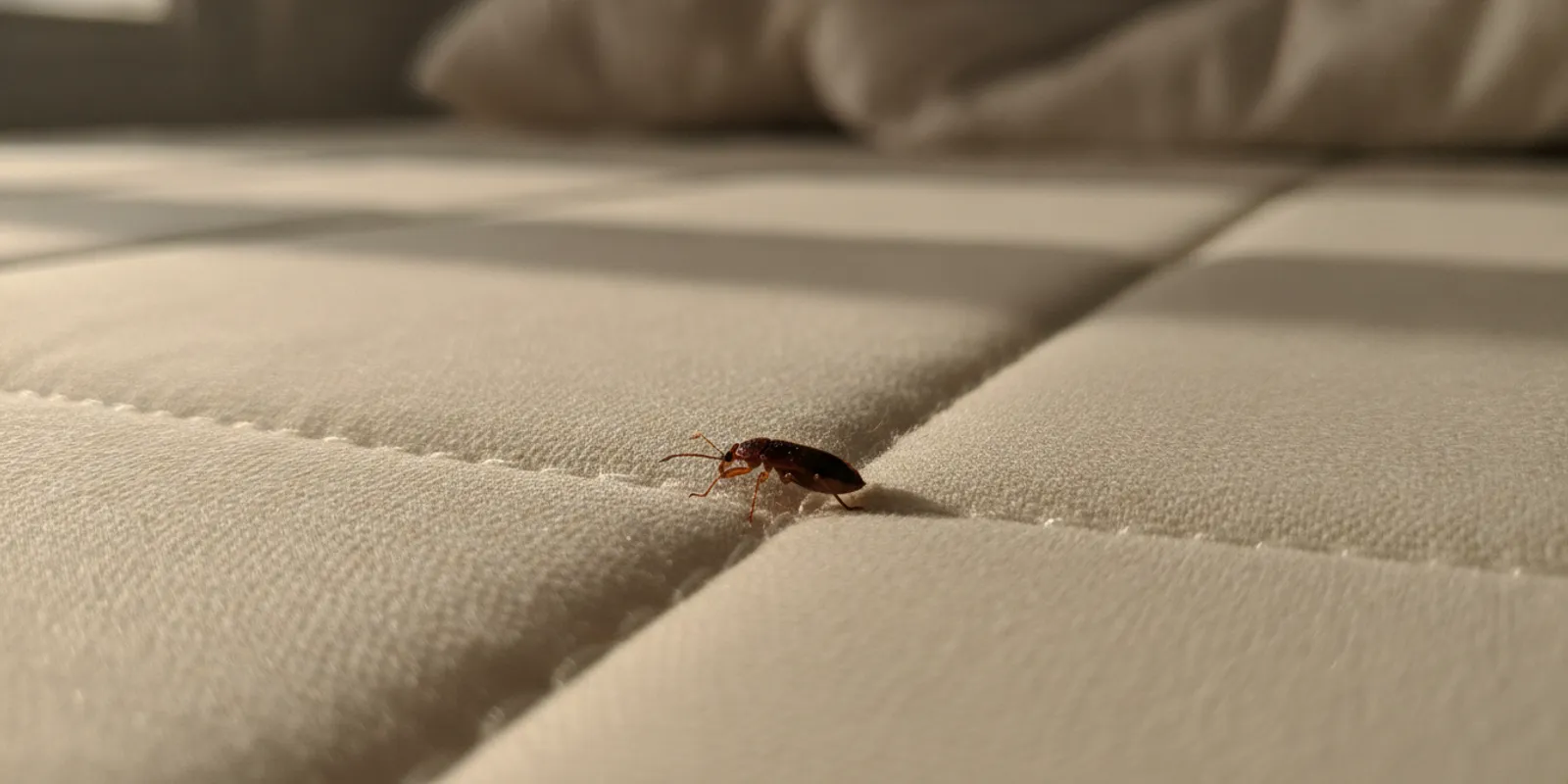
The common house cricket is usually tan to brown, with long threadlike antennae and enlarged hind legs built for jumping. Adults have wings, and the head often has darker markings. Size and color can vary, so use a combination of shape, movement, location, and sound rather than relying on one detail. A clear photo taken from a safe distance can help you compare what you saw without trying to handle it.
Chirping is often the clue that draws attention indoors. Male crickets make the familiar sound by rubbing their wings together. A chirp may seem to come from one spot, but sound can travel or reflect off walls, making the source hard to pinpoint. The insect may also stop calling when a person approaches. Listen from more than one doorway and note whether the sound returns after the room is quiet.
House crickets are not the only insects that jump or make sounds. Field crickets and other occasional invaders can appear around buildings, and small mechanical sounds can be mistaken for insects. If you can safely do so, note the insect's approximate size, coloring, body shape, and whether it jumps, flies, or stays near the floor. For background on how to tell observations from assumptions, see Pro Pest's guide to what a pest inspection can clarify.
Why might crickets be inside a home?
A cricket indoors does not automatically mean there is a large infestation. One can enter through a gap around a door, a damaged screen, a utility opening, or another opening that is easy to overlook. Crickets may also be carried indoors with stored items, boxes, or plants. A single sighting near an exterior door after it has been open is different evidence from regular chirping in a closed room or repeated sightings along the same wall.
Indoor conditions can make certain areas more suitable as hiding places. Clutter, undisturbed storage, gaps behind appliances, and protected corners give insects places to stay out of view. Crickets may feed on a range of organic material and household items, so accessible crumbs, pet food, paper, or fabrics can be worth checking and keeping tidy. That does not mean that every cricket will damage belongings, or that finding one proves a food source is present.
Moisture and warmth can affect where insects gather, but a damp spot alone does not identify the source. Look for a combination of clues: recurring activity, a plausible opening, protected hiding places, and nearby food or moisture. Avoid concluding that a particular drain, wall, or foundation is the source without evidence. A careful inspection connects observations to actual conditions in the home.
What should you do first when you hear chirping?
Start with a calm, short observation rather than spraying the room or moving every object at once. If you can, listen when the house is quiet and write down the time, room, and direction where the sound seems strongest. Repeat the check later. A simple note such as “chirping near the laundry room wall on three evenings” is more useful than a general impression that crickets are everywhere.
- Mark the likely area.
Note the room, nearby exterior wall, doors, windows, and utility fixtures. Do not assume the loudest point is exactly where the cricket is hiding.
- Look for visible activity.
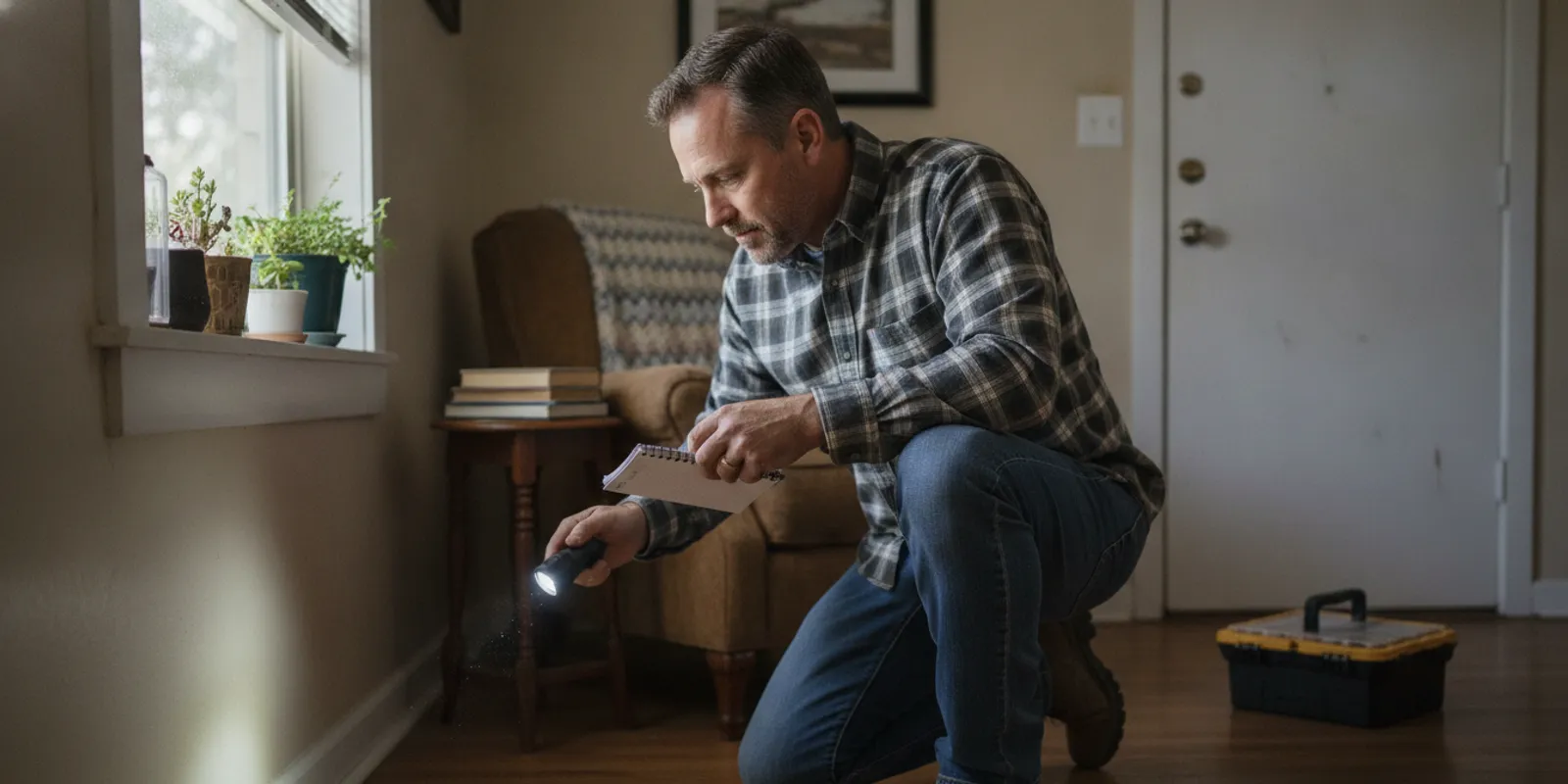
Check the floor edges, corners, under movable furniture, and around stored items, using a flashlight if needed. Do not reach blindly into dark gaps.
- Record sightings.
Note dates, approximate numbers, whether the insect was alive, and where it was found. Take a clear photo if possible.
- Check the nearby exterior.
From the ground, look for obvious gaps, damaged door sweeps, torn screens, and items resting against the wall. Do not climb or dismantle building components.
- Reduce easy attractants and hiding places.
Close food containers, pick up crumbs, and organize floor-level storage so the area can be observed again.
If the insect is visible and easy to reach, you can remove it using a method that feels appropriate for your household. Avoid bare-handed handling if you are uncertain what it is. A capture is useful only if you can do it safely; do not risk a fall, disturb electrical equipment, or use a household product contrary to its label just to collect a specimen.
How can you narrow down where the cricket is hiding?
Work from the sighting or sound toward likely shelter, checking one small area at a time. Crickets may tuck into spaces that are dark and undisturbed: behind boxes, under shelving, near stored items, or along the edge of a room. They can move quickly, so searching a whole house at once is often frustrating. Close interior doors if that helps you focus on one area, but do not block required exits or ventilation.
For sound, use a quiet-room method. Turn off television or music, wait briefly, and listen from a few locations without making a lot of noise. If the chirping stops when you move, pause and listen again from the doorway. Check accessible areas near the apparent source, but remember that walls and room layout can distort direction. If you find an insect, record the exact place before moving storage or cleaning.
For sightings, map the pattern. Are they appearing near one exterior door, a garage connection, a window, or a utility opening? Are they found in a basement-like storage area, laundry space, garage, or living area? The pattern is a lead, not proof of a particular route. Inspect both sides of accessible doors and windows for obvious damage, and note any openings that need repair.
Sticky monitors can help show whether activity continues and which areas are involved, but they do not identify every entry point or resolve the underlying conditions by themselves. Place a monitor only where it will not create a hazard for children, pets, or anyone who might contact it. Check it regularly and remove it if it is in an unsuitable location. If it catches insects, record where and when; do not use a catch on one monitor as a measure of the entire home's activity.
Which home changes can reduce indoor cricket activity?
House cricket control at home is mainly about making entry less likely, reducing accessible shelter, and keeping the situation observable. Begin with manageable improvements rather than a broad, disruptive cleanout. The most useful actions depend on the property and the location of activity, so treat this list as a starting point, not a guarantee that one change will solve every case.
- Close obvious food sources.
Store pantry goods and pet food in containers that close securely. Clean crumbs and food residue from floors and work areas, and avoid leaving food scraps exposed overnight.
- Organize floor-level storage.
Keep boxes and bags off the floor where practical, reduce piles against walls, and leave room to inspect baseboards. Cardboard and clutter can obscure activity and make cleaning harder.
- Address visible door and screen damage.
Check that exterior doors close properly and that screens are not torn. Note worn seals or daylight-visible gaps for repair. Do not assume every small opening is the route until sightings support the connection.
- Review utility and service openings.
From safe, accessible positions, look for obvious unsealed openings where pipes or cables enter. Have repairs done appropriately; do not cover vents, drainage paths, or equipment openings that need to remain clear.
- Keep exterior storage orderly.
Move stored items away from direct contact with exterior walls where feasible and keep door approaches clear. Avoid moving heavy items alone or placing objects where they obstruct access.
- Clean areas where crumbs collect.
Pay attention to appliance edges, pantry floors, and pet feeding areas. Dispose of vacuum contents and food waste in a timely way.
Moisture control should be based on what you find. Fix a known leak or address persistent condensation through an appropriate repair, but do not apply a pesticide or seal a damp area as a substitute for correcting the water problem. If moisture is inside a wall or under flooring, a qualified building professional may be needed to identify the cause. Pest observations can be shared with that professional, but they do not replace a building assessment.
Do traps or sprays solve a cricket problem?
A trap may help confirm that a cricket is moving through a particular area. A correctly placed sticky monitor can also make activity easier to track between inspections. However, one captured insect does not show that all activity has stopped, and a trap may not reach insects hiding elsewhere. Use monitoring to answer a specific question—such as whether activity is recurring beside a door—not as proof that the whole home is cricket-free.
Be cautious about applying a household pesticide without identifying the insect, reading the product label, and checking that the site and intended use are allowed. Do not apply a product to bedding, food-contact surfaces, children’s items, pet areas, or any other location unless its label specifically permits that use and all directions can be followed. More product is not a substitute for correct identification or a targeted plan. Never mix products or use a product in a way that conflicts with its label.
Broad indoor spraying can make it harder to tell whether activity is continuing and may expose people or pets unnecessarily if the product is used incorrectly. If you are considering a treatment, identify the pest and the area first, read the instructions, and follow any precautions. When the source is unclear, activity is repeated, or the insect may be something else, an inspection can help determine whether treatment is appropriate and where it should be focused.
A cricket-specific advice article from Professional Pest Controllers Online recommends seeking a professional pest-control company for a cricket infestation and preferably one associated with the British Pest Control Association. That guidance is not a substitute for assessing a Texas property, but it reinforces a useful principle: recurring activity can call for an informed inspection rather than repeated guesswork. See the cricket control advice.
When is a single cricket different from recurring activity?
An isolated cricket near an open door may be an occasional visitor. It is reasonable to remove it, check the immediate area, and monitor whether another appears. Repeated sightings or regular chirping in the same part of the home deserve a closer look, especially if you cannot find a visible route or activity appears in more than one room. Recurrence does not automatically mean a severe infestation; it means there is more evidence to assess.
Consider requesting an inspection when you have tried reasonable housekeeping and exclusion checks but continue to find crickets, when the sound persists and the source is difficult to locate, or when a suspected opening is not accessible for safe inspection. A professional can assess the affected areas, look for conducive conditions and entry points, and explain whether targeted treatment or a non-treatment correction makes sense. The recommendation should relate to what is observed, not just to the fact that a cricket was heard once.
For a local home, the information that helps an inspection request is practical: the property ZIP code, the room or rooms affected, how often you hear or see crickets, where they are found, and what you have already checked. Pro Pest is based in Sealy and describes residential pest work as inspection-led, with targeted interior and exterior treatment as appropriate and optional exterior follow-up. Exact service availability depends on the address and should be confirmed rather than assumed from a broad regional label.
Pro Pest's residential pest control information describes an inspection of activity, damage, conducive conditions, and entry points before recommendations. For a wider view of the company's listed service options, visit its pest control services page. Those pages explain the service context; they do not establish a fixed price or appointment until the company confirms details for the property.
How should you check doors, windows, and other possible entry routes?
Inspect the transition between outdoors and indoors in a deliberate order. Start at the room where you noticed the cricket and identify the nearest exterior openings. Check whether the door closes all the way, whether the screen is intact, and whether a visible gap or damaged seal is present. Look at the threshold and frame from inside and outside where safely accessible. A gap deserves attention as a possible route, but it is not proof that crickets are using it; compare it with the location and timing of actual sightings.
Next, consider openings around plumbing, cables, or other building services, as well as attached garages and utility areas. Do not remove covers, enter crawl spaces, or handle electrical or mechanical equipment to investigate. Make a note or take a photo of a suspected opening from a safe position and pass that information to the appropriate repair professional or pest inspector. Keep vents, drainage openings, and equipment clear. A repair that blocks a required building function can create a different problem.
Windows and exterior doors are often opened and closed throughout the day, so remember the circumstances around sightings. A cricket seen just inside a frequently used door may have entered during normal use, while repeated activity in a room with closed windows invites a broader check. Ask whether packages, storage, or recently moved items could have introduced an insect. These are investigative questions, not assumptions about the cause.
Outside, check only areas you can reach safely from the ground. Note clutter or stored items close to the wall, damaged screens, and gaps around a doorway. Do not dismantle siding or trim, use a ladder without proper support, or move heavy equipment to look behind it. If an exterior condition is difficult to access, describe it instead of trying to repair it during a pest search. The aim is to give the inspection a useful starting point and identify simple maintenance needs that can be addressed appropriately.
What if the cricket is in a garage or storage area?
Garages and storage rooms can make it harder to find the source because boxes, seasonal items, and equipment create many quiet hiding places. Begin by noting exactly where the cricket was seen or heard. Clear a narrow inspection path if it is safe to do so, but avoid emptying the entire space at once. Move light items carefully, and do not stack boxes in a way that could fall. If you uncover a cricket, take note of its location and whether there are additional sightings nearby.
Check the garage door's visible edges, the door between the garage and living space, and nearby screens or windows. Look for obvious damage or a failure to close, but do not adjust a garage door or its spring system yourself; those parts can be hazardous. Keep household chemicals and tools stored as directed, and do not place a trap where people, pets, or stored goods will be exposed to it. A garage sighting does not by itself mean the insect has entered the living area.
For storage, use closable containers where practical and keep items organized enough to inspect floor edges. If you find insects among stored goods, record which container or group was involved before moving everything. Avoid throwing away possessions based on one sighting. If recurring activity continues after you tidy the area and check accessible entry points, an inspection can help distinguish an occasional visitor from a repeated route or shelter condition.
When the garage is attached to a residence, make a separate note of whether any cricket has been seen on the living-space side. That detail helps describe the scope without assuming that the whole home is affected. For a business or multi-unit property, likewise separate reports by room, unit, and shared area. Specific observations make it easier to plan access and avoid treating unaffected spaces without a reason.
What happens during an inspection for crickets?
An inspection should begin with the customer's observations. Share the dates and times, exact rooms, and whether you heard chirping, saw live insects, or found insects in a monitor. Mention recent changes such as a door left open during moving, new deliveries, or a known leak if relevant. These details help focus attention, but they do not prove the route or cause before the property is checked.
The inspection can examine accessible areas where activity was reported, nearby entry points, and conditions that may provide shelter or attract insects. The inspector may ask to see photographs or a captured specimen if available, but do not delay a request or put yourself at risk trying to catch one. If activity is behind a fixed panel or inside an inaccessible cavity, the inspector may explain what can and cannot be determined without additional work.
After looking, ask the provider to explain the observed evidence, the recommended action, and any preparation or follow-up that applies. Ask whether the recommendation is for targeted treatment, a repair or sanitation change, monitoring, or a combination. A free, no-obligation inspection invitation is a request for an assessment; it is not a confirmed appointment, a fixed-price quote, or a promise that a particular treatment will be needed. Pro Pest's inspection request page is the appropriate route to share property and service details.
How should renters and property managers handle cricket sightings?
Renters should document activity and report it promptly through the property manager or landlord's established maintenance process. Include dates, locations, photos if available, and any obvious concern such as a damaged screen or door seal. Avoid making permanent alterations or applying pesticides in shared or restricted areas without authorization. Keep a copy of the request and any response so recurring sightings can be discussed with a clear timeline.
Property managers can make reports easier to evaluate by asking residents for the same basic information: unit, room, date, frequency, and whether there is sound or a visible insect. Check whether reports cluster near a shared entry, laundry space, storage room, or other common area. A cluster can guide inspection but does not alone establish a building-wide source. Coordinate access and avoid asking residents to move heavy items or enter unsafe spaces.
For commercial properties, the same distinction between an isolated sighting and recurring activity matters, but the operating context is different. A restaurant, office, warehouse, or multi-unit property may have shared access points, deliveries, storage practices, and occupant schedules to consider. Keep records of the location and timing, identify the contact who can authorize access, and communicate any site-specific constraints before inspection. Pro Pest also lists commercial pest control; the property type and exact needs should be discussed rather than assuming a standard service plan.
What should you avoid while trying to control crickets?
Several common reactions can waste time or create risk without answering where activity comes from.
- Do not treat every chirp as proof of a hidden colony.
Confirm whether the sound repeats and whether a cricket can be seen. Check other plausible sources of noise.
- Do not spray the whole room on a guess.
First identify the insect and follow all label directions if a product is used. A broad application may not reach the source.
- Do not seal every opening indiscriminately.
Some openings provide necessary ventilation or drainage. Repair identified gaps appropriately and keep building functions clear.
- Do not move heavy appliances or climb into unsafe spaces alone.
Check only accessible areas and arrange qualified help when needed.
- Do not infer a treatment guarantee from one visit or one trap.
Ask what was observed, what action is recommended, and what follow-up—if any—is included.
- Do not confuse a general pest service description with a confirmed recommendation.
The treatment method depends on inspection findings and the details of the property.
These limits matter because good control begins with the right diagnosis. If the insect is misidentified, the wrong areas may be treated while the real source remains. If the identification is uncertain, a clear photo or an inspection can be more useful than repeated attempts to eliminate a sound.
How can you make an inspection request useful?
Before you submit a request, collect the essentials without trying to solve every part of the problem yourself. Include the property ZIP code so service coverage can be checked, describe the rooms involved, and state whether the concern is one sighting or a pattern. If you have seen crickets outside as well as inside, note where. Mention a suspected entry point as a possibility, not as a confirmed cause.
When did the first sighting or chirping occur, and how often has it happened since?
Which room, wall, doorway, or window is involved?
Have you seen an insect directly, or only heard a sound?
Have sticky monitors captured anything, and where were they placed?
Are there visible screen, door, or utility-opening concerns?
Is the request for a residence or a commercial property, and is the concern limited to one area?
These answers let the provider understand the question before discussing access and next steps. If you are comparing options, ask what the inspection will cover, what the recommendation is based on, whether any treatment is proposed, and what preparation is actually needed. Do not accept a claim that an appointment is confirmed until the company has confirmed the date and time. Pro Pest publishes office hours separately from field-service hours, and same-day service is described only as available whenever possible, not as guaranteed.
Frequently asked questions about house cricket control
Does one house cricket mean I have an infestation?
No. A single cricket can enter by chance. Look for repeated sightings, recurring chirping, or activity in several locations before drawing a broader conclusion. Record what you observe and check the nearby area for a plausible entry point or shelter.
Can I find a cricket by following its chirp?
Sometimes, but sound can be misleading. Listen from a few quiet locations and check accessible areas near the strongest apparent source. A cricket may stop calling when disturbed, and walls or room layout can make the direction seem different from the actual hiding place.
Will cleaning alone get rid of house crickets?
Cleaning can reduce accessible food and clutter, which makes activity easier to monitor, but it may not close an entry route or address a hidden source. Combine reasonable housekeeping with checks of doors, screens, and other accessible openings. If sightings continue, request an assessment rather than assuming that cleaning failed or that a pesticide is automatically needed.
Should I use a cricket spray indoors?
Do not use a product until you have identified the pest, confirmed that the product is labeled for the location and use, and can follow every direction and precaution. Avoid broad application as a substitute for finding the source. When the insect or its location is uncertain, an inspection can help clarify whether treatment is appropriate.
What should I tell Pro Pest when I request an inspection?
Share your ZIP code, property type, rooms involved, dates and frequency, and whether you have seen a cricket or heard chirping. Mention any accessible opening or monitor result as an observation. The inspection request is a request for an assessment; the company must confirm service availability and appointment details.
A practical next step
For house cricket control, the useful sequence is to confirm the evidence, note where activity repeats, reduce accessible food and clutter, and check obvious entry points without disturbing unsafe or essential building features. If the activity persists or the source is unclear, an inspection can connect your observations to conditions at the property and help determine whether targeted treatment or a home correction is the right next step.
Comments