Earwig Control
Earwig control often starts with a simple question: where are the insects finding shelter, and what conditions keep that spot comfortable? Earwigs commonly turn up beneath mulch, flowerpots, boards, or other objects in damp, protected areas. Seeing one does not automatically mean a home has a serious infestation. A practical response is to confirm what you saw, note where activity occurs, reduce favorable shelter near the building, and check whether the insects are actually entering living spaces.
What does earwig control involve?
Earwig control is a process rather than a single product or one-time action. It usually begins with identifying the insect and locating the damp, protected places associated with activity. Next, reduce shelter and excess moisture, check likely entry gaps where practical, and monitor the same locations. This sequence helps you respond to evidence instead of treating every part of a property after one sighting.
Earwigs have a pair of forceps-like appendages at the end of the abdomen. Their appearance can be startling, but one insect does not tell you how many may be present or where they came from. Note whether you saw it indoors, outdoors, or in both settings. Record the room or outdoor location, time of day, and nearby conditions such as a wet mat, dripping hose, or dense ground cover.
That first record can make the next steps more useful. For instance, an earwig found under a flowerpot on a damp patio points to a different starting location than one found beside a basement door after several rainy days. Neither observation proves a larger problem. Both give you a place to inspect and a condition to consider.
There is no need to treat every room or the entire yard because one insect was found. A targeted approach focuses on the locations and conditions associated with activity. Earwigs often hide in narrow, dark spaces during the day, so a quick look across open surfaces may not reveal where they are sheltering.
Why are earwigs around a home?
Earwigs favor places that provide cover and moisture. Outdoors, possible shelter includes damp mulch, leaf litter, compost, stacked firewood, stones, boards, dense plants, and objects resting against the house. Water collecting near a foundation or persistent dampness around an entry can make sheltered spots more suitable.
They may move indoors through gaps around doors, windows, utility penetrations, or other openings, especially when outdoor shelter is close to the structure. An indoor earwig may also be an occasional visitor rather than evidence of an established indoor population. Look for a pattern: repeated sightings in one room, insects near a threshold, or activity close to a damp area gives more useful information than one insect in an unexpected place.
Weather, irrigation, and seasonal maintenance can change outdoor conditions. A pile of leaves that stays wet beside a wall offers different shelter than a clear, dry strip around the foundation. If earwigs are found indoors, inspect the nearby exterior as well as the room. Finding a likely outdoor source can explain why activity is occurring and where prevention work may matter most.
Think about the whole route, not just the room where an insect appeared. A pot, damp mat, or pile of garden debris beside a door can provide cover outside; a worn sweep or a gap at the threshold may then offer a way indoors. This is a possibility to check, not a diagnosis. If the indoor location is far from an exterior opening, note that too rather than assuming a route.
How can you inspect for earwigs safely?
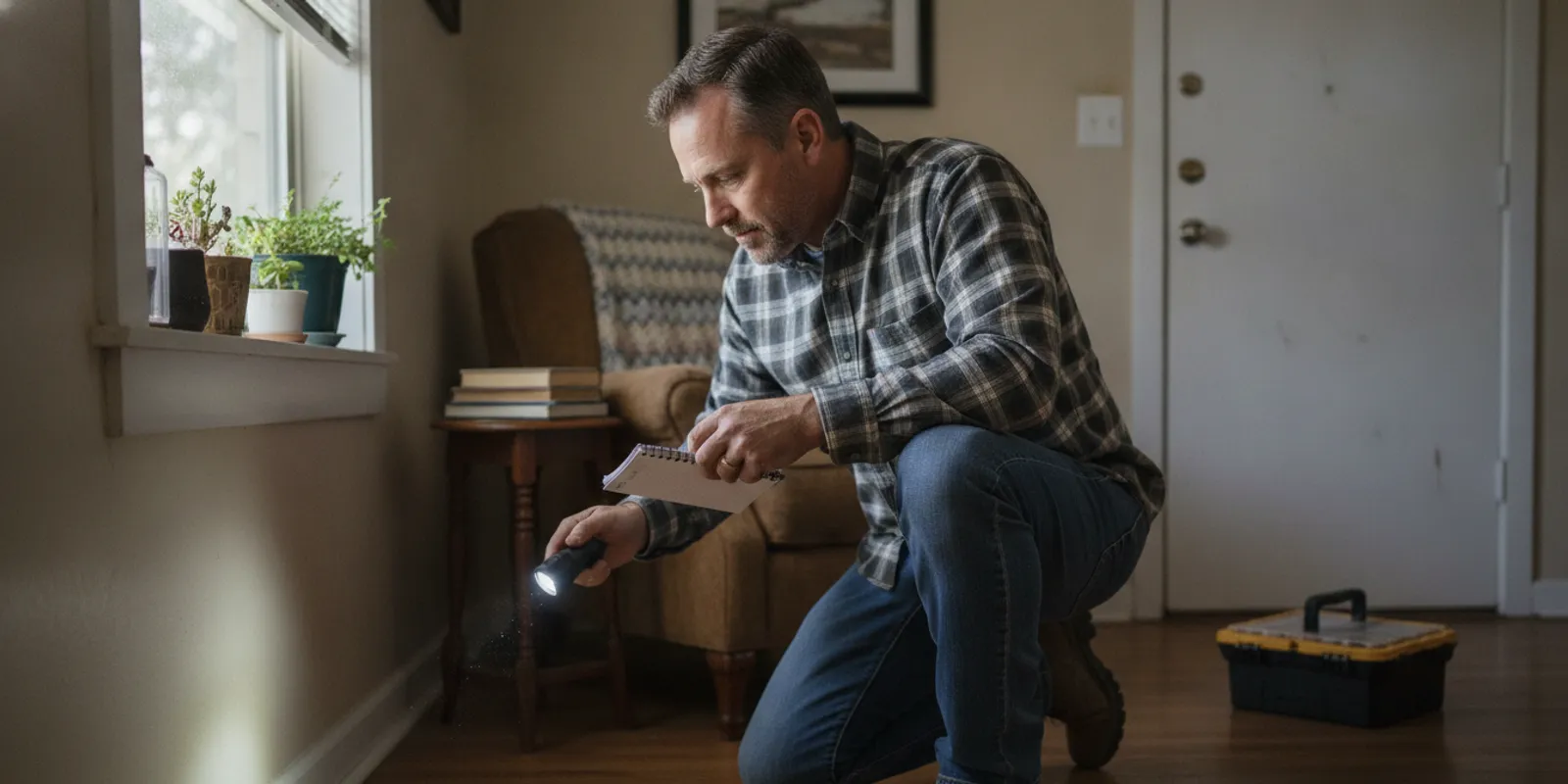
Start with observation rather than moving heavy objects or reaching into concealed spaces. Use a flashlight and look along the edge of the home, beneath objects you can lift safely, and around doors and windows. Wear gloves when handling garden debris. Keep fingers out of cracks, piles, and spaces you cannot see clearly.
- Check sheltered outdoor spots.
Look under flowerpots, loose boards, stones, leaf piles, and stored items near the building. Lift only objects that are light and stable.
- Notice moisture.
Check for dripping spigots, poorly draining areas, wet mulch against the wall, or irrigation that keeps the same strip damp.
- Inspect likely entry areas.
Observe door sweeps, window edges, and gaps around pipes or utility lines. Do not alter electrical, gas, or plumbing components.
- Review indoor sightings.
Note whether earwigs appear near an exterior door, bathroom, laundry area, basement, or another place with moisture or a direct outdoor connection.
- Document a pattern.
A photo from a safe distance, date, location, and brief note about weather or watering can help distinguish occasional visitors from recurring activity.
Try to compare similar locations rather than inspecting randomly. If the insect appeared by a patio door, check that threshold and the exterior strip immediately outside it. If it appeared near a laundry area, note any water issue and whether the room has a nearby exterior wall. This comparison helps separate an entry-point clue from a moisture clue.
Do not dismantle building materials or disturb a suspected hiding place to confirm what is present. If the location is difficult to access, or if the insect is not clearly identified, leave it undisturbed and seek an appropriate inspection. You can compare the insect with the identification guidance in our earwig facts for homeowners.
Which prevention steps can reduce earwig activity?
Prevention works best when it changes conditions around a specific activity area. Make one or two manageable adjustments, then check whether sightings decline. Changing everything at once can make it difficult to tell which conditions mattered. A simple record of what you changed and when makes follow-up more informative.
Reduce damp shelter near the foundation
Rake away leaf litter and remove unnecessary boards, stones, or clutter from the immediate foundation area. Keep stored items off the ground when possible and avoid letting them press against the exterior wall. If mulch is present, keep it from accumulating against siding or covering the foundation edge. The goal is not to remove all landscaping; it is to avoid creating a continuous, damp hiding place next to the structure.
Check that downspouts discharge water away from the foundation and that outdoor faucets and hoses are not dripping. Adjust irrigation if it repeatedly leaves the same strip of soil or mulch wet. If drainage problems are substantial, a qualified building or drainage professional may be needed. Pest advice is not a substitute for repairing a water-management issue.
Use a practical sequence. First, identify the dampest spot and its likely water source. Next, correct an obvious drip or move a movable item away from the wall. Then observe the area again after routine watering or rain. If the ground remains wet despite those changes, the issue may involve drainage beyond ordinary yard maintenance.
Make entry points less accessible
Repair a damaged door sweep or weatherstripping, and seal small, appropriate gaps around doors, windows, and utility openings with materials suitable for that location. Do not seal vents intended for airflow or block drainage features. If you are unsure whether an opening has a building function, ask a qualified contractor before closing it.
Indoor housekeeping can make sightings easier to notice and remove. Pick up damp towels, keep stored items from accumulating on floors, and address leaks promptly. These steps do not prove that earwigs are breeding indoors; they simply reduce damp and concealed places and make monitoring more reliable.
Use simple monitoring
Check the same locations periodically, especially near where earwigs were first observed. A rolled, damp newspaper or cardboard can serve as a temporary monitoring trap outdoors: place it near a suspected hiding area, then check it during daylight and dispose of or relocate it responsibly. Keep such materials away from children and pets, and do not leave them in place long enough to become a new source of clutter or moisture.
Utah State University Extension describes do-it-yourself approaches for earwig populations, including paper traps made from damp newspaper or cardboard. Its guidance focuses on garden management, so treat this as one monitoring option rather than a complete plan for every home or a substitute for identifying the source. See Utah State University Extension's earwig guidance.
A useful monitoring note can be short: “Monday, patio door, two insects beneath the pot; moved pot away from wall; no insects under it on Thursday.” The point is not to create a scientific survey. A few consistent checks can show whether activity is tied to one shelter spot, whether the change helped, and whether sightings are continuing indoors.
What should you avoid when managing earwigs?
Avoid spraying broadly without confirming the insect and understanding where activity is concentrated. An application to an unrelated area may not address the conditions bringing earwigs close to the home. Follow all product label directions if using a pesticide, and do not apply a product to a site or surface unless its label allows that use.
Do not assume that a product described as natural or organic is automatically suitable for every space, occupant, or pet. Product choice and directions matter. Pro Pest documents an organic option for its bed-bug service, but that does not mean every pest treatment is organic or that the option applies to earwigs.
Avoid crushing or handling insects with bare hands if identification is uncertain. Do not reach into dark crevices, lift heavy debris alone, or move an object that may be unstable. If activity is near electrical equipment, structural damage, or a location requiring specialized access, do not try to solve the access problem yourself.
Also avoid sealing openings without understanding their purpose. Some openings are meant for drainage or airflow, and blocking them can create a separate building problem. A careful inspection distinguishes a gap that may be suitable for sealing from a functional opening that should remain clear.
How do common sighting situations change your next step?
The same insect can call for different follow-up depending on where it appears and whether the sighting repeats. Use these examples as a way to organize observations, not as a substitute for an on-site assessment.
One earwig beneath a flowerpot
If you find one beneath a pot outdoors, check whether the pot sits on persistently wet soil or against the foundation. Move it to a drier, less sheltered location if practical, clear nearby leaf litter, and look again after a few days. If no more activity appears, continue ordinary maintenance and keep the area under observation. One insect under a pot does not justify treating the whole yard.
Several sightings at a patio threshold
If earwigs recur near a door, inspect both sides of the threshold. Look for damp mulch, a mat that stays wet, standing water, or a damaged sweep. Correct manageable conditions and note whether the next sightings occur at the same place. If they continue to appear indoors, an inspection can help assess the route and nearby conditions.
Earwigs in a bathroom or laundry room
Record whether the sightings are isolated or repeated, and check for ordinary moisture concerns such as a damp towel or visible leak. Observe the nearest exterior wall and possible openings without removing fixtures. A bathroom sighting does not prove that the insects originated in plumbing; avoid assuming a source until the pattern and conditions have been assessed.
Activity at a business or rental property
Keep a concise log of date, room, approximate number, and whether the sighting was indoors or outside. Avoid asking tenants or employees to handle insects or move heavy stored items. Separate the affected area from unrelated locations in your notes, and share whether the property is an apartment, restaurant, office, or another type of setting. For commercial needs, Pro Pest lists distinct commercial pest-control information.
When is an inspection a useful next step?
Consider an inspection when earwigs keep appearing indoors, sightings recur in several rooms, or reasonable moisture and clutter changes have not reduced activity. It may also help when you cannot identify a likely entry route, activity appears in multiple parts of a property, or a business needs to understand the issue without disrupting its operation.
A useful inspection looks at evidence and surrounding conditions. For residential work, Pro Pest describes inspecting inside and outside for pest activity, damage, conducive conditions, and potential entry points before recommending targeted treatment. Depending on findings, residential service may include targeted interior and exterior treatment, with optional exterior follow-up. The inspection request is free and no-obligation; submitting it does not confirm an appointment or establish a fixed-price quote. Learn more about residential pest-control service in Sealy.
For a business or rental property, describe the building type, where activity occurs, the pest suspected, any affected rooms or tenants, and whether you are seeking one-time or ongoing help. Commercial needs can differ from a home, so a clear description helps frame the request. Pro Pest lists separate commercial pest-control information and pest-control services.
Service availability depends on the address and conditions. Pro Pest is based in Sealy and describes service in Sealy and surrounding areas. Houston and Katy are target markets, not proof that every address can be served. If your property is outside the immediate area, provide the ZIP code and ask whether the location can be served rather than assuming coverage. The company's About page provides its local context.
How should you prepare a useful inspection request?
Share concise, practical details instead of trying to diagnose the problem. The aim is to help the team understand what you observed and where. If you have a photo taken from a safe distance, keep it available, but do not approach or disturb an insect to get a better image.
- Property type:
note whether it is a house, apartment, restaurant, office, or another setting.
- Location:
provide the ZIP code and the room, exterior wall, or outdoor area where you saw activity.
- Observations:
share how many sightings you recall, when they occurred, and whether they were indoors or outdoors.
- Conditions:
mention nearby dampness, irrigation, stored materials, or a door or window that may not close tightly.
- Service preference:
say whether you are asking about a one-time concern or ongoing service, without assuming a cadence or plan.
These details are useful because they separate what is known from what is only suspected. “I found two insects by the back door on three evenings” is more helpful than “there is a nest in the wall” when no nest has been confirmed. Likewise, “the mulch stays wet after watering” gives a concrete observation, while “the yard is infested” may overstate what a few sightings show.
Use the inspection request form to provide contact details, ZIP code, preferred date, service interest, and comments. A requested date is not a confirmed appointment. You can also review the Pro Pest home page for the company's general local service information.
Earwig control questions
Does seeing one earwig mean there are many more?
Not necessarily. One indoor sighting may be an occasional visitor. Repeated sightings in the same area or activity in several places are more useful reasons to investigate moisture, shelter, and possible entry points.
Are earwigs usually found indoors?
They are often associated with damp, sheltered outdoor locations. They can enter buildings through openings, but finding one indoors does not by itself show that the home has an established indoor population. Check the nearby exterior and track whether sightings recur.
Can a damp newspaper trap solve the problem?
A damp paper or cardboard roll can help monitor or collect earwigs in a garden area, as described by Utah State University Extension. It does not remove the need to address favorable shelter or moisture, and it may not explain indoor activity or resolve an entry issue by itself.
Should I use pesticide as soon as I see an earwig?
First confirm what you saw and where activity is concentrated. Focus on reducing damp shelter and checking likely entry points. If you choose a pesticide, use it only as its label directs and only for the site and purpose listed on that label.
What information helps Pro Pest assess the concern?
Share the property type and ZIP code, where and when you noticed earwigs, whether they were indoors or outdoors, and any nearby moisture or shelter conditions. That information supports an inspection-led discussion but does not guarantee a particular service or appointment time.
Start with what you can observe: identify the insect, note where it appears, and reduce damp shelter close to the building. If sightings continue or the source is unclear, request an inspection and share the property details so the next step can be based on the conditions found.
Comments