Palmetto Bug Vs German Cockroach
A palmetto bug vs german cockroach sighting can look like an easy identification question, but a quick glimpse rarely settles it. A large reddish-brown roach and a smaller tan roach suggest different possibilities. Size, markings, location, and repeat sightings together give a more useful picture than a common name alone. This guide explains how to compare those clues, what to record, and how to choose a sensible next step without treating uncertainty as proof.
What does the name palmetto bug mean?
Palmetto bug is a common name, not a precise species identification. People often use it for a large American cockroach, but everyday use may include other large roaches too. Someone may apply the term to any sizable roach found indoors. The name by itself cannot tell you which insect was present, whether it came from outdoors, or whether more activity is likely.
German cockroach is the common name for a particular species. Adults are usually much smaller than the large roaches people call palmetto bugs. They are often light brown to tan, with two dark parallel stripes behind the head. These features can help with comparison, but they are not a guarantee when the insect moved quickly, the room was dim, or the photo leaves out the head.
Keep the label separate from the observation. For example, a note that describes a large reddish-brown insect beside a back door records what you saw. A guess about a palmetto bug can be written separately. This small distinction matters because a confident label can shape how people interpret later sightings, even when the first view was poor or incomplete.
How can you compare their appearance?
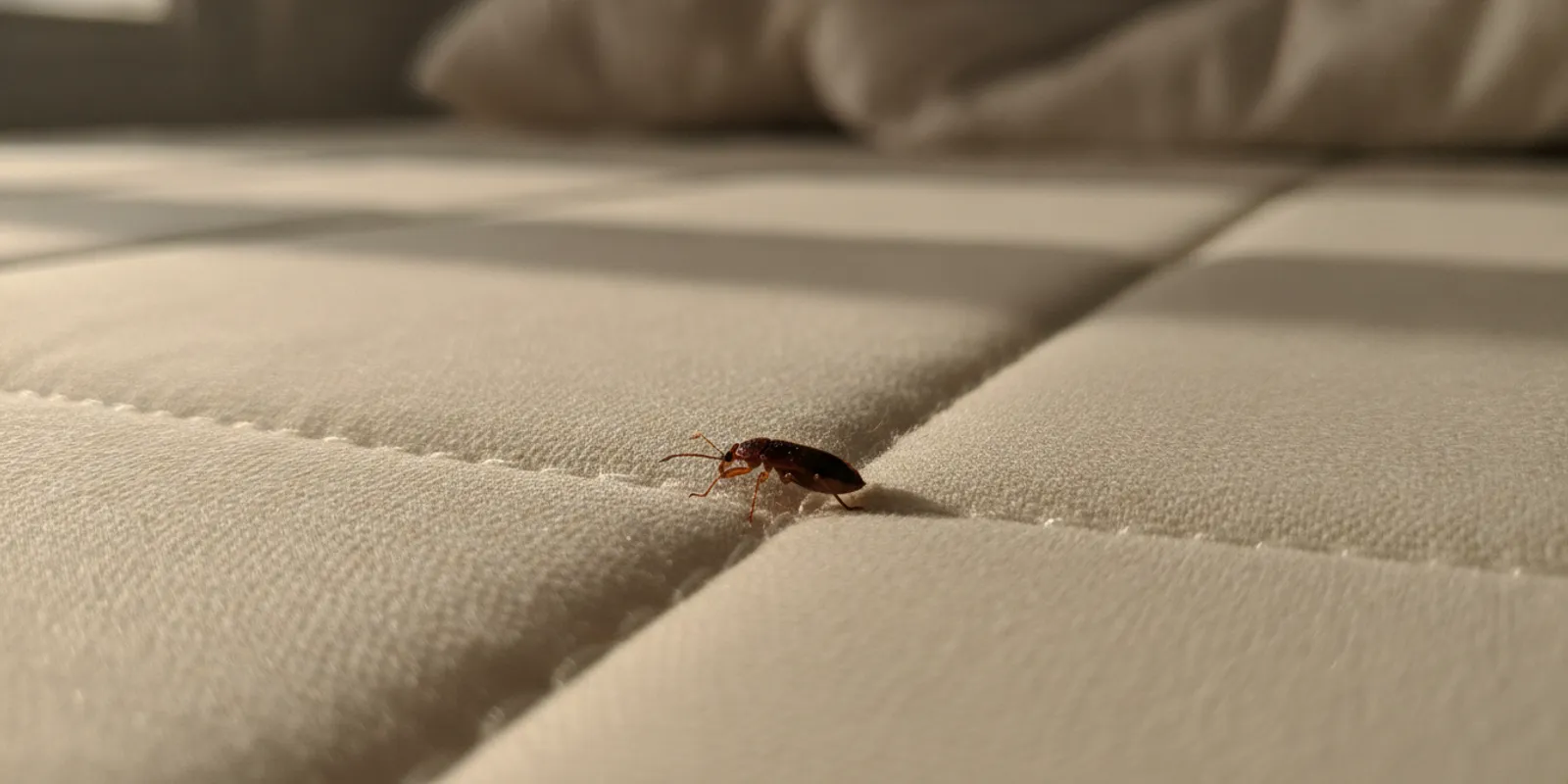
Begin with approximate size, then look at color and markings. An adult American cockroach is large, often around an inch or longer. An adult German cockroach is usually around half an inch. Treat those as rough comparisons, not a diagnostic test. Other cockroach species exist, and young insects can differ from adults in size, shape, and markings.
- Large palmetto-type roach:
often noticeably larger and reddish-brown. Some large species have a pale marking behind the head, and adults may have wings.
- German cockroach:
usually smaller and tan or light brown, often with two dark stripes behind the head.
- Unclear sighting:
a shadow, fast movement, distance, or partial image may hide the traits needed to make a useful comparison.
Look at the whole insect if possible. A clear view of the area behind the head can be more informative than color alone, but do not handle a live roach to inspect it. If safe, take a photograph from a reasonable distance. Include the entire insect and a familiar object in the same plane for scale. Do not put a hand, ruler, or phone close to a moving insect just to improve the image.
Color is an imperfect clue. Indoor lighting may make a tan insect look darker or a reddish insect look dull. Dust, moisture, the insect’s condition, and a camera flash can change its appearance. A clear image that shows body shape and scale is more useful than a highly zoomed, blurry picture. If important details are missing, record the identification as uncertain.
Which clues are useful, and which are weak?
A visible size comparison and clear markings are stronger clues than a vague impression such as dark or brown. A repeated pattern can add context, but it does not guarantee species identification. Consider how the image was taken, whether the insect was moving, and how much of its body was visible before drawing a conclusion.
Review a sighting in a consistent order:
- Describe size.
Estimate roughly, only if you can do so without getting close. A familiar object in the same plane as the insect can help indicate scale.
- Describe markings.
Note whether the head stripes are visible, not visible in the image, or not observed. Those are different statements.
- Describe color cautiously.
Use plain terms such as tan, brown, or reddish-brown, and mention poor lighting if it affected the view.
- Record the setting.
Include the room, surface, nearby food or moisture, and whether the insect was near a door, drain, or plumbing.
- Track recurrence.
Record later sightings separately instead of changing the first note to fit a new theory.
A fleeting view may support only a general cockroach-like description. That is still useful. You can clean up accessible crumbs, note the location, and monitor whether activity repeats without choosing a species name first. A careful record of what remains unknown is more helpful than a precise-sounding guess.
Where might each type be found?
German cockroaches are associated with indoor places that provide warmth, moisture, food, and shelter. People may notice them near kitchens, appliances, plumbing, cabinets, or other protected spaces. The University of Minnesota Extension cockroach overview describes German cockroaches as a common indoor species that favors warm, humid conditions. This is broad context, not proof that every small roach in a kitchen is German.
Large roaches people call palmetto bugs may be noticed near exterior access points, garages, drains, utility areas, or damp sheltered places. One indoors could have entered from outside, but location alone does not establish that. Gaps, plumbing routes, weather, and nearby conditions can all affect where an insect appears. A large roach inside does not prove it came through the nearest door.
Record the exact place rather than only the room. A note that says kitchen is a start; a note that says floor beside the refrigerator, near the sink, gives more context. Include whether it was near a threshold, window, floor drain, cabinet, pantry, utility room, or stored items. Record a suspected route separately from what you actually observed.
How do the typical clues compare?
Clue | Large roach called a palmetto bug | German cockroach |
Typical adult size | Large, often around an inch or longer | Smaller, usually around half an inch |
General appearance | Often reddish-brown; exact markings vary | Usually tan or light brown, often with two dark stripes behind the head |
Possible context | May be noticed near damp sheltered spaces or exterior access points | May be associated with warm indoor spaces near food and water |
Important limit | The common name may refer to more than one large roach | Young insects and unclear views may not show adult traits |
Useful record | Size, location, possible opening, and recurrence | Size, head markings if visible, room, and recurrence |
This table describes typical clues, not a guaranteed identification chart. An immature insect may not match the adult description, another species may share some features, and a photo may omit the most useful markings. Combine the clues you have and say plainly where the evidence is incomplete.
What do repeat sightings and other signs tell you?
One large roach near an exterior opening is a different pattern from repeated small roaches near indoor food or water. Neither pattern alone identifies the species, population size, or source. Multiple sightings, insects of different sizes, droppings, shed skins, or egg cases are reasons to document activity. Those signs do not identify a species on their own, and debris can be mistaken for pest evidence.
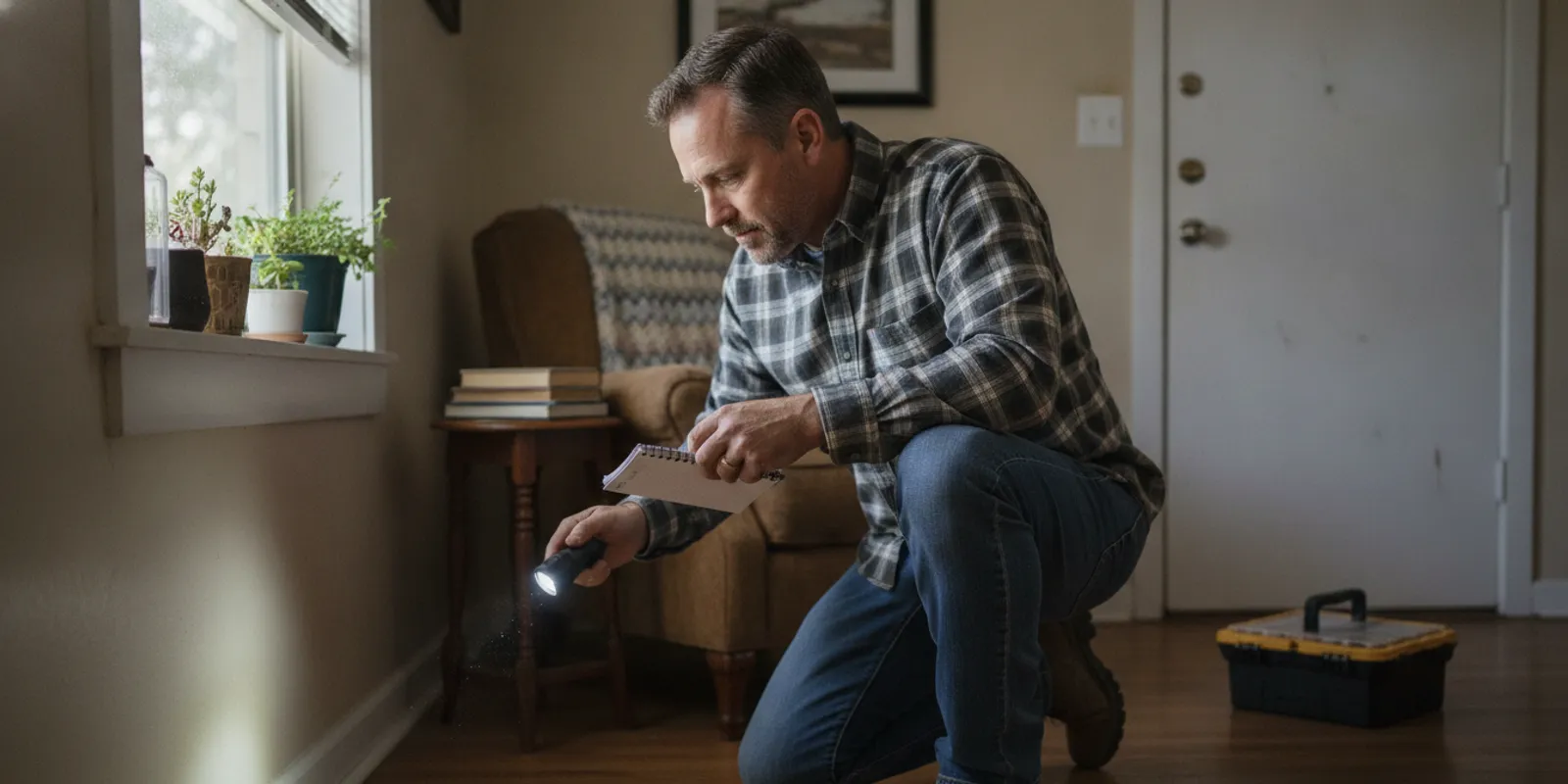
Use a simple log rather than relying on memory. For every observation, record the date, approximate time, room, exact nearby location, estimated size, color, visible markings, and whether the insect was alive. Note whether it was one insect or several and whether you have a clear image. If another person reported it, identify it as a report and include when they saw it.
Consider two examples. A large roach appears once beside a patio door on a rainy evening. Record the door location and visible traits, check the accessible screen or door sweep later, and note whether another sighting occurs. Do not conclude that it definitely entered from outside. In a different case, small roaches appear on several evenings near a kitchen appliance. Record each date and location, note visible markings and nearby food or moisture, and avoid assuming the species based on size alone.
Droppings and shed skins can be difficult to distinguish from ordinary debris. If you may want to share them, photograph them in place before cleaning and do not touch unknown material. Egg cases can be overlooked or confused with unrelated objects. A picture and location note are more useful than handling a specimen or declaring an identification from an indistinct mark.
Be careful not to count every report as a separate insect. Several people may describe the same sighting, or one photo may be shared more than once. Mark observations by date and place, and say whether you personally saw the insect or heard about it later. This keeps the record accurate and helps reveal whether activity appears to cluster around one area.
How can you check the area safely?
Keep an initial check limited to visible, accessible areas around the sighting. Look for crumbs, spills, accessible moisture, visible gaps, and signs on open surfaces. You do not need to dismantle equipment or open a wall to collect useful information. Do not reach blindly into dark voids, move heavy appliances alone, or enter electrical or mechanical spaces that may be unsafe.
If the insect was near an exterior opening, look at the visible door sweep and screen. Note whether the door was open, the screen was damaged, or an obvious gap was present. Close doors when practical. These observations may help identify conditions to address, but they cannot guarantee roaches will stay out or prove that a particular gap was the entry route.
If activity was near a sink, pipe, or drain, record whether the area was damp and whether a leak or standing water was visible. Address an accessible leak through the appropriate maintenance route. Do not pour pesticide into a drain or apply a product in cracks, appliances, or food areas unless its label specifically allows that use. Do not reach into a hazardous area to inspect it.
For pesticide products, read and follow the label, including placement, exposure, and cleanup directions. Do not combine products or use them in ways the label prohibits. Random spraying can obscure evidence, expose people or pets, or fail to address conditions supporting activity. If you are uncertain whether a product is suitable for a location, pause and seek qualified guidance.
What can you do while watching for a pattern?
Basic housekeeping can reduce easy access to food and water while you gather information. Store food in closed containers, wipe crumbs and spills, keep garbage contained, and address accessible moisture. Avoid leaving pet food out longer than needed. These steps improve conditions but do not confirm which species is present and may not resolve an ongoing source on their own.
Write down the time and exact place of each sighting.
Take a clear photo only if you can do so without approaching or handling the insect.
Record whether the insect was moving, dead, or seen only in a photograph.
Note nearby food, water, plumbing, doors, and other relevant features.
Record cleanup or maintenance steps and whether activity appeared again afterward.
Organize notes by room and date. A factual entry such as two small tan roaches seen beside the dishwasher on separate evenings is more useful than a confident but unverified claim about a widespread infestation. If you remove clutter for cleaning, handle it deliberately and avoid reaching blindly into stored belongings. Do not move suspect items between rooms if that could spread insects.
Review the log after several days or whenever there is another observation. Look for repeat locations, changes in the size or number of insects, or a gap in the record. Do not treat no new sighting as proof that there is no activity; it simply means none was observed during that period. Keep the dates clear so that later decisions do not rely on an uncertain memory of when activity began.
What changes at a business or managed property?
At a restaurant, apartment building, hotel, office, warehouse, or other commercial property, location and reporting process matter as much as appearance. Record whether the sighting was near food storage, waste, plumbing, a delivery area, shared wall, or tenant space. Include date, room or unit, number of insects, visible features, and any photo. Separate direct observation from reports made by someone else.
For a multi-unit building, mark whether a report came from one unit, a common area, or several locations. A simple floor list or map with dates can show where observations occurred without suggesting a source prematurely. Share the record through the normal reporting route with the responsible manager or service provider. Coordinate access and work with the person responsible for the property.
Employees and residents should not independently apply products in shared spaces. Food-handling businesses should follow their sanitation and operating procedures and the relevant product directions. Protect food and food-contact surfaces according to those procedures. Do not dismiss repeated reports because one insect was removed, but avoid declaring a site infested based on one uncertain sighting.
For example, a manager may receive two reports from different shifts in the same storage area. The useful next step is to record dates, exact locations, and whether either person captured a clear image, then share the combined log through the established process. If reports come from several units, keep each unit and common space distinct. A map can organize observations without making assumptions about movement between spaces.
Property owners seeking help can specify property type, suspected pest, ZIP code, affected rooms or units, dates, photos if available, and whether they want to discuss one-time or ongoing service. These details explain the concern; they do not predetermine the treatment plan or establish that service is available at every address.
How can you compare observations methodically?
Review a note or photograph in the same order each time, rather than starting with the name someone used. First ask whether the insect is clearly visible as a cockroach-like insect. If the view was fleeting, record that limit. Then compare approximate scale. Do not give an exact measurement when perspective or camera distance makes it unreliable. A familiar object in the same plane can help, but it should not be placed beside a live insect if that requires getting too close.
Next check whether the image shows the area behind the head. A clear image may reveal the parallel markings associated with a German cockroach. A view from above that hides the head area is less useful even if the overall color is clear. If you saw the insect directly but did not notice the markings, record that they were not observed. Do not reconstruct details from memory after someone suggests a likely identification.
Finally, compare context without allowing it to outweigh appearance. A small roach found near indoor food and moisture may fit a different pattern from a large roach near an exterior opening. Location remains a clue, not proof. Ask whether observations happened in the same room, whether the insects appeared similar in size, and whether the same person may have reported the same event more than once.
A careful note might state the date, approximate time, exact location, one small tan insect, no clear view of markings, and a blurry photo. Another could describe one large reddish-brown insect near a garage threshold and whether a screen door appeared closed. These statements preserve the observations without converting them into a diagnosis. They also make it easier to compare future sightings consistently.
When reviewing several records, note which details are confirmed and which remain uncertain. A photograph may be clear about size but not markings. A witness may recall the location but not the time. Do not discard the useful part of a report just because one detail is missing. Keeping uncertainty visible makes the record trustworthy and helps a professional decide what additional assessment may be useful.
When can an inspection help?
An inspection can be useful when sightings recur, identification remains uncertain, possible signs appear in more than one area, or no plausible route or source is visible. It may also help in a shared or sensitive space where improvised treatment could create complications. The purpose is to assess activity and conditions rather than to treat a tentative label as a confirmed finding.
Pro Pest describes an inspection-led residential process: assess activity and conditions, then recommend targeted treatment based on findings. Residential work may include targeted interior and exterior treatment, with optional exterior follow-up. A free, no-obligation inspection is a request, not a confirmed appointment or fixed-price quote. Pro Pest is based in Sealy and describes service in Sealy and surrounding areas; confirm your ZIP code rather than assuming address-level availability.
For more on the residential offering, see Pro Pest residential pest control and the service overview. Commercial property owners can review commercial pest-control information. To request an assessment, use the inspection request page. Recommendations depend on findings and property conditions.
When requesting an inspection, share whether the property is residential or commercial, the ZIP code, suspected pest, sighting dates and locations, whether activity is recurring, and whether you want to discuss one-time or ongoing service. Include a photo if available and label it as unclear if it does not show the details well. Describe what you observed rather than presenting a tentative identification as confirmed.
An inspection can also add context that a single photograph cannot provide. A professional can consider the image alongside the area, nearby conditions, and reports from other rooms. Before a visit, gather a short timeline, a few representative images, and a list of affected areas instead of a folder of unlabeled photographs. Note if the photos came from a resident or employee, and whether you personally observed the insect.
For a home, note accessible locations where activity occurred and any nearby food, water, appliances, doors, or plumbing. Do not rearrange heavy appliances or open walls to prepare. For a business or managed property, identify the relevant unit, room, shared area, or work zone, and follow the site’s access and reporting process. Explain any operating procedures to the person coordinating the visit.
The inspection-led process is an assessment, not a promise that a specific treatment or follow-up will be recommended in every case. Ask what was observed and which conclusions remain uncertain. Pro Pest describes residential inspections as considering activity, damage, conducive conditions, and entry points. Actual recommendations depend on what is found at the property.
What common situations suggest a next step?
One large roach beside a door
Record approximate size and color, photograph from a safe distance if possible, and note whether the door or screen had a visible gap. Check only the parts of the entry area that are easy and safe to see. Watch for recurrence and keep the first sighting separate from a theory about how it entered.
Several small roaches near a kitchen appliance
Write down each date and the precise side of the appliance or nearby cabinet where activity occurred. Note accessible water, food, warmth, and visible markings. Do not pull heavy equipment out or spray behind it to get a closer look. Small size and stripes may suggest German cockroaches, but identification still depends on what can actually be seen.
A roach in a garage or utility area
Note its relation to an exterior door, drain, stored items, or plumbing. If safe, organize visible items enough to inspect open edges, but do not reach into piles or voids. A garage sighting provides context; it does not establish whether the insect is a large outdoor-associated roach or another species.
Reports from multiple rooms or units
Use a room list or simple map with dates, and distinguish direct observations from secondhand reports. Share it with the responsible manager or service provider. Several reports merit organized assessment, but they do not prove how many insects are present or where activity began.
A photo with unclear markings
Keep the image and note what is missing: it may be too dark, distant, or cropped above the head. Do not edit a photo in a way that implies details you did not observe. If activity repeats, take another picture only when safe, and provide both the image and the sighting log when asking for guidance.
What mistakes make identification harder?
- Relying on a local name:
palmetto bug is used inconsistently for large roaches.
- Judging by color alone:
lighting and the insect’s condition can change its apparent color.
- Calling an unseen mark absent:
a blurry photo may simply fail to show markings.
- Assuming location proves origin:
where an insect is found is context, not a route map.
- Overreacting to one sighting:
record it and look for a pattern rather than guessing at population size.
- Ignoring repeat observations:
recurring activity deserves a clear record even when species is uncertain.
- Using products without checking directions:
follow the label and avoid unintended exposure.
A useful first record can be brief: one photo, room and date, approximate size, color, visible head markings, and whether the insect was alive. Photograph shed skins or possible egg cases in place without touching unknown material. If you cannot identify what you see, say so. Honest uncertainty is more useful than a precise-sounding guess.
Frequently asked questions
Is a palmetto bug the same as an American cockroach?
The name is often used for a large American cockroach, but everyday usage varies and may refer to other large roaches. The common name alone is not a dependable identification.
Are German cockroaches always found in kitchens?
No. Kitchens can offer food, water, warmth, and shelter, but indoor activity can occur elsewhere. A kitchen location is a clue to record, not confirmation of species.
Does one large roach mean there is an infestation?
Not by itself. Record where it appeared and watch for repeated sightings or other evidence. One sighting also cannot rule out further activity, so keep the record factual.
Can I identify a species from a photo?
A clear photo showing the whole insect, approximate scale, and markings can help, but some images lack enough detail. A photo is evidence to review, not always a final identification.
What should I include in an inspection request?
Share property type, ZIP code, suspected pest, sighting dates and locations, whether activity repeats, and any photos. Explain whether you are asking about one-time or ongoing service without presuming a treatment plan.
Careful identification starts with what you can observe and a record of where activity occurs. If sightings continue or the source remains unclear, an inspection-led assessment can help determine an appropriate next step.
Comments