Mouse Droppings Cleanup: How to Handle Droppings Safely
Finding droppings can be unsettling. This mouse droppings cleanup guide explains how to approach a small, accessible area and when to pause. Keep children, pets, and other people away from the immediate location.
What should you check before cleaning?
Look from a safe distance at the amount, location, and surface. A few droppings on a washable counter differ from a thick accumulation in an attic, wall void, crawlspace, insulation, ducts, or equipment. If the area is extensive, concealed, poorly ventilated, or difficult to reach, do not treat it as a routine household wipe-down. Ask a qualified cleanup professional or public-health authority about the right handling approach.
Do not sweep, brush, blow, or vacuum droppings, urine, or nesting material. Those actions can disturb dry material and move particles into the air. If you can ventilate without entering a heavily contaminated space, open doors or windows and leave the room for about 30 minutes before returning. Gather gloves, paper towels, a suitable disinfectant, and sealable plastic bags. Read the product label before use.
How do you clean a small amount on a hard surface?
- Prepare.
Restrict access and ventilate when practical. Put on disposable gloves. Move nearby food, dishes, or utensils out of the work area without touching contaminated material.
- Wet the material.
Thoroughly apply a suitable disinfectant to the droppings and nearby surface. Follow label directions for coverage and contact time. Avoid splashing or spreading material.
- Lift carefully.
Once the label's required contact period has passed, use paper towels to pick up the wet material. Do not crush or scatter it. Put towels and material directly into a plastic bag.
- Clean again.
Disinfect the area as directed. For food-contact surfaces, follow label instructions about rinsing before putting food or dishes back.
- Contain waste.
Seal the first bag, place it inside a second bag, seal that bag, and dispose of it according to local requirements.
- Finish.
Remove gloves without touching the outside, discard them with the waste, and wash hands thoroughly with soap and water.
Never mix cleaning products. Do not combine bleach with ammonia, acids, or other cleaners. Use products only as their labels direct; do not improvise mixtures or shorten contact time.
Why should you avoid sweeping or vacuuming?
Dry sweeping and vacuuming can disturb droppings, urine, or nesting material. The safer sequence for a small, accessible spot is to keep others away, ventilate if practical, wet the material with disinfectant, wait as directed, lift it with towels, and bag the waste. Do not use a household vacuum, brush, compressed air, or dry cloth on droppings or nests.
Washington State University Environmental Health & Safety advises wearing latex or rubber gloves and thoroughly soaking or spraying droppings and nesting material with disinfectant before cleanup. See its hantivirus cleanup factsheet.
How does location change the cleanup?
Kitchen cabinets and pantries
Remove nearby dishes and food packages without contacting the material. Discard food in damaged or unsealed packaging if it may have been exposed. Clean a hard shelf using a suitable product and follow label directions, including any rinse requirement for food-contact areas. Wash potentially exposed utensils before reuse, and wait until the surface is ready according to the label before returning food.
Attics, crawlspaces, and garages
These areas may be dusty, enclosed, or hard to ventilate. Do not disturb nests or droppings mixed into insulation. Avoid reaching into gaps or moving stored items that may cover signs. If material is extensive, access is difficult, or you must crawl through debris, stop and ask a qualified professional or public-health resource how to proceed.
Vehicles and equipment
Material near wiring, inside ducts, or around machinery can be hard to reach. Avoid turning on a fan or equipment that could move dust. Do not dismantle components or reach into concealed openings. When access is limited, seek qualified help rather than cleaning blind.
Clothing and porous items
Do not shake contaminated fabric. Keep it separate from clean belongings and follow its care instructions. If visible debris is extensive or handling it would spread material, contain it and ask a qualified professional or public-health resource for advice. One method does not fit every fabric.
How can you decide whether cleanup is within your capacity?
Consider four questions. Is the amount small and limited to one spot? Can you ventilate and work without disturbing additional material? Is the surface washable and accessible? Can you follow the disinfectant label? A few droppings on a clear floor differ from a layer across several spaces, material in insulation, or evidence inside equipment. If any answer raises concern, pause rather than improvising.
Cleanup and pest assessment are separate tasks. A pest inspection can assess activity and conditions, but should not be presented as specialized contaminated-material remediation. If the material is embedded, extensive, or difficult to reach, ask an appropriate cleanup or public-health resource how to handle it. If signs suggest ongoing activity, seek pest advice as a separate next step.
What should you check after cleaning?
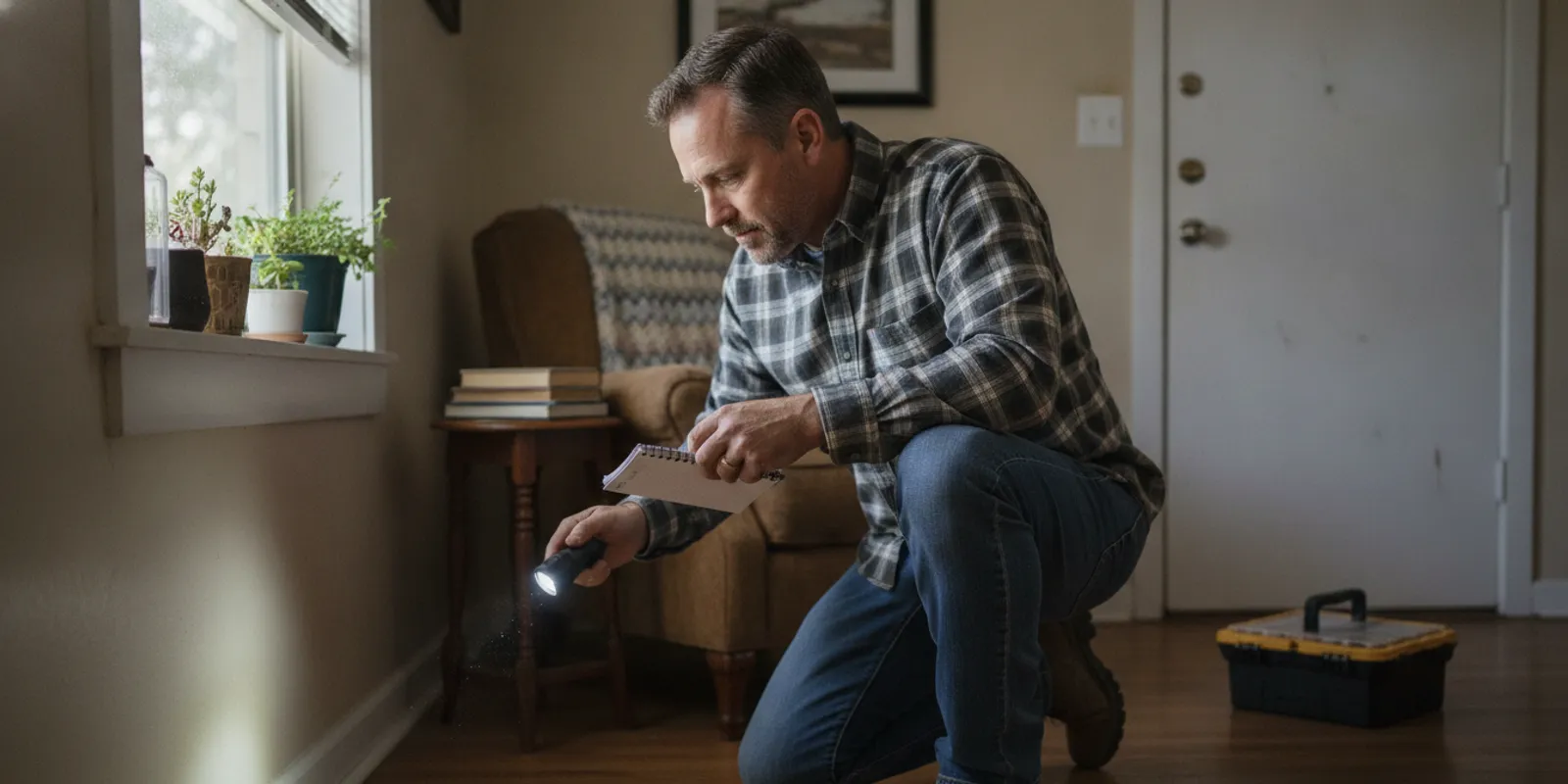
Removing visible evidence does not establish how mice entered or whether activity has ended. Record the date, room, surface, approximate amount, and whether signs reappear. From a safe position, note nearby gnaw marks, shredded nesting material, damaged food packaging, or droppings. Do not identify a species or estimate the extent of activity from one observation alone.
Look at visible access points around doors, foundations, and utility penetrations without putting fingers into gaps. Do not block vents or interfere with equipment. Keep pantry goods in sturdy closed containers, use a covered waste bin, and reduce stored clutter where practical. If you clean a spot near a pantry and later see fresh evidence nearby, record both locations and dates. If signs appear in a garage instead, note that location separately rather than assuming the same source.
What should homeowners and businesses document?
Make a concise note of the room or operational area, date, surface, approximate amount, and whether evidence returned. If safe, take a photo from a distance without moving material. Do not collect or transport a sample unless a qualified authority instructs you. Use neutral descriptions, such as “droppings beside the pantry baseboard,” rather than declaring an infestation or entry route.
Homeowners can note whether the location is near food storage, an exterior wall, a garage, or a utility opening. Commercial owners and property managers should identify the affected room, aisle, storage area, or equipment zone, and follow applicable sanitation procedures. Restrict access while the immediate location is handled appropriately. In a shared building, inform the owner or facilities contact and avoid making changes to shared systems yourself.
What changes for a workplace?
A business should consider how the area is used and who may enter it. Restrict access to the immediate spot, notify the responsible facilities or sanitation contact, and follow established workplace procedures. A food-handling room, warehouse aisle, and office closet have different operational needs. Do not move contaminated belongings through customer or employee areas simply to make them easier to reach.
Record a location another person can find, such as a room name, aisle, cabinet, or equipment zone. At shift handoff, communicate whether the area remains restricted and whether cleanup is complete. Describe what was seen, not an unsupported cause or estimate. If material is concealed or extensive, do not assign an employee an unsafe cleanup task.
How can you prevent repeat signs?
After safe cleanup, focus on conditions you can verify. Keep food and pet food in closed containers, clean crumbs and spills, close waste bins, and reduce piles of paper or fabric that remain undisturbed. Organize garage storage and leave room to inspect along walls. These habits help make new signs easier to notice; they do not guarantee that activity has stopped.
Look at door sweeps, thresholds, and visible gaps around pipes or cables from a safe position. Note openings for appropriate repair, but do not seal vents or other features that must remain open. Do not put fingers or tools into gaps. In a rental or commercial property, coordinate repairs with the owner or facilities contact.
Avoid responding by placing chemicals in inaccessible areas or applying pest products contrary to their labels. If signs continue, keep a short log and request an assessment rather than escalating chemical use without understanding the conditions.
When can an inspection help?
An inspection may be useful when signs return after cleanup, appear in several rooms, or are concentrated in a storage or work area. The purpose is to assess conditions and activity before recommending what fits the findings. Repeated signs may warrant further investigation, but do not by themselves establish how many animals are present.
Pro Pest describes residential work as inspection-led, with targeted initial treatment and optional exterior follow-up. A free, no-obligation inspection is a request, not a confirmed appointment or fixed-price quote. Review the company's pest-control services and residential pest-control information.
When requesting an assessment, provide the ZIP code, property type, affected rooms or work areas, approximate amount, and date signs were first noticed. Mention access barriers without opening or disturbing a space to gather more information. Pro Pest is based in Sealy and describes service in Sealy and the surrounding area; Houston and Katy are not proof of address-level eligibility, so confirm the ZIP code. For commercial needs, see the commercial pest-control information. The About page provides local company context.
What mistakes should you avoid?
Do not sweep, dry-brush, blow, or vacuum droppings or nesting material.
Do not mix bleach with ammonia, acids, or other cleaners.
Do not treat an enclosed or heavily contaminated space as a routine wipe-down.
Do not reach into wall gaps, insulation, ducts, or machinery.
Do not assume visible cleanup proves activity has ended.
Do not infer species or infestation size from one observation.
Do not use pest-control chemicals contrary to their labels.
For a small, accessible area, careful wet cleanup and follow-up checks are practical first steps. Recurring, extensive, or hard-to-reach signs call for a more complete assessment.
For a workplace or shared building, record the affected location, restrict access where appropriate, and coordinate with the responsible contact. Do not move debris or open equipment solely to investigate. A clear note about when and where signs appeared can help make follow-up more useful.
Cleanup waste should remain sealed and separate from clean supplies. Wash hands after removing gloves, and avoid touching food or personal items until you have washed. Clean and dry the tools or surfaces used according to their material and the product label; discard disposable materials rather than reusing them.
If signs recur, compare the new observation with your log instead of repeatedly treating the original spot as the whole problem. A new location, a return to the same area, and no new evidence are different observations that should be reported accurately. That careful description helps determine whether further cleanup advice or a pest assessment is appropriate.
Careful wet removal suits only a small, accessible area; recurring, extensive, or hard-to-reach evidence calls for a more complete assessment.
Comments