Brown Recluse Bite: What to Know and When to Seek Care
A brown recluse bite can be worrying, but many skin problems are mistaken for spider bites, and a mark alone cannot confirm which spider caused it. If you think you may have been bitten, focus first on your health: clean the area, watch for changes, and contact a medical professional when symptoms are concerning. If you also find a spider indoors, keep your distance and document it safely.
Key takeaways
- Protect your health first:
Clean the area, avoid harmful home remedies, and contact a healthcare professional when symptoms are concerning.
- Do not self-diagnose:
A skin mark or nearby spider cannot confirm a brown recluse bite.
- Get urgent help for severe symptoms:
Trouble breathing, fainting, confusion, severe weakness, or rapidly spreading swelling need emergency attention.
- Keep pest and medical questions separate:
A Pro Pest inspection can assess the home environment, but it cannot diagnose a skin lesion.
What should you do first after a suspected brown recluse bite?
Start with basic care and a calm assessment. Wash the area gently with soap and water. If a hand or arm is involved, remove rings, watches, or anything else that could become tight if swelling develops. Rest the affected area and, if comfortable, keep it elevated. A cool, damp cloth may help with discomfort. Do not put ice directly on the skin.
Write down when you first noticed the mark and what you observed. Take a clear photo in consistent lighting, and note whether the area is changing, becoming more painful, or swelling. A dated photo can help a clinician compare changes over time. Avoid repeatedly pressing, rubbing, or checking the spot in a way that irritates the skin.
Do not cut or squeeze the area, try to suck out venom, apply a tourniquet, or use heat as a home remedy. These actions can injure tissue or delay appropriate care. Do not take leftover prescription medicine or apply a product intended for another condition without asking a health professional. If you are unsure what is appropriate for your circumstances, contact a clinician or pharmacist.
If the spider is still nearby, do not try to catch it with your hands. A photo taken from a safe distance may be useful, but your health comes first. Do not delay medical care to search for, trap, or identify a spider. In many cases, the spider is not found, and treatment decisions should be based on symptoms and a clinician's evaluation rather than a visual guess.
Can you tell a brown recluse bite by looking at the mark?
Usually, no. A skin mark cannot reliably identify a spider species or prove that a spider bite occurred. Several conditions can look similar in their early stages, including irritation, an insect bite, a skin infection, or another sore. Even a lesion that changes over time does not by itself establish that a brown recluse was responsible.
The familiar idea that every suspected bite has a distinctive pattern can lead people to diagnose themselves too quickly. A central mark, a red area, a blister, or a changing color is not enough to confirm a brown recluse bite. Nor does not seeing a spider rule out every possibility. Share what you observed, when it began, and how it has changed with a medical professional; let that person evaluate the whole situation.
It is also easy to confuse a spider found in a home with the cause of a skin problem. Finding a spider nearby may be worth documenting, but proximity does not prove a bite. A clinician may ask about when and where the mark appeared, recent activities, medical conditions, medications, and other symptoms. Answering those questions accurately is more useful than trying to fit the spot to a picture online.
When possible, take a photograph of the skin without filters and include a ruler or another safe size reference beside, not on, the affected area. Keep images private when sharing them with a clinician. Do not send graphic images broadly or rely on online comments to rule out a medical problem.
Which symptoms mean you should get medical care?
Contact a medical professional promptly if the area is worsening, unusually painful, blistering, opening, or changing in a way that concerns you. A clinician can assess the skin, consider other possible causes, and advise whether treatment or follow-up is needed. If the person is a young child, an older adult, pregnant, or has a condition that affects healing or immunity, it is sensible to seek individualized advice rather than waiting for a dramatic change.
Seek emergency help for severe or rapidly developing symptoms, such as trouble breathing, fainting, confusion, severe weakness, rapidly spreading swelling, or other signs of a serious reaction or illness. Do not wait to see whether those symptoms pass. If the person appears seriously ill, use your local emergency services.
Also seek prompt advice if there is spreading redness or warmth, increasing tenderness, drainage, fever, or red streaking. Those changes can have causes other than spider venom, and a medical professional needs to assess them. Do not assume that a worsening wound is simply the expected course of a bite, and do not attempt to drain it yourself.
There is no need to wait for a particular number of hours or for a mark to develop a certain appearance before asking for help. If you feel uncertain, symptoms are progressing, or the person has additional health risks, contact a healthcare professional. When you call, explain what you know and what you do not know rather than stating a species identification as fact.
What information should you give a clinician?
A concise timeline is useful. Record when the mark was first noticed, where the person was, what they were doing, and whether they actually felt a bite. Note any change in size, color, pain, swelling, or skin condition and when that change occurred. Include symptoms affecting the rest of the body, not only the skin.
Share clear, dated photos that show how the area changes.
Describe any first aid, creams, medicines, or home remedies already used.
List relevant allergies, health conditions, and medicines if asked.
Say whether a spider was seen, and describe how it was observed without claiming certainty.
Ask what changes should prompt a return call or urgent evaluation.
If you safely captured a spider without handling it, a clinician or qualified local expert may be able to advise whether identification is useful. Do not bring a live spider to a clinic or risk another bite to obtain a specimen. If there is no specimen, that does not prevent a clinician from evaluating the wound and symptoms.
How can you build a useful symptom timeline?
A simple record can make a medical conversation clearer, especially if the mark changes between the first observation and an appointment. Use one note on your phone or a piece of paper rather than scattered messages and memory. Start with the date and approximate time you first noticed the mark. If you did not see a bite happen, say that plainly; the time you noticed a skin problem is not necessarily the time it began.
For each later observation, add only what is new. For example: "Tuesday evening, noticed a small sore on the lower leg; no bite was felt. Wednesday morning, area seemed more tender. No fever noticed." This kind of neutral description is more useful than writing that the lesion is definitely a recluse bite or guessing how it will progress. Do not measure by pressing on the skin, and do not delay care to complete a detailed log.
Keep observations about the person separate from observations about the house. One short note can describe the skin and general symptoms; another can record where a spider was seen, if any. That separation helps avoid treating a nearby sighting as proof of the sore's cause. Bring the information to the clinician or read it during a call, and follow the advice you receive even if your notes are incomplete.
If another person is helping, ask them to record what they directly observed and when. Avoid repeatedly photographing or examining a spot if that causes discomfort. A few clear observations and a reasonable timeline are enough to start a conversation; the goal is to communicate accurately, not to diagnose the condition at home.
How do you document a spider without putting yourself at risk?
Keep people and pets away from the spider. If it is visible and stationary, take a photo from a distance using a camera zoom. Do not place your fingers near it for scale, disturb a web or hiding place, or use bare hands to move an object where it may be hiding. A blurry photo is not worth an injury.
If the spider disappears, note the room and the general area where you saw it. Avoid dismantling furniture or reaching into closets, boxes, shoes, or storage areas without checking first. Use a flashlight to look from outside the area rather than putting your hand into a dark space. Keep the account factual: where it was, what it looked like from your vantage point, and whether you saw one or more.
Online identification can be uncertain. Brown spiders may be difficult to distinguish from one another, especially in poor lighting or a low-resolution image. A suspected identification should not be treated as a medical diagnosis or as proof of an infestation. If there is a recurring concern in the home, a professional inspection can help assess the site conditions and possible pest issue.
What should you do if a spider is inside your home?
Do not handle it. If it is in an open, accessible place, keep children and pets away and avoid trying to crush or pick it up with bare fingers. If you cannot safely manage the situation, leave the area and seek help. For an isolated sighting, avoid assuming that a spider has established itself throughout the house; record the location and look for a pattern before drawing conclusions.
Reduce opportunities for accidental contact by checking shoes, gloves, and items that have been left undisturbed before putting them on or reaching inside. Keep storage orderly, avoid leaving clothing on the floor, and use care when moving boxes or stored belongings. When cleaning or organizing a low-use area, wear gloves appropriate for the task and look before reaching into hidden spaces. These steps are sensible precautions, not a guarantee that a spider will never enter.
Pay attention to conditions rather than using a single sighting as a measure of risk. Note whether you see spiders repeatedly, find them in multiple rooms, or discover them while moving stored items. Record dates and locations. That information helps a pest professional understand the concern and distinguish a one-time encounter from a pattern that merits further assessment.
For general residential pest-control information, see Pro Pest's residential pest-control page. The appropriate response depends on what is found at the property; a page or phone conversation cannot substitute for an inspection of the actual conditions.
What changes should you monitor while you wait for advice?
While you wait for medical advice, monitor the person's overall condition without repeatedly touching or examining the area. Record whether pain, swelling, redness, or the person's general symptoms are improving, unchanged, or worsening. A short, dated record helps a clinician understand what changed without turning observation into a home diagnosis.
Note new or worsening pain, swelling, warmth, redness, blistering, drainage, fever, or red streaking.
Record symptoms elsewhere in the body, such as trouble breathing, fainting, confusion, or severe weakness.
Use similar lighting and distance if you take a photo, and place any size reference beside the area rather than on the skin.
Follow the medical professional's follow-up instructions, and contact that office again if the condition changes.
Seek emergency help for severe or rapidly developing symptoms instead of waiting for a scheduled call.
A photo can document change, but it cannot establish the cause or determine treatment. If photography is difficult or uncomfortable, a plain-language description is enough to begin a conversation with a clinician.
How can you reduce accidental contact with spiders?
Make simple changes in areas where belongings are stored or left undisturbed. Keep clothing, towels, shoes, and gloves off the floor when practical, and check them before use if they have been sitting untouched. Move boxes carefully, avoid reaching behind stored items without looking, and use a flashlight to inspect dark corners before putting a hand into them. These are practical habits, not proof that a particular species is present.
Keep storage areas organized enough that items can be seen and moved without putting a hand into a hidden gap. Where possible, avoid accumulating piles of unused materials directly against walls. When cleaning, work in a way that lets you see the space before reaching into it. Wear task-appropriate gloves when handling stored materials, but remember that gloves are not a reason to grab a spider or reach blindly.
At home, tell children not to pick up spiders, webs, or unknown insects. Ask them to alert an adult and keep away from the area. Keep pets from nosing around a spider if possible. If a pet may have been bitten or is acting unwell, contact a veterinarian for advice; human first-aid instructions are not a substitute for veterinary care.
These precautions can lower the chance of an unexpected encounter while you sort out a sighting. They do not confirm which spider is present, and they do not replace an inspection when sightings recur. If you notice activity in multiple rooms or repeatedly in one area, make a brief record of the dates and locations instead of relying on memory.
What common assumptions can lead you astray?
One common mistake is treating every painful or unusual skin sore as a spider bite. Another is assuming that a spider in the same room must have caused a mark. Both conclusions can distract from other explanations that deserve medical attention. Keep the description neutral: say that a bite is suspected, explain what was observed, and avoid presenting an uncertain identification as settled fact.
A second mistake is waiting for a specific color, ring, blister, or other visual sign before seeking care. There is no appearance-based home test that safely rules a brown recluse bite in or out. If symptoms are severe, worsening, or worrying, seek medical advice based on the person's condition instead of waiting for a picture to match a description.
A third mistake is assuming that pest treatment answers the medical question. Pest professionals assess the property and discuss pest-control options based on findings. They do not diagnose skin lesions. In the same way, medical evaluation of a wound does not establish whether spiders are present in a home. Keep the two questions separate and seek the appropriate help for each.
When can a pest inspection help?
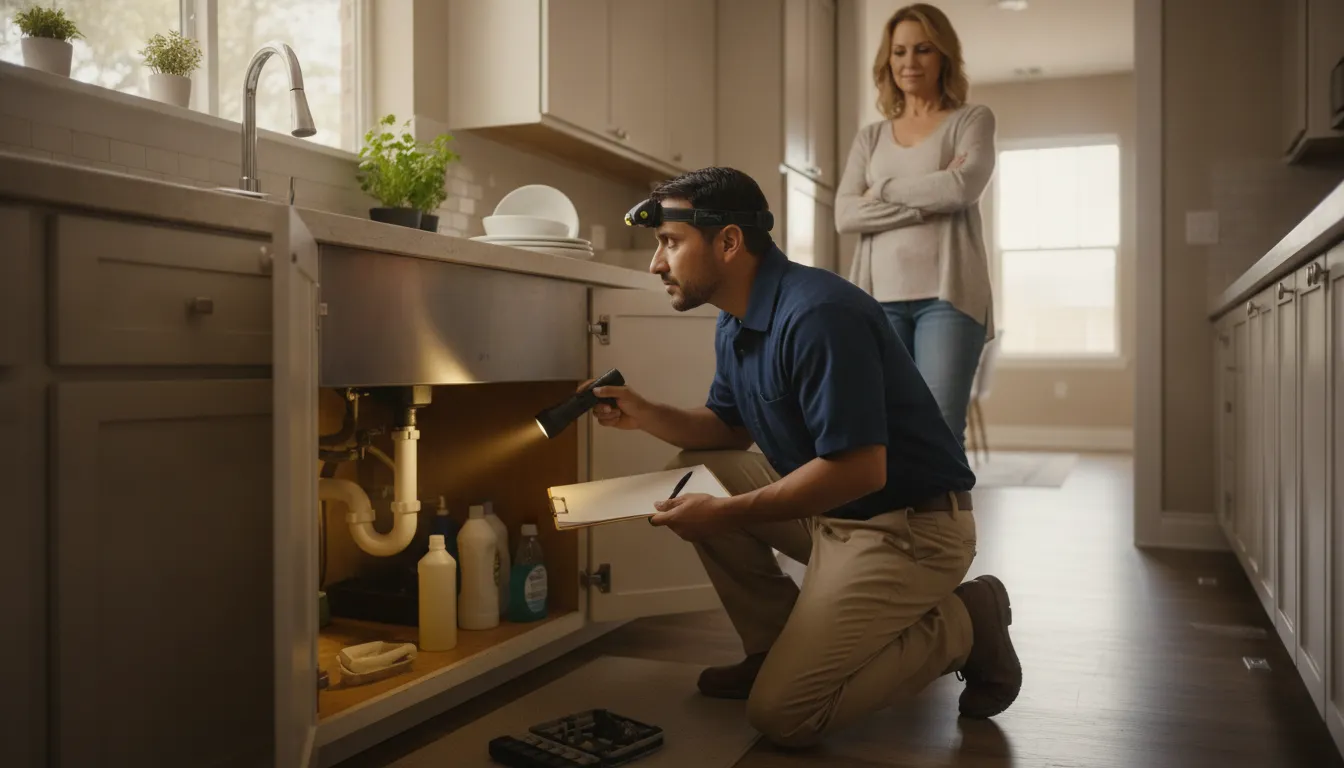
A pest inspection addresses the home environment, not the bite itself. A pest professional can inspect relevant areas for pest activity and conditions that may contribute to encounters, then discuss findings and possible next steps. That is different from diagnosing a skin lesion, recommending medical treatment, or confirming the cause of a wound. For a suspected bite, contact a healthcare professional for medical advice.
Pro Pest describes its residential process as inspection-led: conditions and activity are assessed first, then treatment recommendations are based on findings. Residential work may include targeted interior and exterior treatment, with optional exterior follow-up. A free, no-obligation inspection is a request, not a confirmed appointment or fixed-price quote. The specific pest, property, ZIP code, and whether you are seeking one-time or ongoing service all matter when asking about availability.
Pro Pest is based in Sealy and describes service in Sealy and the surrounding area. Do not assume every address in a larger city or region is covered. If you are outside the immediate area, provide your ZIP code and ask whether the property is within the current service footprint before planning around a visit.
For residential pest information and service details, you can also review the Pro Pest services page. If you want to discuss a possible home pest concern, use the inspection request form and describe the type of property, the general location of the sighting, and whether you are asking about a one-time visit or ongoing service. Avoid including private medical information in a pest-service inquiry.
How can you prepare for an inspection request?
A short, factual account makes it easier to explain what you need. Share the property ZIP code, the room or general area where you saw a spider, how often you have noticed activity, and whether you have a clear photo taken safely. Mention any immediate access concerns, such as a child or pet using the area. You do not need to identify the species before making an inquiry.
Keep the medical and property questions separate. If someone has a concerning skin symptom, arrange appropriate medical advice regardless of whether a pest inspection is requested. If a spider is present, do not wait for a service visit before taking sensible steps to keep people away from it. A home inspection can help assess conditions, but it cannot determine what caused an individual's skin mark.
When discussing service, ask what an inspection covers, what the findings indicate, and what options are appropriate for the property. Do not assume a specific treatment, schedule, or result before the site is assessed. Pro Pest's public information describes a recommendation based on inspection findings; exact services and availability depend on the situation and location.
Before submitting a request, gather only details that help explain the property concern. A useful note might include the kind of property, ZIP code, room or general area, dates of sightings, whether activity has recurred, and whether the spider was photographed from a safe distance. If the sighting occurred near stored belongings, mention that general context without dismantling the area to look for more. Keep the description factual rather than naming a species you cannot confirm.
Think about access and household needs as well. If a child, tenant, customer, or pet regularly uses the area, explain that so the concern is understood. Ask how the inspection request is handled, whether the address is in the service area, and what additional information is useful. Submitting a preferred date is a request rather than a confirmed appointment, and a request for a free inspection is not a fixed-price quote for treatment.
For a commercial property, describe the type of site and the relevant room or work area; do not assume residential procedures or scheduling terms apply. Local commercial owners can ask what the inspection will cover and how findings will be communicated. In every case, contact a healthcare professional separately for a person's symptoms, and avoid sharing sensitive medical details through a pest-service form.
Frequently asked questions
How quickly does a brown recluse bite show symptoms?
There is no reliable timeline that lets someone confirm a brown recluse bite at home. A mark can be noticed after an unknown amount of time, and skin changes have many possible causes. If it is worsening or you are concerned, describe the timing and symptoms to a healthcare professional rather than waiting for a particular pattern.
Does a red or blistered mark prove it was a brown recluse?
No. Redness, blistering, pain, or a changing appearance cannot identify a spider on their own. Different skin conditions may look alike, so a clinician should evaluate symptoms that are progressing or concerning.
Should I keep the spider if I think it caused a bite?
Do not take a risk to capture it. A safe photo may help document what you saw, but do not touch or handle a spider and do not delay medical care to find it. A clinician can assess the person even when no spider is available for identification.
Can a pest inspection tell me whether a skin mark is a spider bite?
No. A pest inspection assesses activity and conditions at the property. It is not a medical evaluation and cannot establish the cause of a skin lesion. Ask a healthcare professional about the mark and contact a pest professional separately if you have a home pest concern.
What if I only saw one spider?
One sighting does not by itself confirm an infestation or explain a skin problem. Keep your distance, note where and when you saw it, and watch for repeated activity. If sightings continue or you have concerns about the property, request an inspection and provide the location and any safe photo you have.
When a suspected brown recluse bite is involved, protect your health first and avoid diagnosing the cause from appearance alone. Seek medical advice for worsening or concerning symptoms, and treat any home pest concern as a separate question that can be assessed through an inspection.

Comments